

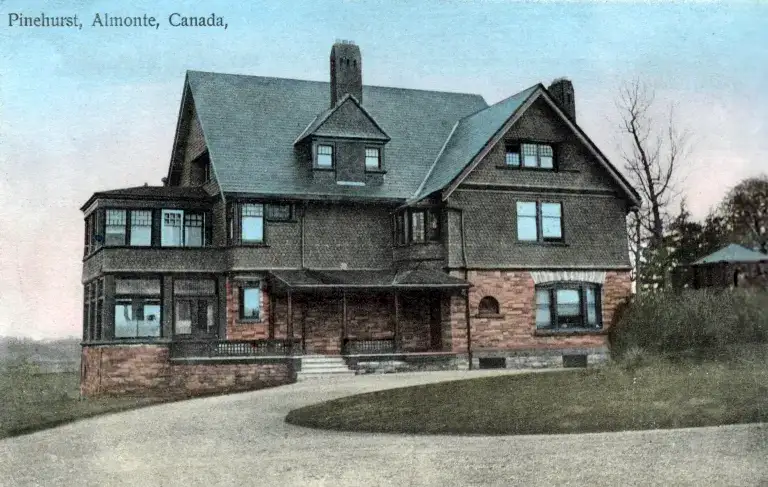
I attended the December 2, 2025 public meeting of Mississippi Mills council regarding the proposed Pinehurst property redevelopment. This large estate is a gem. Built by the Rosamond family of woollen mill fame, its ten acres feature the Mississippi River to the west and forests and the Ottawa Valley Recreation Trail to the east. In many countries a property such as this would have already been saved for the common good. The UK’s National Trust is a fine example of how countries protect their built environment.
This public meeting was certainly something. Adjacent neighbours of this project came out en masse, filling the council chamber’s gallery. Twenty-three citizens stood at the microphone and aired their concerns. All were well spoken and most offered different points of concern. One spoke via Zoom using poetry to make her point, a young girl from the neighbourhood shared her thoughts, even a former owner of the property who discussed the expense of owning a heritage property. Many cited increased traffic volumes and safety concerns, others increased density, noise levels, building height, and environmental degradation.
The mayor ran a good meeting, offering all 23 the time they needed to say their piece, adding that a written submission would hold the same weight as one presented verbally before council.
I pondered the perceived negativity of the acronym NIMBY (Not in my back yard) and how it’s believed that a Nimby is simply opposed to change, any change. I wondered how many councillors started their council careers in opposition to something they saw as not good for their town?
This group didn’t fit the usual definition of Nimbyism. They weren’t mad, nor unruly, no pitchforks here, only well prepared as they came genuinely concerned for their neighbourhood.
This was one of the longest council meetings I’d ever attended. It was something to witness. The neighbourhood had rallied. There was a true sense of community. Whether they all had known each other before they had come together to discuss the impact this proposed development would have on their lives, the lives of their children and the town in general.
They came prepared and with a purpose. I kept thinking “What would Jane Jacobs do?” Jane was not a trained city planner, but a journalist, community activist and author on what makes a good neighbourhood who understood the importance of well-balanced planning. She rallied a neighbourhood in NYC and successfully stopped the proposed Manhattan expressway that would have severed a neighbourhood in two.
Later she moved to Toronto and fought the same fight to successfully stop the proposed Spadina expressway. Her most important book, The Death and Life of Great American Cities, has been a resource for communities since the early sixties. Jacobs believed in walkable neighbourhoods, commercial shops are good if they are in service to the neighbours, that vibrant spaces emerge from diversity and human-scale interaction but not from grand designs imposed from above.
She believed communities are too complex to be engineered from above and should evolve organically through local knowledge and small-scale decisions.
The first draft of the redevelopment plan for this property had a myriad of elements – boutique hotel, a seniors’ building, spa, 27 cabins, restaurant etc.
Presently the developer is taking a second look at his plan. Perhaps he took the neighbours criticism to heart.
Wouldn’t it be lovely if the owner would sit down, face-to-face, with neighbours to discuss possibilities for the property and its buildings recognizing there are three important views to consider—his, the neighbours, as well as the heritage site itself.
Jeff Mills
