


by Brent Eades
The spread of AI apps like ChatGPT has prompted concern about where this new technology could be taking us.
According to a New York magazine article, “Everyone Is Cheating Their Way Through College: ChatGPT has unraveled the entire academic project,” a survey of US students soon after the app’s release in 2022 revealed that over 90% of them were using it to help write their assignments.
It cites one professor’s fear that “Massive numbers of students are going to emerge from university with degrees, and into the workforce, who are essentially illiterate … both in the literal sense and in the sense of being historically illiterate and having no knowledge of their own culture, much less anyone else’s.”
Meanwhile a Globe and Mail story cited Swiss academic Michael Gerlich’s research conluding that dependence on AI links to lower critical-thinking scores, especially among teens and young adults.
There are justifiable concerns that AI will kill human jobs, especially entry-level ones like customer support and market research. In March, the CEO of Ottawa’s Shopify Inc. decreed that before requesting the creation of new positions, staff “must demonstrate why they cannot get what they want done using AI.” Many other tech companies are embracing AI as a way to automate jobs and cut costs.
The Internet and its offspring — AI apps, social media, streaming video, smartphones — have clearly had a profound impact on how many of us learn, socialize and entertain ourselves.
But technological change has always prompted anxious predictions about how it might unravel society and dull our brains. Let’s have a look.
“Is Google Making Us Stupid?”
In 2008 Atlantic writer Nicholas Carr asked this question, describing how he was finding it harder to focus on books and long articles: “I get fidgety, lose the thread, begin looking for something else to do … The deep reading that used to come naturally has become a struggle.”
Carr blamed this on his immersion in the online world: “My mind now expects to take in information the way the Net distributes it: in a swiftly moving stream of particles… I zip along the surface like a guy on a Jet Ski.”
TV: A vast wasteland
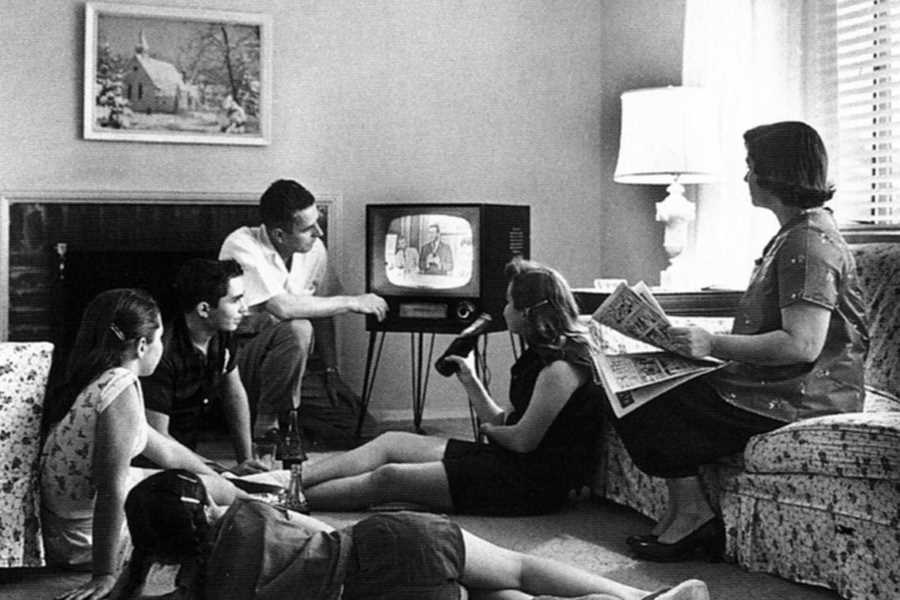
Television was long a convenient whipping boy for perceived societal ills. In 1961 the chair of the US Federal Communications Commission famously called it a “vast wasteland,” decrying its failure to educate the public and its potentially pernicious effects on children.
The prominent theologian Reinhold Niebuhr feared that “much of what is still wholesome in our lives will perish under the impact of this visual aid,” echoing concerns that television would reduce community engagement, discourage reading, and promote violent content.
On the airwaves
Commercial radio had its critics too, though not as vocal as those of television. In a 1929 article commentator Jack Woodford wrote, “Now we know what we have got in radio — just another disintegrating toy. Just another medium … for advertisers to use in pestering us. It would not be so bad if the listeners were taking in something even slightly informing.”
Woodford foresaw the death of conversation, when “all the modern host needs is his [radio] and a ration of gin. The guests sit around the radio and sip watered gin and listen to so-called music interspersed with long lists of the bargains to be had at Whosit’s Department Store.”
Hello operator?
Alexander Graham Bell’s telephone was embraced by businesses, but there were concerns about its impact outside the office.
“Does the telephone break up home life and the old practice of visiting friends?” wondered the Knights of Columbus in 1926, while an American professor lamented its potential for annoyance: “Thanks to the telephone our neighbors have it in their power to turn our leisure into a series of interruptions.”
(What most shocked people about the telephone was that for the first time in history, it was possible to converse in real time with someone who wasn’t within shouting distance — many found this nearly magical in its strangeness and novelty.)
Books and more books
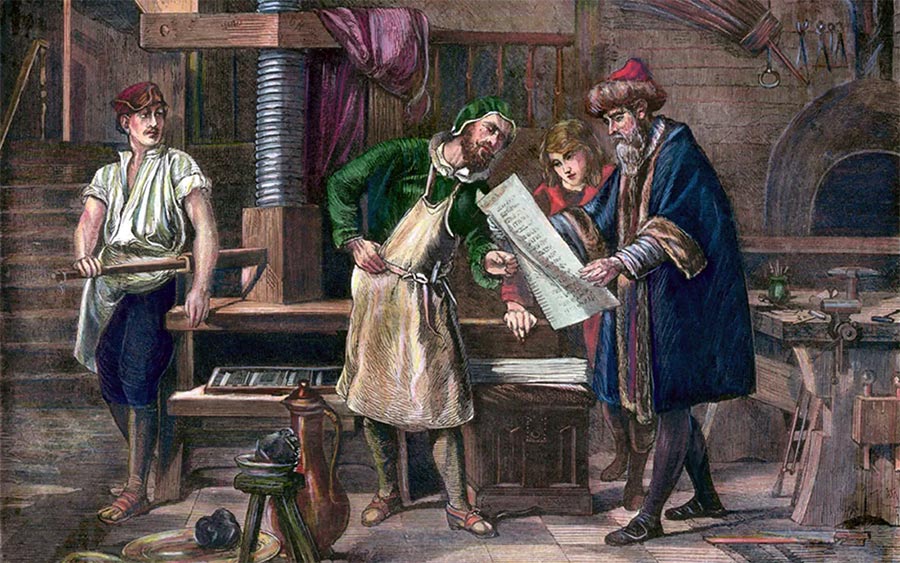
Before Johannes Gutenberg brought movable type and the printing press to Europe in the fifteenth century, books were both rare and expensive. A wealthy European might own a few dozen, a monastery or university a few hundred. Perhaps 30,000 books existed in all of Europe. Within fifty years of Gutenberg’s invention, that number had multiplied to as many as 9 million.
This new technology was at least as disruptive and transformational as the creation of the Internet 500 years later. As books proliferated, the Catholic church (rightly) feared they might spread heretical ideas or challenges to established doctrine — this helped fuel the Reformation — while governments were alarmed by their potential to spread seditious ideas or incite rebellion. Which they also did.
But surely not writing itself?
Odd as it may seem millennia later, the very act of writing down knowledge was once seen by some as harmful.
The Greek philosopher Socrates was not a fan. He said to a teacher of writing 2,500 years ago:
“This invention will produce forgetfulness in the minds of those who learn to use it, because they will not practice their memory… You have invented an elixir not of memory, but of reminding; and you offer your pupils the appearance of wisdom, not true wisdom, for they will read many things without instruction and will therefore seem to know many things, when they are for the most part ignorant.”
Which, come to think of it, sounds like Nicholas Carr’s concern that Google was making him stupid — that writing, like the Internet, might cause us to zip along the surface of knowledge rather than absorbing it in our minds and coming to our own conclusions.
So is AI different somehow?
Hard to say. As an Atlantic article said recently, current AI models don’t even remotely replicate human intelligence. “They are impressive probability gadgets that have been fed nearly the entire internet, and produce writing not by thinking but by making statistically informed guesses about which lexical item is likely to follow another.”
And these guesses are often wrong. This won’t likely change anytime soon.
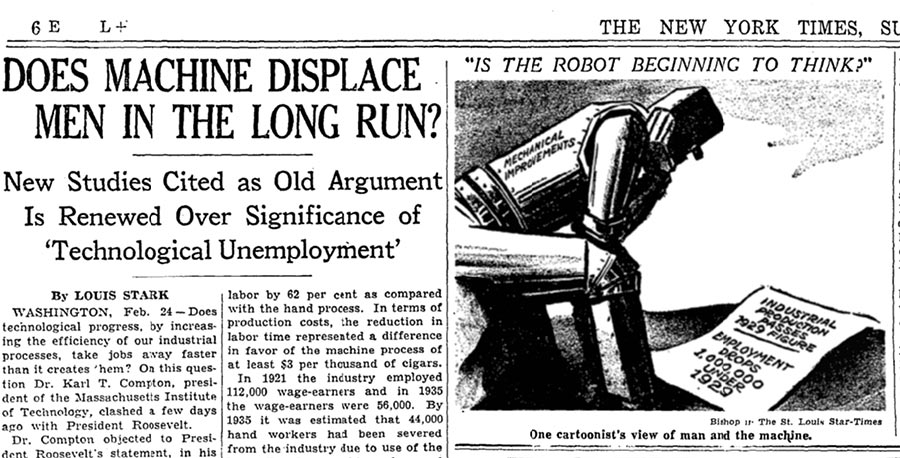
As for AI taking away jobs: well, new technologies often do. The Industrial Revolution and its machines, which automated much work previously done by hand, displaced countless artisans and drove them into the hellish early factories. By the 1960s the first generation of robotic machines was replacing many workers; today, some factories that once needed hundreds or thousands of employees might have a few dozen supervising the machines that churn out the products.
But there are aspects of AI that seem to make it different from its predecessors.
First is how fast its use and influence have spread. ChatGPT, the forerunner of many AI services that followed, was released only 37 months ago and is now used by about 120 million people every day.
By contrast, Internet use in Canada took over two decades to become nearly universal. When I signed on in 1993 just 1% of Canadians were online and only in 2015 did that that number reach 90%.
Second, there’s the ‘black box’ aspect to ChatGPT and its kin — the fact that their creators don’t entirely understand what’s going on inside their systems or what results they’ll produce. The models that drive them, trained on immense amounts of data, are simply too complex and opaque.
Final thoughts
So here we have a new technology that’s spreading very fast, disrupting jobs and education — and no one, not even its makers, entirely understands how it works or what it might do next. I can’t think of a past tech breakthrough that compares, really.
Could AI plateau soon, making only incremental advances over what it can do now? That’s quite possible and has been the typical story of technology so far — something new comes along, anxiety and disruption follow, but in time it becomes commonplace and unthreatening.
Could it also evolve into something we can’t imagine in 2025? Also possible, though I think we’re a long way from some of the more apocalyptic predictions about where AI could be taking us. Those assume we’ve achieved so-called artificial general intelligence, when the machines can do the same as human brains or better. There’s no consensus on when or if we’ll hit this milestone — it could be ten years away or a hundred. Or never. No one knows.
If, like me, your education is decades behind you and you’ve retired from your profession, current AI offerings won’t likely make much difference to your life unless you happen to have an interest in technology. (Other than possibly annoying you when it replaces the human you used to chat with when trying to get help with an issue online.)
If, on the other hand, you’re a first-year university student with your degree and career still to come, then AI will surely affect you — both the quality of education you get and the state of the job market once you graduate.
No one can say for sure where AI is headed and how it could change society or even our brains. But it isn’t going away and it bears watching.
