

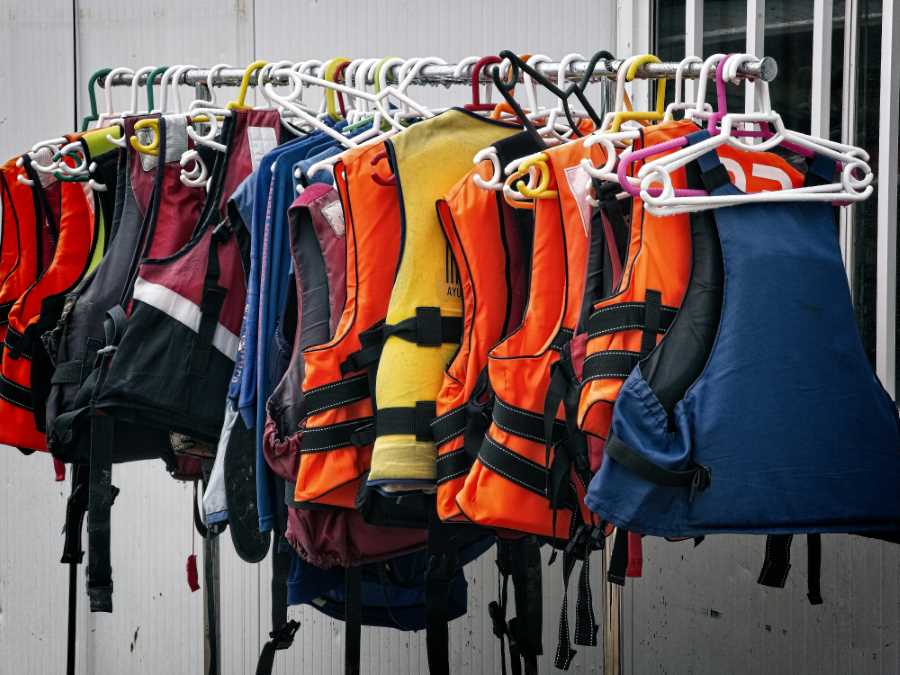
A press release from the OPP today advised that so far this season ten people have drowned in boating accidents in the eastern Ontario region. Not one was wearing a life jacket, or personal flotation device (PFD) as they’re often called now.
This is sad, obviously, and also unnecessary. If you’re on the water in a boat of any kind — canoe, kayak, powerboat, paddleboard, whatever — you should be wearing one, period.
This is no reflection on your judgement or your swimming skills. The problem is that when an accident happens on the water — falling out, capsizing, or worse, being hit by another boat — a lot can go wrong very fast.
In a capsize or collision, there’s a risk of being injured, or tangled in lines. Even just falling from a boat can induce ‘cold water shock’ — which can happen in water that may not seem very cold at all, 20°C or less. This is compounded by the initial panic you’re likely feeling.
The symptoms of cold water shock are severe and will come on faster the colder the water is. If your head is under water you can experience an involuntary gasping reflex and swallow several litres of water instantly. Strength and coordination will diminish dramatically. If you’re fully clothed you’ll be dragged down by the weight of the water in your apparel.
And even if you skirt these dangers, swimming in open water can be much more tiring than in a placid pool, due to currents and winds.
Wearing a PFD will avert most of these risks. Crucially, it will keep your head above water in all but the worst circumstances.
I’ve belonged to several paddling groups over the years, and the non-negotiable rule is always “Wear a PFD or stay home.” This isn’t just good policy; it also means that if you fall out of your boat and start to drown, I won’t be put at risk trying to rescue you. Slightly cynical I guess, but also the reality.
You can pick up a decent PFD at Canadian Tire for as little as $40. That’s a mighty small price to pay for staying alive.
