

by Bernadette van Duyvendyk
As I enter the mall, I imagine the person I see is my father, in dress uniform, seated behind the table as solemnly as a soldier would, with pamphlets, a clear, plastic box of red poppies, and money box spread out before him. You can hear the clink of change, and shoppers admire the silver medals on his lapel; but few take time for this elderly North Nova Scotia Highlander and his story.
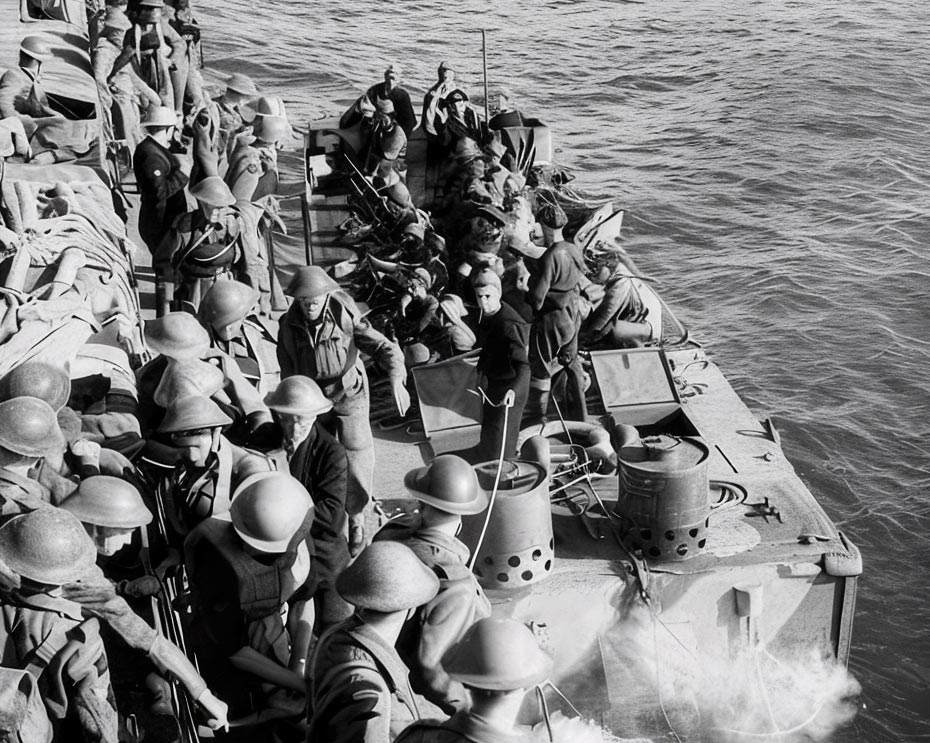
Like many young men, my father stepped off the farm, and out of logging, on to adventure, and enlisted for WW11 in 1940 at the age of 24. In August 1942, his large troop ship was mercifully well offshore in the salty, ocean water lineup of Canadian landing craft at Dieppe. As the battle ignited, his ship turned around to escape being bombed. He watched the troops exit the landing craft ramp further ahead of him, pulled by the tides into a deadly thunderous rat-tat-tat of machine guns. War had suddenly bent around them, sucking them in, and warping them like gravity around a black hole.
Nine hundred and sixteen soldiers were killed in sunny France at Dieppe in August, 1942. One thousand, nine hundred and fifty soldiers were taken prisoner.
***
Today, Kova goes to work at a secret naval military facility in Nanisivik, Nunavut. He got up early this morning to photograph a stunning sunrise on Artic Bay.
Today, Charles goes to ‘the sandbox’, a test site in Suffield, Alberta. He will test interceptor drones that can attack enemy drones weighing up to several hundred kilos. The drone he is testing can reach heights of 3,000 meters and speeds of 200 kilometers. Before he leaves, he holds and kisses his sleeping newborn baby boy.
Today, Lan steps onto a warship in Halifax for the first time. She spent the last few days celebrating her grandfather’s birthday with her family.
Today, Angus conducts drills at CAF Petawawa. However, his mind is on asking the love of his life to marry him.
Today, Najeet chats it up with the locals over a latte at Tim Horton’s in Kitchener before she heads for work assembling CT-Standard Issue Rifles.
***
My father kept silent about the war for many years; only sharing his experiences in his later life. Most of the stories I heard about the war were from my Dutch mother and her experience in Holland. My father never hunted on his expansive wooded property in rural Nova Scotia. He kept his army-issued rifle, but only to eliminate wild animals threatening his livestock. I would go to Remembrance Day services with him in the days when there would be many other soldiers there from WW11 and see and feel the grief for the families of the local men who didn’t return.
We are asked to remember those who have died bravely for peace, and we wholeheartedly do. However, war continues to threaten, bend and twist globally. We experience the juxtaposition of living in peace in Canada, and at the same time boosting our war machine. However, as much as we may have to prepare for the possibility of war, we can make our charging cry one of peace and as a country and in our own daily lives practice peaceful solutions to combat lies, hate, power and strife. My father was a man of peace. That’s what he would want us to remember. I am so grateful and indebted to him, and to the many whose lives were sacrificed and didn’t come home. So much love has been lost because of war.
“There’s a lovely girl who waits for me, and thinks that I’ll come home.… There’s a photo that she gave to me that lies closely by my side. You can scarcely recognize it now for with my blood it’s dyed.” (The Once)
