

Reflections from the Swamp

Dear Reader
Most years, we wander across the swamp to the Isthmus of St. Patrick on St. Patty’s Day. This year, my knee isn’t up for the pilgrimage. Although it’s cold, we can’t trust the pond ice to hold us up. Years ago, I placed a copper pot full of gold-colored pyrite stones on the Isthmus and let my grandchildren discover the pot of gold left by the leprechauns. We never take the gold from the pot; we want our leprechauns to feel safe to return when the summer rainbows return to the swamp. The rainbows always start on the Isthmus.
The Irish settled Corkery at about the time of the potato blight in Ireland. Peter Robinson led the immigrants up from Brockville on foot in the 1840s. The Protestants settled in the fertile Carp Valley while the Irish Catholics settled in the rocky, swampy areas around Corkery. You can still see many of the log buildings built by the Irish when you drive through the area. Many of their descendants still live here. Corkery Church is the second-oldest church in the Ottawa area.
This is a story about the Irish coming from Ireland during the potato famine to Corkery.
St. Patrick’s Exile
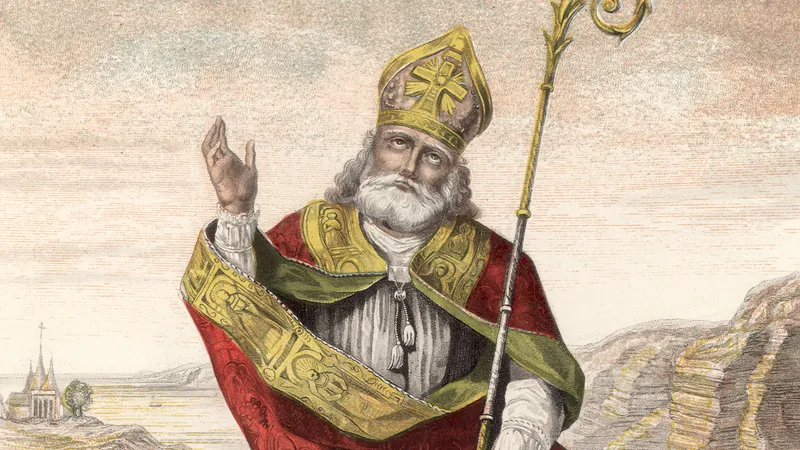
The cottage is frightfully cold and barren.
Country Cork is awash in starving souls,
Black plague on the potatoes has rotted every one of them
Communal plates are empty; despair has stolen the glimmer from the eyes
Hunger fills the seat by the door, Grim reapers harvest their dead
Cottages are burned when emptied; the day of reckoning is neigh
Old toothless Sarah is babbling again. She speaks,
“The days of miracles and wonders have fled with St. Patrick’s snakes.”
The Groffels have come slivering into the house through the cracks
You can’t see them yet, but I know they’re here
They smell of retching and sulphur eggs;
They’ll eat our corpses and chew our bones
Grasp your crucifix with outstretched hands.
Groffels can’t abide our Lord or his mother.
The child implores, Sarah, what might a Groffel be?
Is he like the weasel that bleeds the chickens, or more frightening than that?
Sarah looks through the child and stares into the empty hearth.
The Groffel is a devil, he is. Sometimes standing on his goat-like hind legs,
with a face like a fox. Other times, he is dressed in a scarlet tunic
, carrying a musket, or sits in court wearing a magistrate’s wig.
The devils feed on starving souls.
It wants us to die so it can sit in Papa’s chair and smoke his pipe.
It can create a fire in the hearth without wood by breathing on stones,
I could tell you more, but I can barely make out what it says.
It speaks in the tongues of fallen angels.
Frithering opnobs. Crusuating blither. Frath pestilates op nathering corpulas.
Making sense of it all is hard. I don’t know what it means,
but I know these words are all curses and spells.
The Groffels want us gone like the pox.
The landlords want our land, and the devils want our souls
The Devils own most of the world.
They have sailed to every corner and planted their flags.
They have stolen the lands from all of the people
and now need people to till the soil, even their starving Irish people.
They want us gone and will give us passage to the New World
just to be rid of us. They have land beyond imagination and will give it to
those who will work it. So it has been said.
And Sarah, inquires the child,
“Shall we too leave this place and sail to these lands to till the soil?
Will there be food for us all? Do the potatoes grow without the blight?
Oh, Sarah, take us to this place. Let us join our neighbours and the priest
and be rid of this deadly, cursed place.”
Yes, my child. The priest is urging us all to go.
He is bringing the statue of St. Patrick with him
He is going to the new Corkery in Upper Canada.
There is a tree of life in a garden that beckons us to come
The fields are covered in potatoes as far as the eye can see
There are a hundred acres for every family for the taking.
There are trees aplenty to build a new home
and barns to fill with our own potatoes, cattle and sheep.
We will know all of our neighbours, for they’ll be our kin.
St Patrick is leaving his perch in the town square
He is leaving Ireland to sail with us. He will not abandon us.
We will place him in the church when we build it.
There are Groffels everywhere, but few have found a haven in the New World.
Hope still lives in the New World, where the Groffels can’t abide the cold.
And so they set off for the New World with hope in their despair.
Though some died on route, they reached the great rivers
and walked the forests for weeks before finding their lands.
They came to the swamps, rocks and trees, making a home in the wilderness.
They brought with them St Patrick, the fairies, leprechauns, and Mary, but left the Groffels behind.
St Patrick stands in the church in Corkery, while Mary greets us outside on the lawn.
It’s as if there had never been anywhere else.
