


When we are experiencing polar temperatures, we like to think about our warm weather pastimes at the cottage. We have written a number of times about warblers at the cottage, perhaps because we see at least a dozen different species each year. Some we see often; for example, the chestnut-sided warbler. Others much less so, but we love them each and every one. After all, warblers eat insects, for the most part the larvae or caterpillar stage. We would love warblers more if they were to eat more mosquitoes, but such small insects are not warblers’ primary diet.
A true summer warbler, we see the chestnut-sided warbler throughout the summer, from early May when they begin to return from the Caribbean to early August when they leave for warmer climes. A long-distance migrant, the chestnut-sided warbler ranks high on our list of favourite birds, meeting at least two criteria. The first is ease of identification with the male’s yellow crown, black mask, and chestnut sides. The female displays a dull yellow crown and most helpfully the chestnut sides as well. The second criteria is its love of insects especially caterpillars. Chestnut-sided warblers nest about six feet above the ground in the deciduous trees and shrubs of the forest understory.

Other summer warblers begin to show themselves in August.
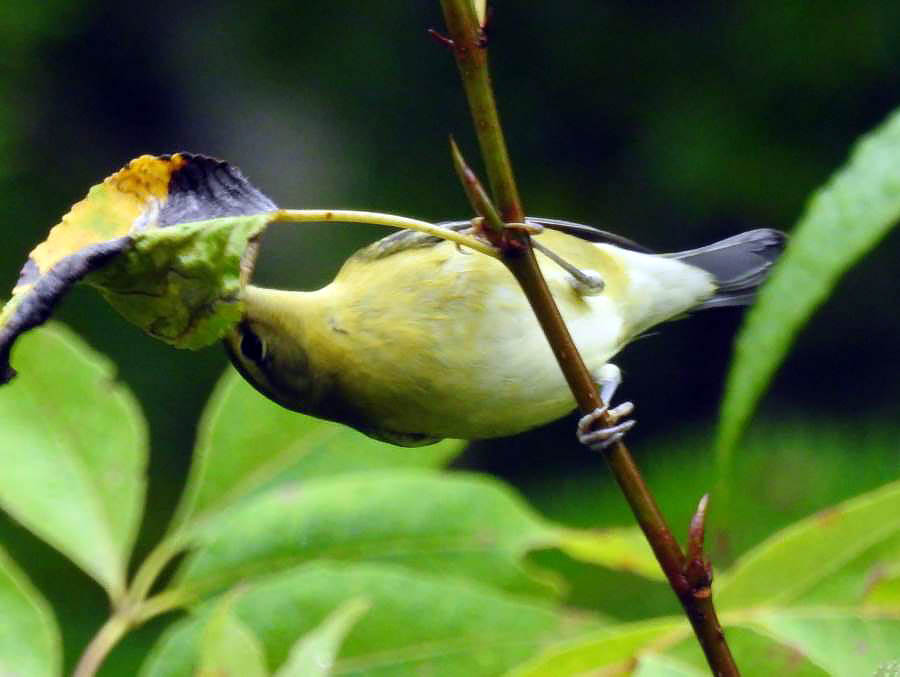
Named after an American state, the Tennessee warbler is one we have seen only once. Our sighting in late August, 2022 was likely early in its fall migration from its breeding grounds in the boreal forests well north of Lanark where it breeds and conceals its nests near the ground. During the summer, 90 per cent of the food it takes to its young is caterpillars. Although the Tennessee warbler also preys on beetles, spiders, and wasps, in the fall and winter the adult will forage for fruit in the form of berries as well. This warbler’s colouring provides excellent camouflage, so more could be flying through Lanark and we simply have not been fortunate enough to see them. The Tennessee warbler has a long flight to its wintering grounds in Mexico and Central America.
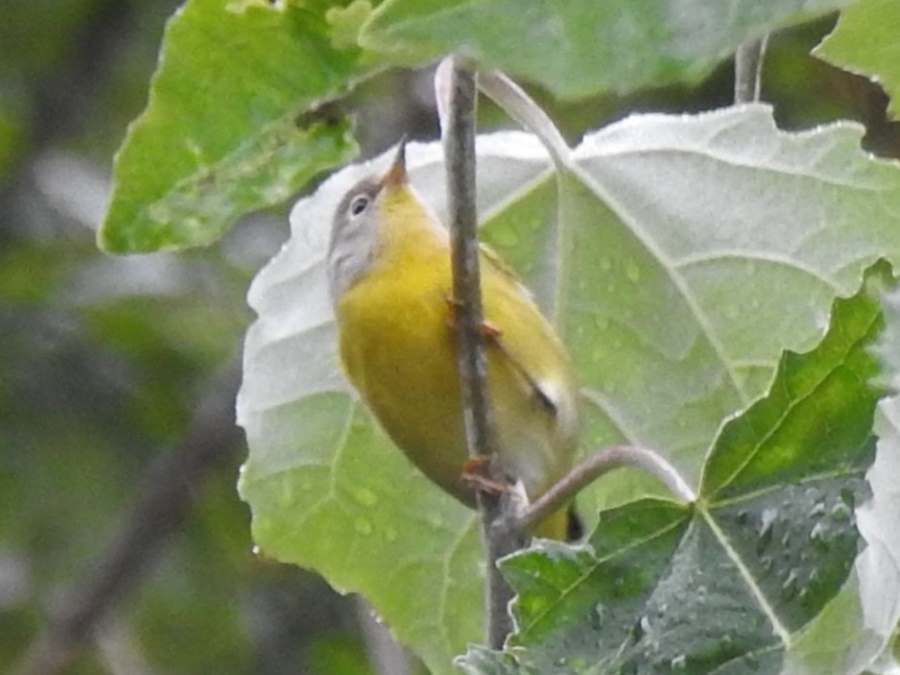
We have not seen the Nashville warbler very often, only four times since 2006. One of those years was 2025. Like all the warblers we know in Lanark, the Nashville warbler’s colouring provides excellent camouflage, with its yellow underside, olive-green back, and grey head blending in well with the shrubby forest growth it seems to prefer. The excellent camouflage could be one reason we have seen so few, but its distinctive eye-ring helps us identify the Nashville warbler once we are looking at a good photo. This photo was taken September 6, 2025.
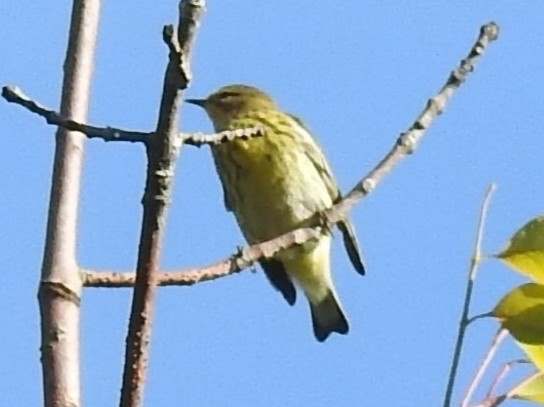
Staying with American place names for another moment, the Cape May warbler also migrates through Lanark on its way to and from our northern spruce forests where it feasts on the spruce budworm. If the year is bad for spruce budworms, it is good for Cape May warblers. Autumn is when we have twice seen a Cape May warbler, undoubtedly returning to its wintering grounds in the Caribbean via Lanark. We would love to see one in the spring to see the male’s breeding colours of rich olive green, rufous cheeks, and striped breast. This photo was taken August 31, 2022.
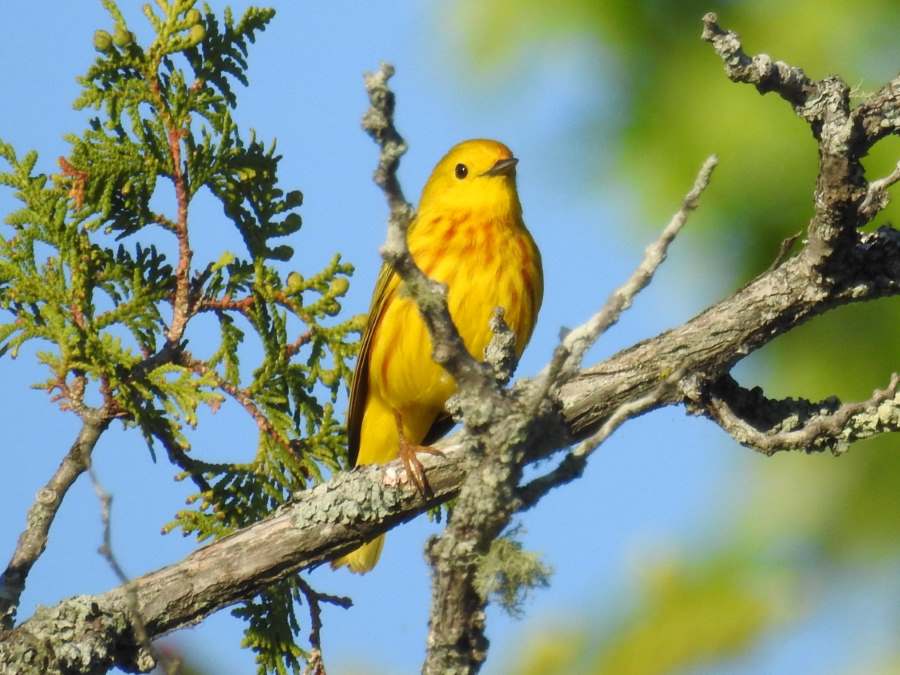
We have seen a yellow warbler four summers since 2006 when we bought the cottage. Each time is a thrill. The ones we have seen could have been nesting nearby, as their summer breeding range includes Lanark. Yellow warblers are insectivores and include moth caterpillars in their diet. Classified as long distance migrants, even the ones that breed around Hudson’s Bay, winter in Central and northern South America. During the summer they can be found amongst dwarf birch stands on the tundra or the slender branches of shrubs and small trees in Lanark. This little yellow warbler was perched on a cedar branch in the Lanark Highlands in June one year.
Most of our summer warbler visitors migrate through our region from late spring through late summer. And, all eat moths! Whichever form of the insects they eat, we love them all. May is only 4 months away! We are looking forward to it even now.
For this article, we referred to Jeffrey Domm’s Lorimer Field Guide to 225 Ontario Birds, Chris Earley’s Warblers of the Great Lakes & Eastern North America, as well as AllAboutBirds.org.
