


The most plentiful wildlife at the cottage are the insects. Of these, wasps are one of the most numerous. We have so many species of wasp at the cottage, we could write about a different one each month of the year. All species of wasp have a number of features in common, including two pairs of wings which fold along their bodies when at rest; slender hairless bodies; and, thin waists. Beyond these similarities, wasps have various specialist roles.
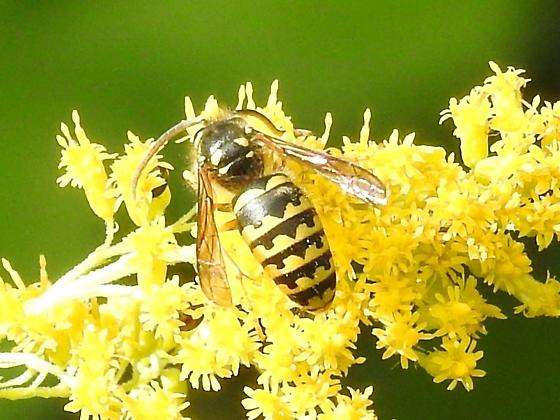
Possibly the most numerous wasp at the cottage is the common aerial yellowjacket. They provide an extraordinarily important range of ecological services, specifically through pollination, predation, and parasitism. Without these wasps, we would be overrun with insect pests. Yellowjackets scavenge dead insects to feed their offspring, meaning they prevent the bodies from piling up, like a cleaning service. Unfortunately, their scavenging habits and love of sugar brings them in close proximity to us and our picnics, and that seldom ends well. In addition to hanging out with us, they frequent and pollinate our goldenrod and black-eyed Susans, amongst other road-side plants. Yellowjacket workers also prey on live arthropods such as grasshoppers, crickets, caterpillars, spiders, flies, lacewings, and even ladybird beetles.
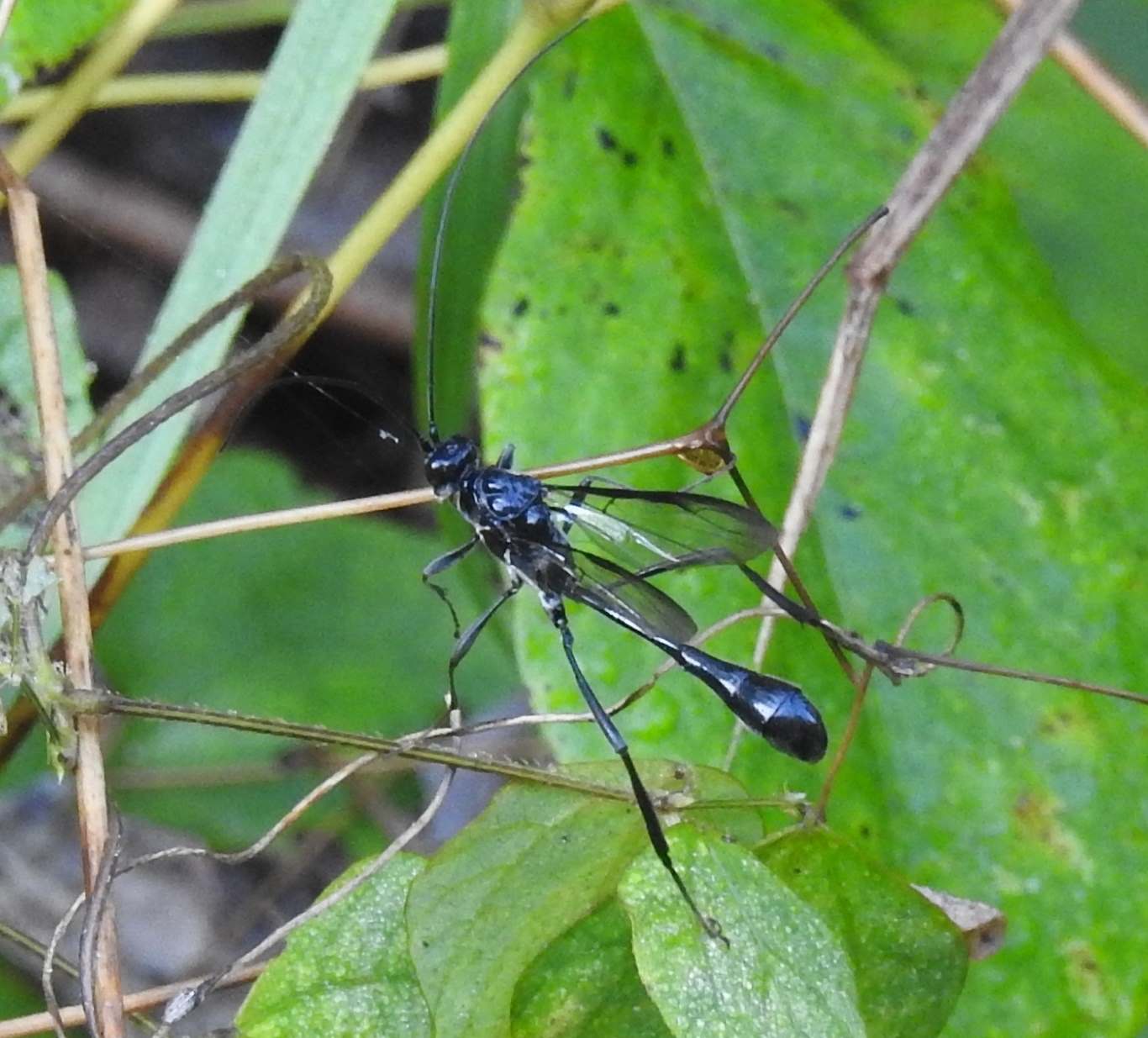
You can be forgiven if you didn’t immediately recognize the American pelecinid as a wasp. It doesn’t sport the yellow-and-black stripes we usually associate with this group. The female reminds us a bit of a scorpion. On the females which we seem to see most often, that dangerous-looking hind end isn’t a giant stinger, it’s the female’s abdomen, modified into an ovipositor for laying eggs. The female wasp uses her ovipositor to poke into the ground until she hits a June bug larva. She will then deposit a single egg into the grub. When it hatches it will feed on and kill the June bug. If you don’t appreciate grubs killing your lawn, thank the American pelecinid wasp for her services! We do not see the male nearly as often, so we were delighted when our intrepid photographer captured (a shot of) this one. You can see that it does not sport the long abdomen of the female.
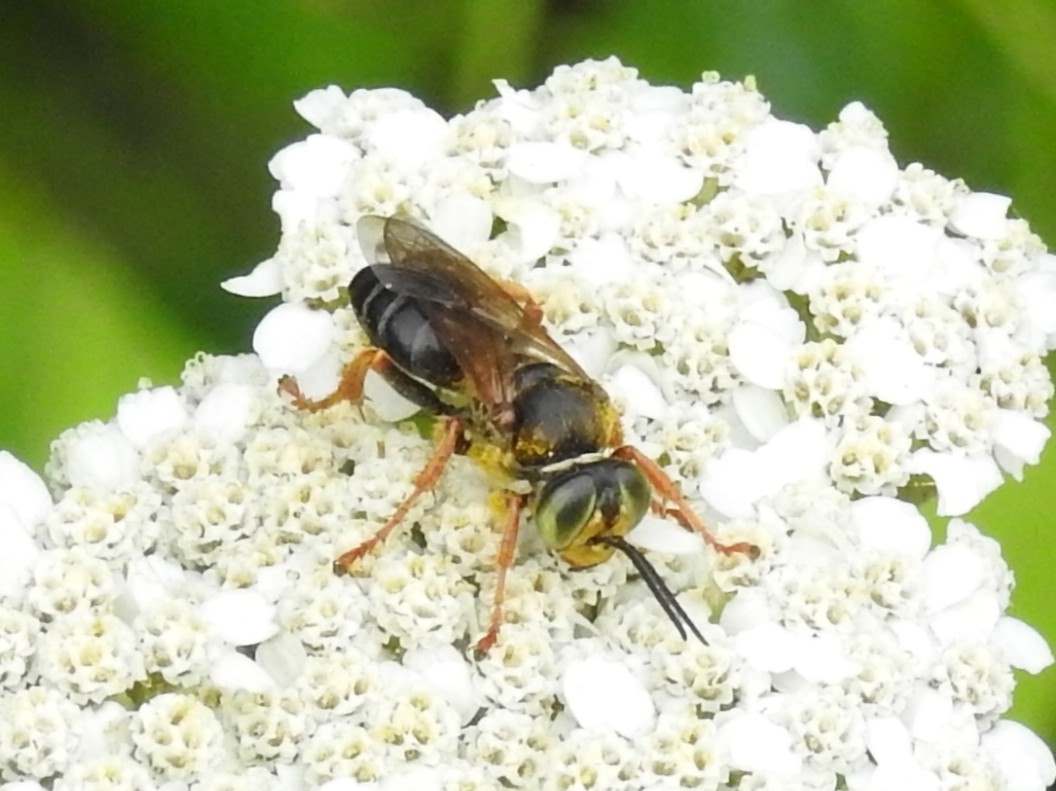
Adult square-headed wasps derive all of their nutrition from visiting flowers, and they are often seen in late summer on flowers such as milkweed and goldenrod. However, since most square-headed wasps are predatory, they are not supping the flowers’ nectar; rather, they are using the flowers as a hunting ground where they paralyze prey insects including aphids, leafhoppers, flies, beetles, crickets, cicadas, spiders, and caterpillars before flying them back to their larvae in a nest in the ground, a plant stem, or a rotten log.
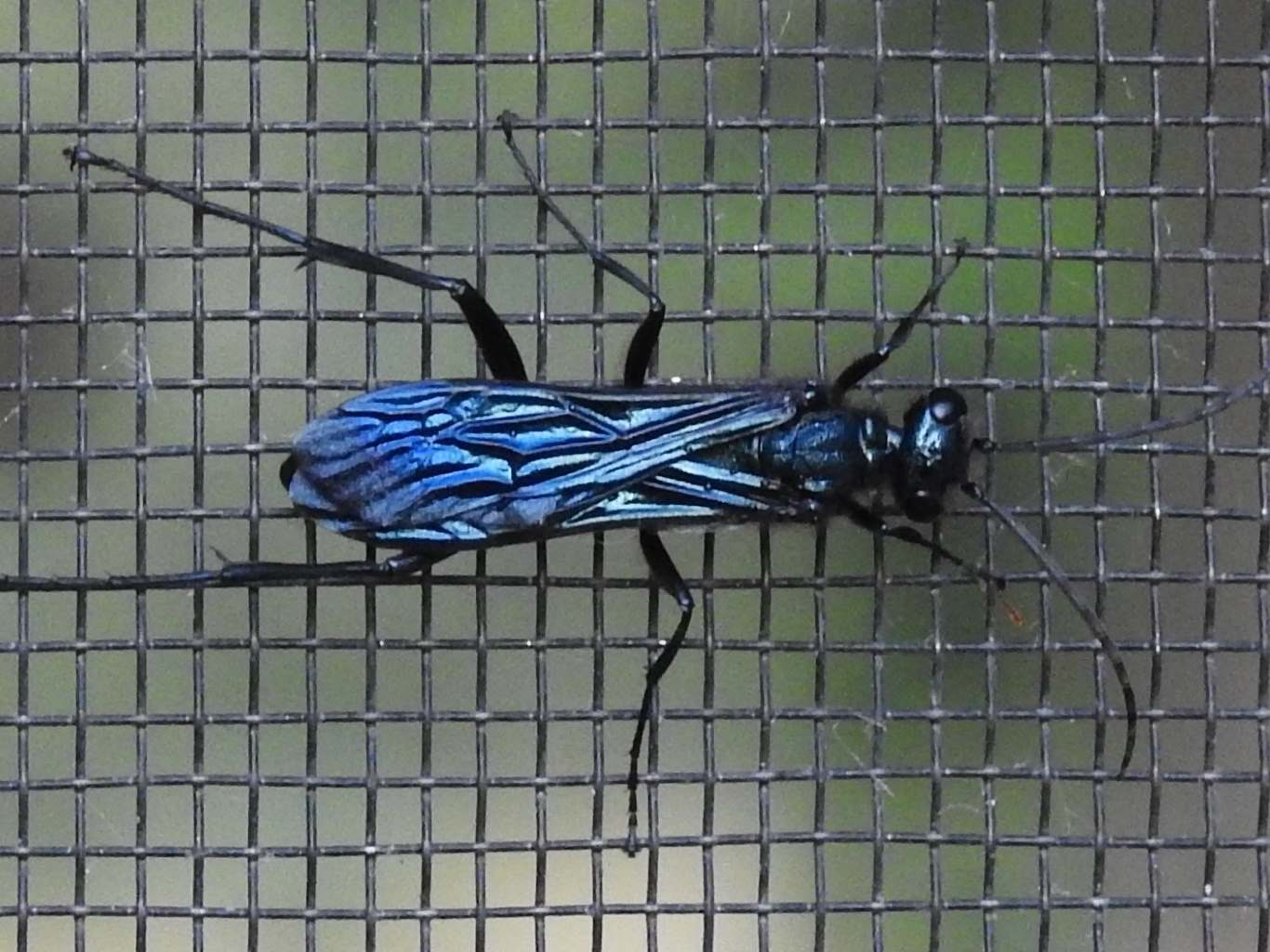
The common blue mud dauber wasp is a metallic blue species of mud dauber. It is not normally aggressive towards us, especially the males which cannot sting. Females can build their own nests, but often refurbish nests abandoned by other wasps and bees, removing remaining, old larva and placing their own egg and freshly caught spiders. We see this mud dauber through the height of summer, often on flowering spurge. Of course, this one was inside our screened-in porch.
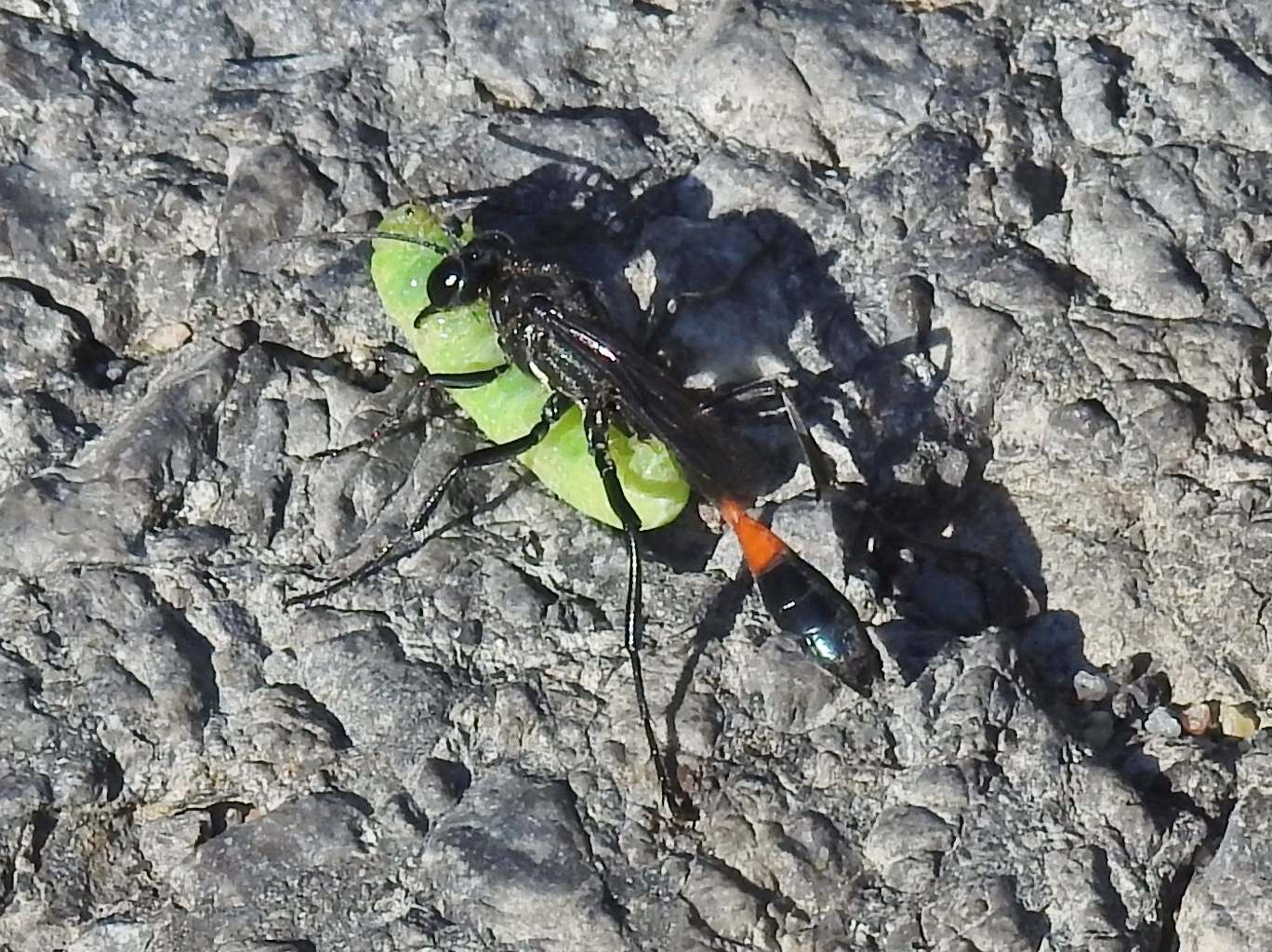
We see many common thread-waisted wasps which are found throughout southern Ontario. They generally live in open areas with soft or sandy soil where they can burrow nests. Our corner of Lanark has soft sandy soil in abundance. The adult female burrows in sparsely vegetated sandy soil such as the cottage roadsides. She captures and paralyzes prey which she drags to the burrow where she lays a single egg on the prey. The wasp larvae feed on the prey before pupating, soon emerging from the nest with fully formed wings. The adults feed primarily on flower nectar. We see the adult common thread-wasted wasp feeding on the nectar of various plants including black-eyed Susan and goldenrod. In this photo, an adult is taking a caterpillar to its burrow.
The wasp species of Lanark fulfill many important ecological roles. Unfortunately, they do not always receive the credit they deserve for their importance keeping pest insects under control and pollinating plants.
Our library does not have a wide selection of books about wasps, but one we found particularly interesting and useful was Heather Holm’s A Guide for Eastern North America Wasps.
