


The wildlife we see at the cottage eat a wide variety of foods, from seeds, nuts, insects, and snails to sap and nectar, amongst many others. Perhaps it is those which feed on nectar that seem to be the most gentle.
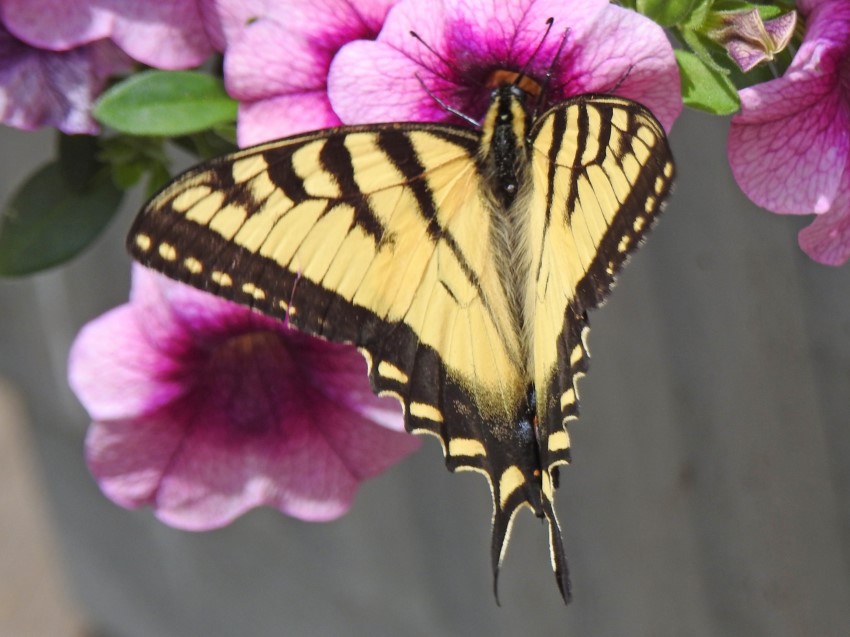
A nectar-feeder we love to see is the tiger swallowtail which is a butterfly which visits each year, starting as early as late May and ending in early August. Some have been identified as Canadian tiger swallowtails, others as eastern tiger swallowtails. Some have even been identified as midsummer tiger swallowtails, a hybridization of the two and increasingly recognized by scientists as a species. Non-experts that we are, we stay away from trying to identify these beautiful butterflies to species, staying at the higher taxonomic level of genus. The tiger swallowtail in this photo, however, was identified by an expert as a Canadian tiger swallowtail. It was feeding on the nectar of a mini petunia on the lakeside deck.
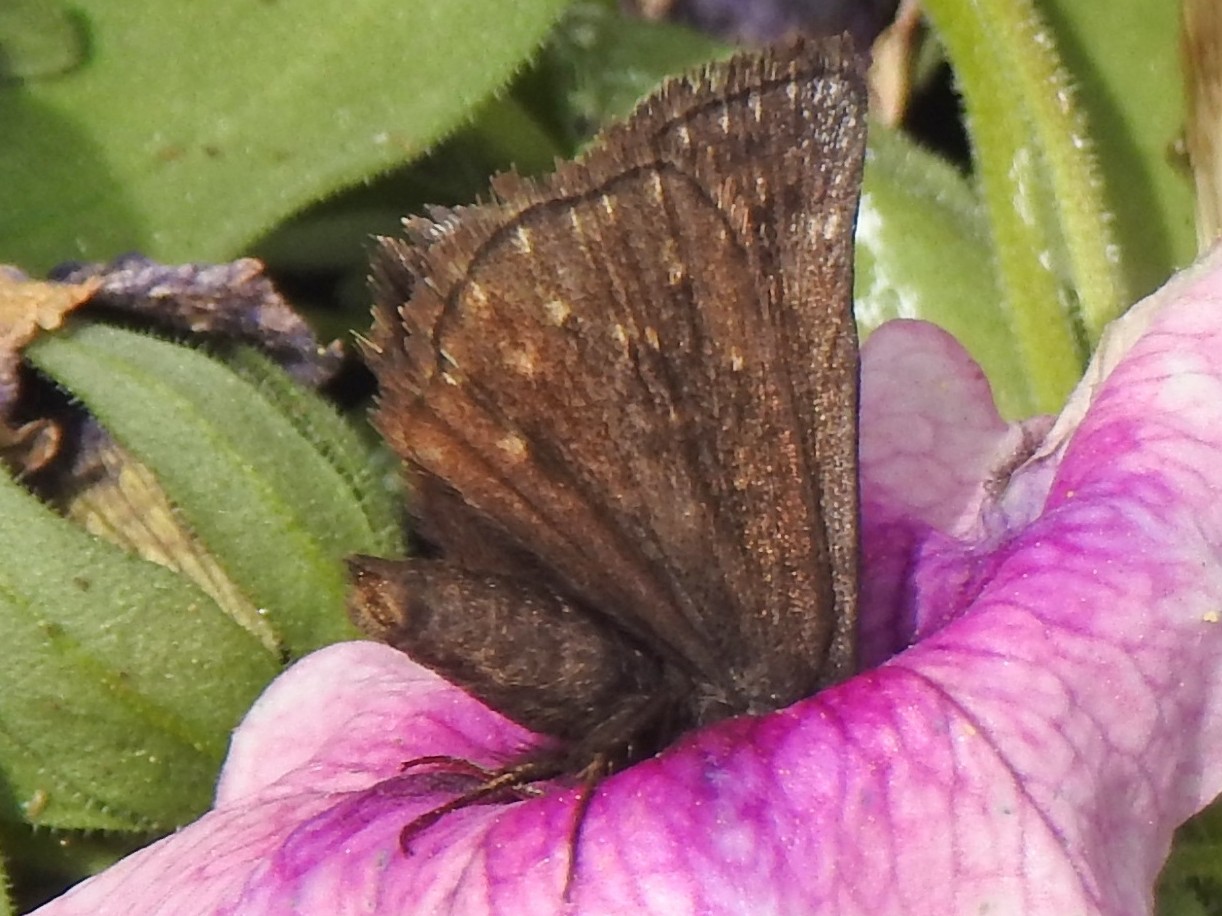
A butterfly that is not a true butterfly is Juvenal’s duskywing skipper. Skippers are a distinct group of insects which looks a lot like true butterflies but have a stockier body, hooked antennae, and fly in an erratic fashion. Despite these differences we find it extremely difficult to differentiate between true butterflies and skippers. We have had to memorize the names of the skippers we see, knowing they are not true butterflies. We think of them as cousins to butterflies and moths. Scientists probably would not like that characterization. We see Juvenal’s duskywings most years in May. Their habitat includes areas with oak trees and scrub oaks both of which we have in abundance. Often we have photographed them on columbine but clearly in this photograph it loves the petunia.
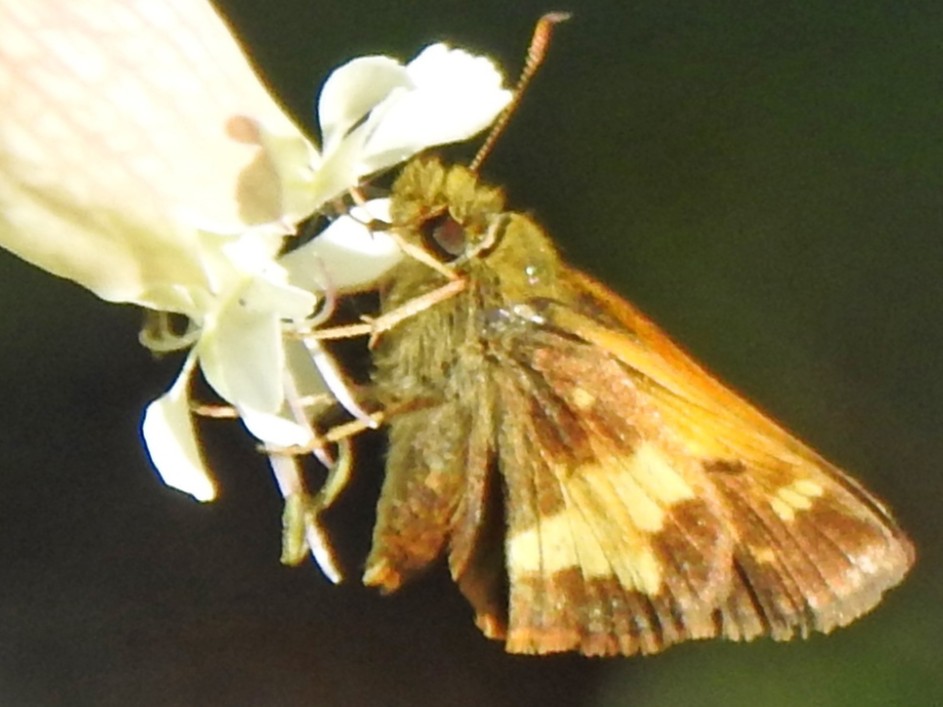
Another skipper, this hobomok is feeding on the nectar of a bladder campion (wild flower) along the roadside. We have seen the hobomok skipper every year since we first identified one. They fly between very early and late June, which is a short window of time. As we have said before, once we learn to identify an insect, we tend to see it repeatedly. The hobomok skipper is one of only a few species of grass skippers found in Ontario, so named for the grasses which host the larval stage. This pretty species of skipper is energetic and has captured our hearts.
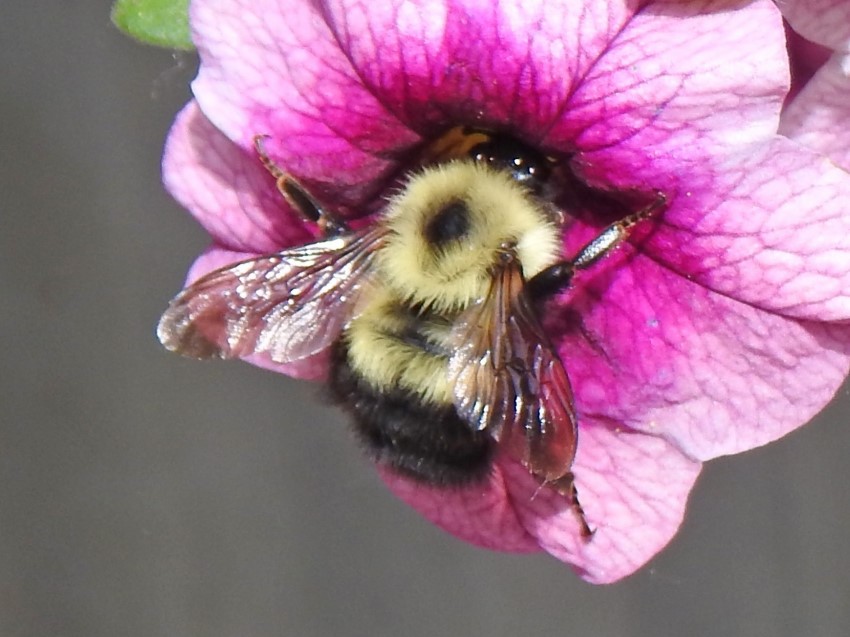
On the same petunia, the same day in June this year as the swallowtail and duskywing, a common eastern bumble bee made an earnest effort seeking nectar as you can see with its head buried deep in the petunia’s trumpet-shaped flower. We see this gentle bumble bee each year. As long as we stay away from it, the bee ignores us. Once though, when the creeping thyme, which runs wild through our ‘lawn’, was providing a beautiful outdoor purple carpet, one of us was stung on his toe. Apparently, common eastern bumble bees take great exception to being trod upon. Shoes or sandals are called for. We have at least four species of bumble bee at the cottage, including the tricolored, northern amber, and the brown-belted. All drink nectar.
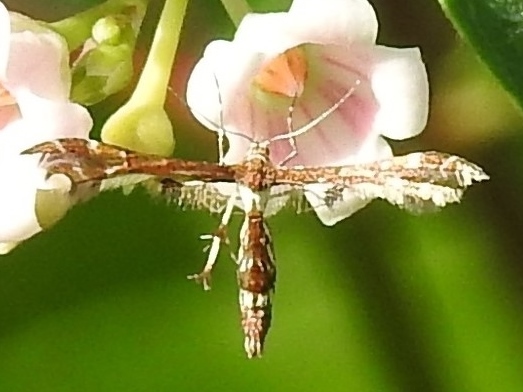
Our photos of moths tend to be of diurnal moths, those which fly during the day. Occasionally a nocturnal moth is late to home after the party and we are able to photograph it, as happened with this Busck’s Plume Moth which we saw early one morning a few years ago. When opened out, a plume moth’s wings are narrow. When at rest the moth rolls its wings tight, ending up resembling twigs or detritus, making an effective camouflage for this weak flyer. This plume moth is sipping the nectar of our native dogbane plant.
All five of the insects we have talked about have specially-adapted tongues which allow them to access the nectar of flowers. The proboscis of the butterfly, skipper, and moth is a long, narrow tube which functions much like a straw would for us. These straw-like tongues curl into tight coils when not in use. The bee’s tongue is also long but functions more like a sponge to draw nectar into the bee’s mouth.
Amongst the many different foods eaten by the wildlife we see at the cottage, one of the most interesting is nectar. The unique and almost whimsical ways nature has adapted butterflies, moths, and bees to take advantage of the nutrients of nectar places it high on our list of natural curiosities.
For this article we checked some facts using The ROM Field Guide To Butterflies of Ontario by Peter Hall etal. We also looked at David Beadle’s Peterson Field Guide to Moths of Northeastern North America; and, John Acorn’s Bugs of Ontario.
