


Every year, after making it through a winter full of blustery weather, we are happy to see the reawakening of mother nature, especially at our cottage on White Lake. A number of hardy plants bloom early and many birds migrate in early spring, putting themselves at risk of arriving before it has warmed up enough for all the snow and ice to have left. This article looks at just a few of the flowers and migrating birds that are early arrivals. All of these photographs were taken in early May, during the first days we moved to our cottage for the season.
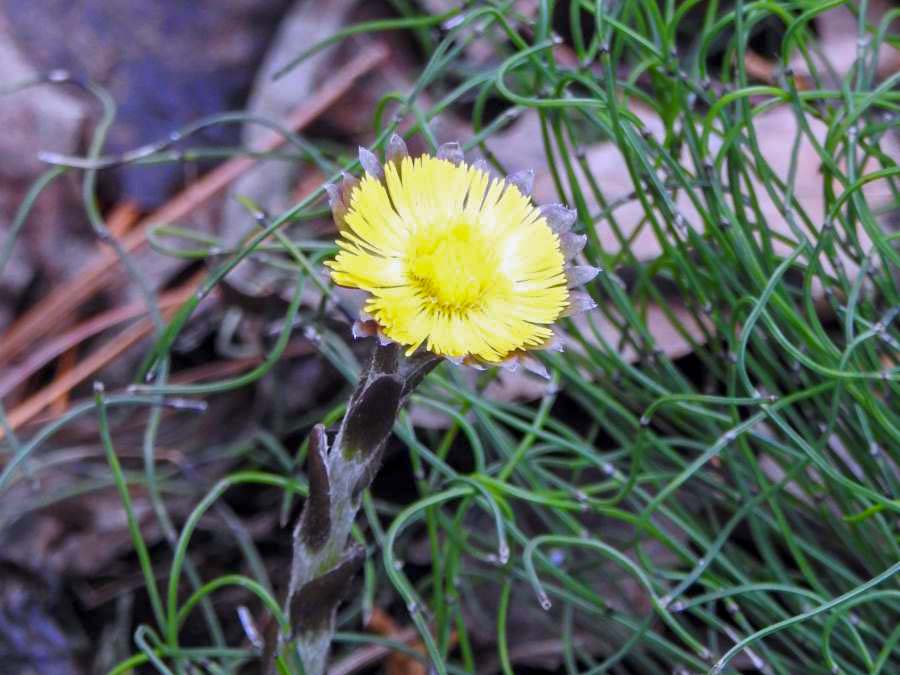
Coltsfoot is a member of the aster family. This perennial grows in moist, disturbed soils. This photo is of a plant growing beside our boat house, very close to the water. It is one of the first plants to flower in spring, as early as March. The leaves do not appear until after flowering. The leaves are shaped like a horse’s hoof, hence the common name for this plant. The yellow flowers can be seen from March to June.
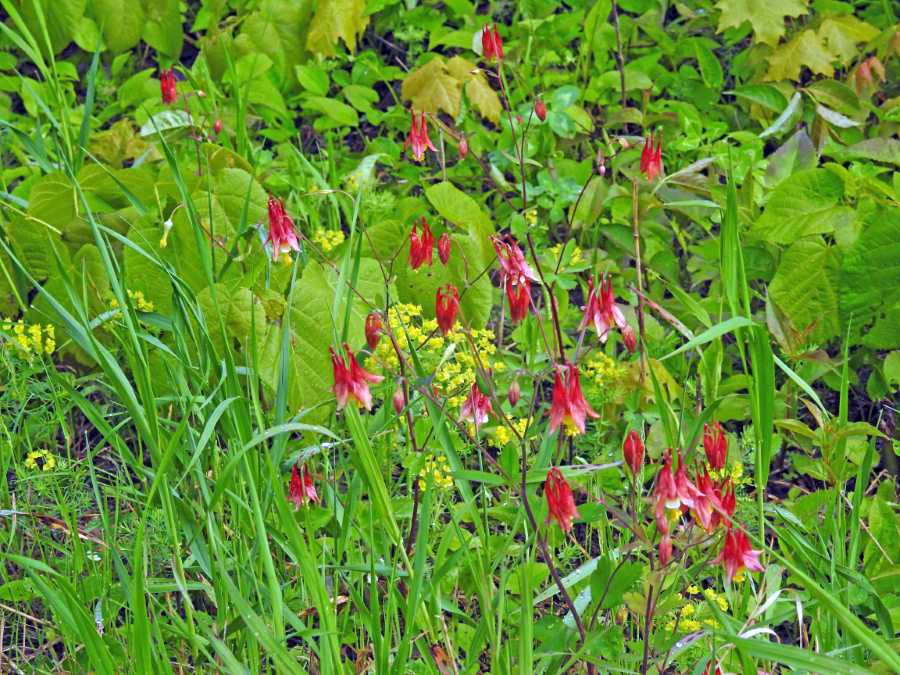
Columbine is a member of the buttercup family. It is a perennial that grows in dry soils. We even have some growing out of cracks in the erratic boulders around our cottage. The plant’s red blooms can be seen from May to July. Blossoms are frequented by hummingbirds and butterflies.
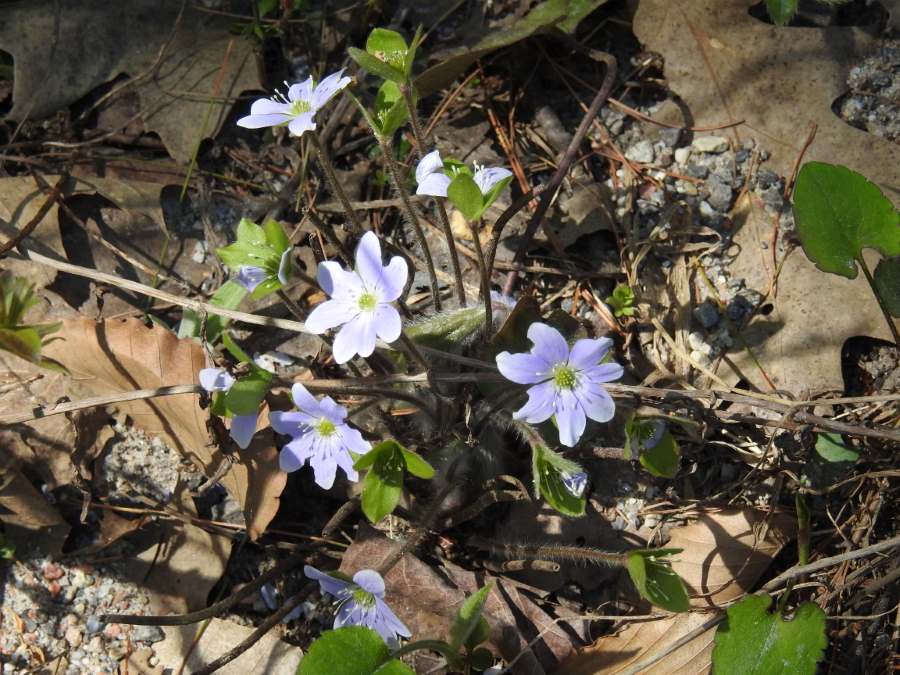
Hepatica is another member of the buttercup family. Its other common name is liverleaf because the lobes of its leaves are similar in shape to the liver. Our field guides note that the stems of this plant are covered in long hairs to protect them from the cold. The flowers can range in colour from white to pink to blue. Blooms can be observed from April to May.
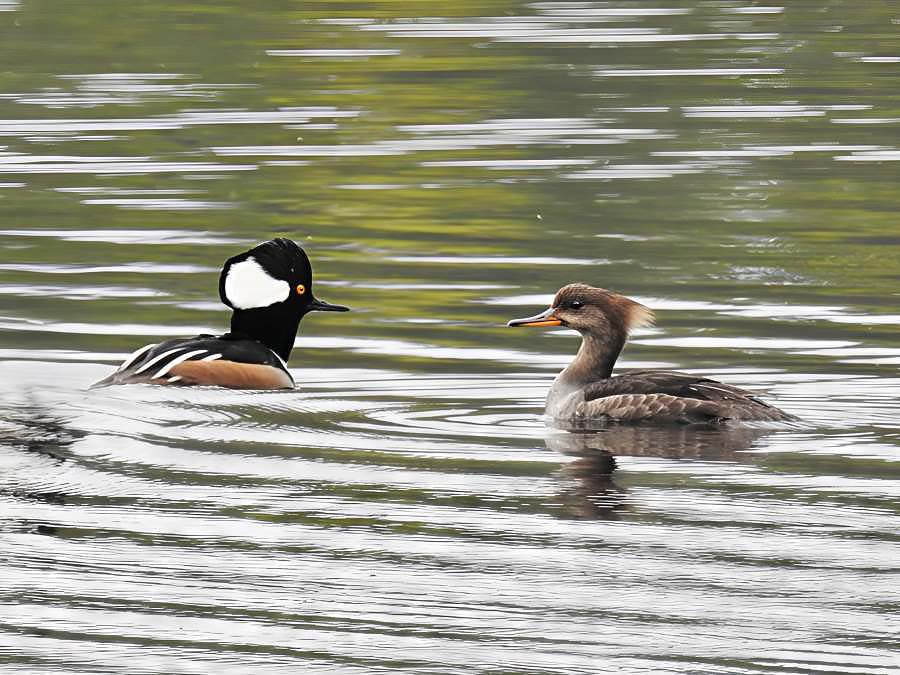
The hooded merganser is the smallest of the three species of mergansers we see at White Lake, with adults growing to 40 – 49 centimeters in length Both the male and female have crests that they can raise or flatten. They dive to feed on fish, aquatic insects and crayfish, preferring clear, shallow fresh water lakes. The male is on the left and female the right.
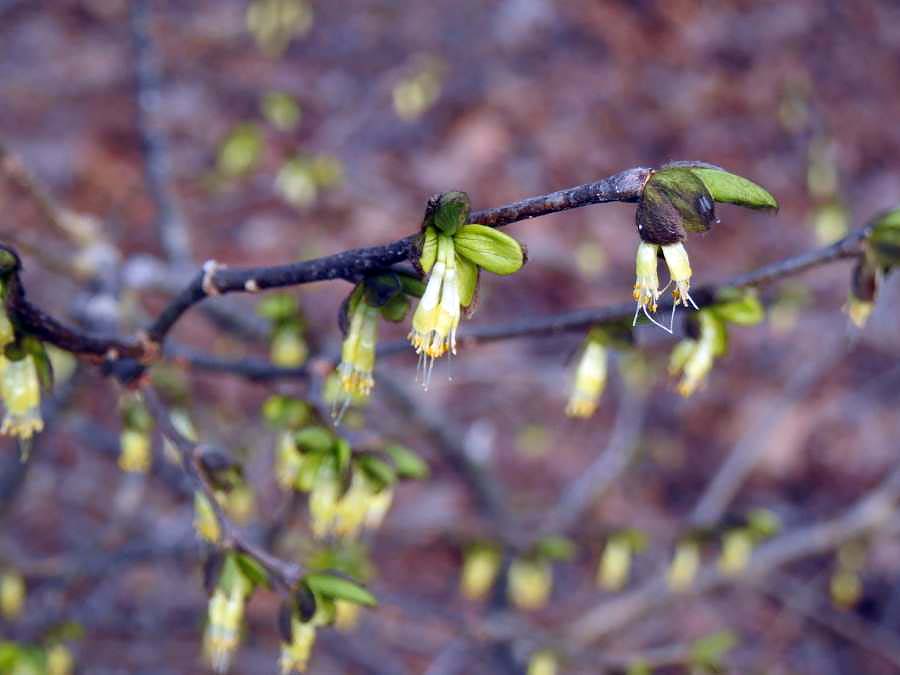
Leatherwood is a woody shrub that grows in deciduous forests. Its pale-yellow flowers can only be seen in May. Our field guide notes the bark is pliant and so tough that it can hardly be broken by hand, hence the common name. Deer like to eat the twigs and leaves of these shrubs.
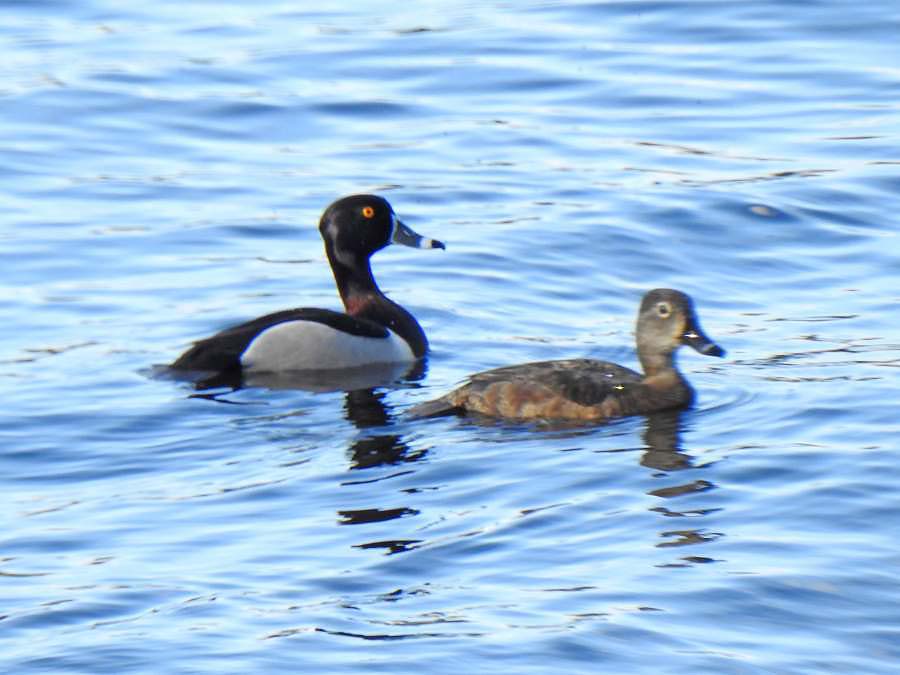
The ring-necked duck is a common, medium-sized diving duck. Adults can grow to 38 – 46 centimeters in length Both the males and females have distinctive white markings on their bills. They feed by diving, tipping, and dabbling for aquatic plant tubers and aquatic invertebrates including clams and snails. This male (left) and female (right) were likely just stopping over during their migration to nesting areas further north.
Whatever the reasons for these early arrivals, we take much delight in seeing and photographing the earliest biological signs that spring is on its way.
We relied on four field guides for this article: Timothy Dickinson, Deborah Metsger, Jenny Bull and Richard Dickinson’s ROM Field Guide to Wildflowers of Ontario; Roger Tory Peterson and Margaret McKenny’s Peterson Field Guide to Wildflowers of Northeastern and North Central North America; George A Petrides’ A Field Guide to Trees and Shrubs; and, David M. Bird’s Birds of Eastern Canada.
