by Edith Cody-Rice
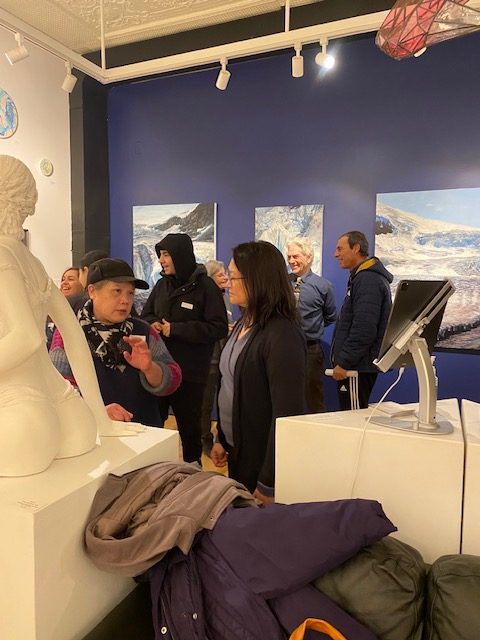
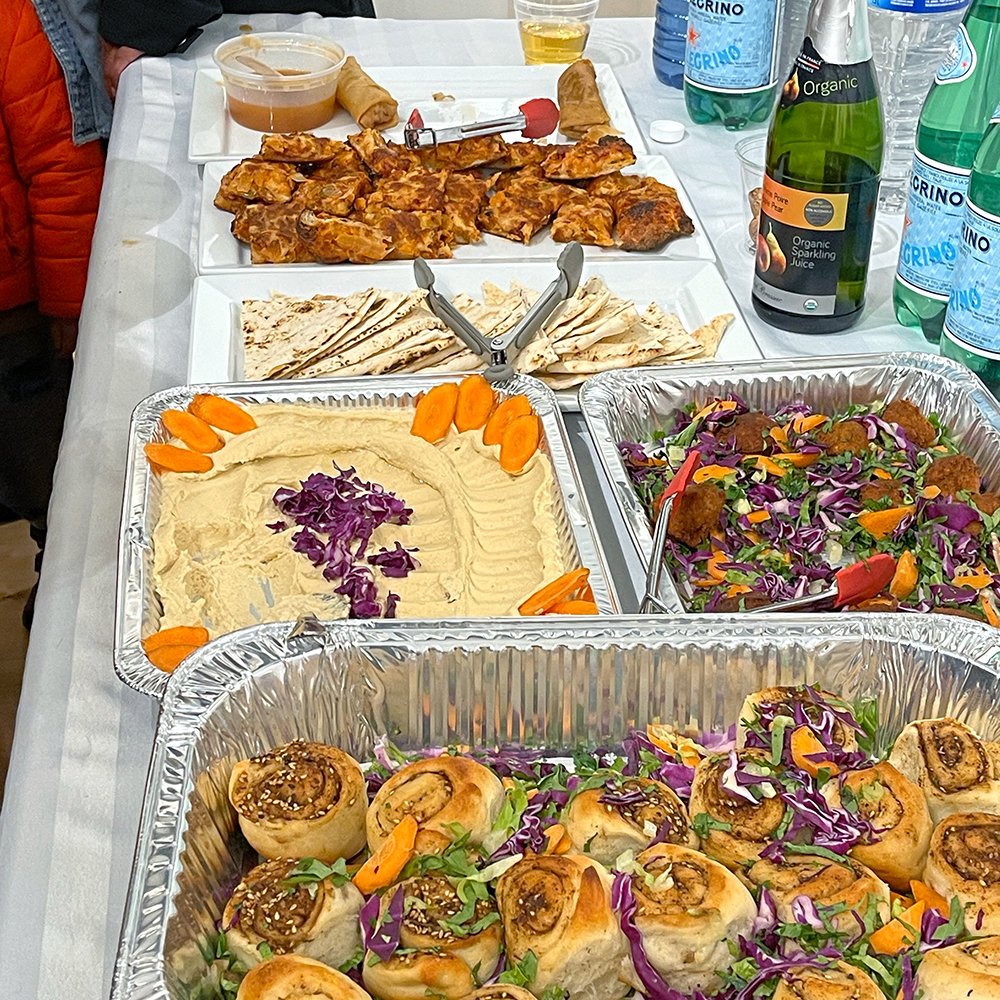
The Mississippi Mills Inclusion Project, a significant and needed initiative to welcome all residents of the region, got off to a successful start at the Sivarulrasa Gallery on Sunday afternoon. Attendees chatted while enjoying the delicious food provided by Jessica’s Syrian Food, the Canadian Cafe (spring rolls), and Pizzaria Unlimited (Bollywood Pizza).
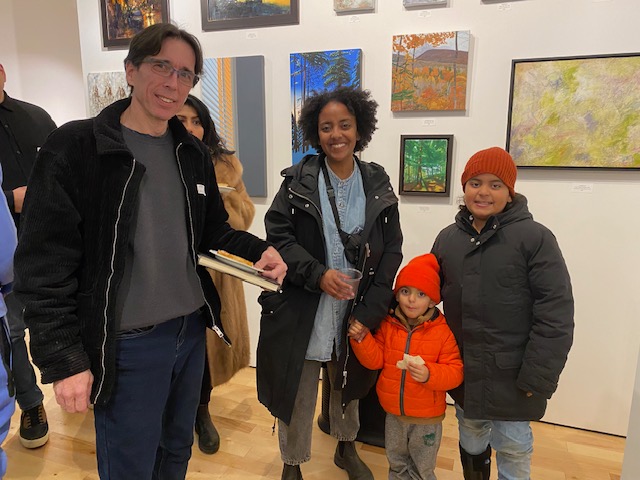
The crowd included people who have lived in the area for many years as well as new arrivals. I chatted with Bel, who lived in Carp but has moved to Perth, as well as Jay Wisintainer, owner of Nomad Fashions on Mill Street in Almonte. He has been in the area for 15 years. Sanjeev Narula, on the other hand, is a new business owner in town who is opening a Beckers store on the site of the abandoned convenience store on Bridge Street, a welcome addition.
Sanjeev Sivarulrasa, owner of the gallery said of the afternoon,
I think the Mississippi Mills Inclusion Project is a wonderful initiative for our community. It brings together people of all backgrounds so that everyone feels valued and welcome. I think it is especially important in this Bicentennial year to celebrate the multicultural diversity of Mississippi Mills, and the December 10 “Multicultural Meet & Greet” was a great way to start this type of positive engagement in our community.
As Sanjeev has pointed out there are approximately 1000 people living in Mississippi Mills that are Indigenous or visible minorities. But we frequently do not see them participating in local activities or events.
Bel gave the following assessment,
Equity Diversity and Inclusion have become buzz words recently, with many organisations, clubs and groups wanting to focus on how to address systems and structures that have encouraged inequities and lack of diversity in our communities.
Projects like the Inclusion Project in Almonte are so important as they target specifically visible minorities that may traditionally or regularly be excluded from activities – whether by accident or because the design of festivities, projects and activities do not allow minorities to attend. For example, there might be barriers to participation because of the timing of the activities, there might be need for day care, maybe because of the need to juggle multiple jobs or simply because activities do not reflect their own cultural traditions and celebrations. There might also be a case of an expectation of one-sided assimilation into a culture that is still foreign versus a celebration or acknowledgement that minorities have a different culture that needs celebration as well.
It is also important that inclusion is not just a form of tokenism, a check list of things to do.
I think that having a project like this is a big step forward, something to be celebrated, and nurtured. I wish the project much luck and much support within the community.
She says it well.