

EDITOR’S NOTE AND DISCLOSURE: This story started as a question to an AI app about claims I’ve seen online that we all, very likely, breathe in atoms emitted by famous people centuries ago. All the research I did confirms this theory. I then asked Claude AI to write an article about the topic, and what you see below is what it gave me, aside from a few minor edits I made.
The writing quality was quite decent—not dissimilar to what I would have written myself. (I’m fond of em dashes for one thing—something AI is accused of overusing.) But does this mean that the Millstone will now be written by AI apps? No. While AI may be proficient at writing articles of this kind, in its current form it certainly couldn’t do well on topics of purely local interest. Still, I was impressed by what Claude gave me. Even a year ago the results wouldn’t have been nearly as good.
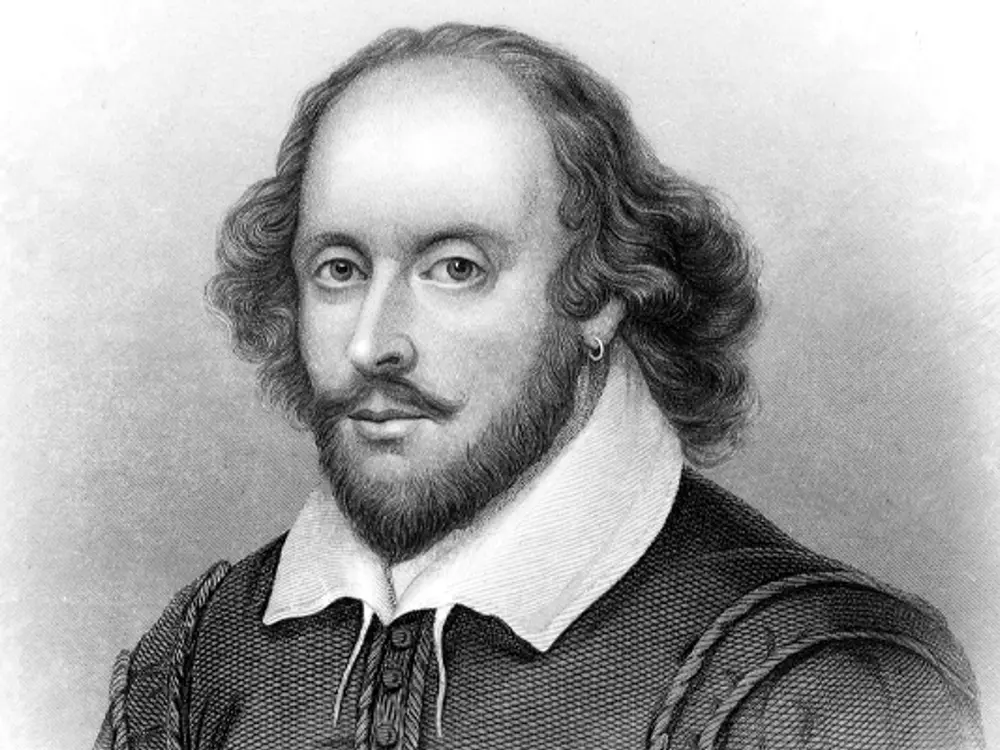
The strange, wonderful math behind the air in your lungs
Somewhere in the breath you just took, there may be an atom that was once exhaled by William Shakespeare. Or Cleopatra. Or a mammoth grazing the tundra twelve thousand years ago.
That’s not speculation. It’s math.
Each time you breathe in, you pull in an incomprehensible number of molecules—roughly 25 sextillion of them, a figure so far beyond everyday experience that it’s easier to just say: an enormous amount. More than the number of grains of sand on every beach on Earth. More, in fact, than the number of stars in the observable universe, by far.
The Earth’s atmosphere is basically a closed system. The same air has been circling the globe for billions of years, churned by winds, driven by storms, drawn into lungs and exhaled back out again. Over that time, the molecules have mixed with extraordinary thoroughness. There is no pocket of “fresh” air untouched by history. It has all been breathed before.
Yes, but Shakespeare?
Now consider what that means. Shakespeare lived about 400 years ago. The atoms he exhaled didn’t disappear—they dispersed into the atmosphere and kept moving. Four centuries is more than enough time for any given molecule to travel the globe many times over and mix evenly into the air we all share. When scientists work through the math, the conclusion is striking: each breath you take very likely contains at least one atom that once passed through Shakespeare’s lungs.
Not “might contain.” Very likely does.
The same calculation works for Julius Caesar, for Joan of Arc, for your great-great-grandmother, and for every other human being who ever lived and died on this planet—provided enough time has passed for the mixing to occur. A few centuries is more than enough.
It works in the other direction too. The atoms you exhale today will disperse, mix, and travel. Centuries from now, someone will breathe them in—a child in a town that doesn’t yet exist, in a country whose name hasn’t been invented. In a very real sense, you are already part of their air.
But also…
There is one small caveat. This works best for the gases that cycle freely through the atmosphere—nitrogen, oxygen, and argon, which together make up nearly everything you breathe. Carbon is a bit more complicated, since a great deal of it gets locked away in rock, soil, and formerly in fossil fuels, temporarily removed from circulation. But nitrogen alone makes up about three quarters of every breath, and it moves through the atmosphere with very little interruption. The calculation stands.
The air, it turns out, is not a backdrop to history. It is a participant in it — an invisible, ever-circulating record that passes through all of us, connecting every living thing to every other across time.
So the next time you step outside on a crisp morning and take a deep breath of fresh Lanark County air, you might spare a thought for the remarkable journey those molecules have already made—and the long journey they still have ahead.
