

Reflections from the Swamp

Dear Reader
I hope that you are enjoying these cooler days of summer, our gardens, and have had a chance to travel to other parts of the country.
It has been a long time since I have written you a story from The Swamp. I feel like my distant relative Rip Van Winkle, who found a comfortable spot on the riverbank and went for a nap that lasted a hundred years.
I have some random thoughts about a postman I knew as a child, with stories within them.
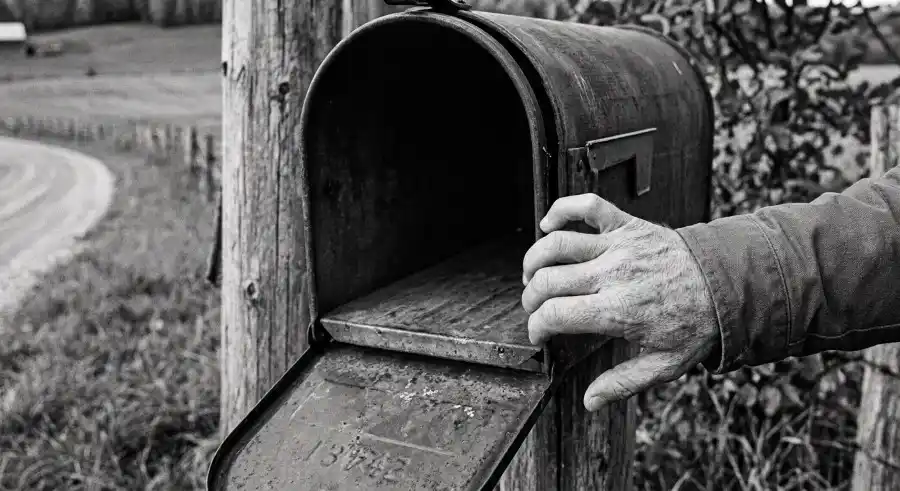
The post office has announced plans to move those of us who still get home delivery to those community mailboxes familiar to most of you in Almonte. Presently, I get my mail from a mailbox mounted on the side of the road near my house. I can open the van window, reach into the mailbox, and continue driving with the mail into my driveway.
Historically, post offices were central to communicating with the outside world. The Almonte Post Office was a grand building rivalled only by the Town Hall. Post offices were located near railway lines to ensure quick mail delivery.
When I was four years old, we moved several blocks away from another immigrant family, the Postmas, who had a girl, Johanna, who was my first friend. I was shown how to walk to Johanna’s house and how to cross a street safely. I would regularly walk to Johanna’s house, passing a house with rabbit cages in the backyard. Mr. Cummings, a postman, raised rabbits for meat. I would often go into his backyard to see the rabbits.
Mr. Cummings was a tall, lean, well-tanned man who wore a black uniform, black work boots, and a brimmed cap while delivering mail. To me, he looked like a policeman or a soldier. As I entered his backyard, Mr. Cummings was preparing to butcher a rabbit. He had a wood stump, a hatchet, and a bucket for discarded parts.
Despite my tender years, I wasn’t traumatized by the scene unfolding in front of me. Many immigrant families ate rabbits, including our family. He showed me the steps in butchering a rabbit like one might teach a child to tie his shoes. First, cut off the rabbit’s head so it won’t feel any more pain. Grab one hind leg, using it as a handle, and cut off the other three legs. Slit the rabbit from its neck to its crotch with a jackknife. Cut off the last leg. Grab the fur and peel off the hide with one strong pull.
Rabbit feet were a common good luck charm in those days. Mr. Cummings gave me a rabbit’s foot that had been made into a keychain which I gave to my brother for Christmas.
A few years later, I often saw Mr. Cummings on the city bus on my way home from school. He finished work earlier than most men, and would be on the bus with children coming home from school. He had his empty mailbag on his lap, and I would sometimes sit with him. I had started collecting stamps, which was my window into the greater world. I asked people who were regularly on the bus with me in the mornings to save stamps for me. I paid particular attention to people who looked “foreign” and often received envelopes of Italian, German, and English stamps. I showed Mr. Cummings the stamps I had received, and he told me which country they were from, facts about the country, and who the monarchs were.
I asked Mr. Cummings to save stamps for me, but he told me that he wasn’t allowed to take stamps off of the mail he delivered. The mail belonged to the Queen until delivered. I didn’t think he or the Queen were reasonable and became jealous of all the stamps he and the Queen had but wouldn’t share.
Once, around Christmas, Mr. Cummings gave me a brown envelope full of exotic stamps that he had received from his customers. He had asked the customers he had gotten to know to save stamps for me. He was a thoughtful and kind man.
Some day soon, the mail truck will stop coming down our road, and I will have to go to Corkery Road to get the mail. Who is going to teach the next generation of children to skin a rabbit or discover lands across the seas? I’m thankful for the experiences I had with Mr. Cummings.
As Bob Dylan once said. “Oh, the times they are a changing.”
