

Almonte resident James Moore is a retired military officer and a former Assistant Deputy Minister of the Government of Canada.
The Canadian Constitution may prove to be more durable and relevant than that of our neighbour to the south – only time will tell. Certainly, over the last four decades Canada has made a few efforts to update our constitution with appropriate amendments to keep up with the issues of the time. The last attempt by the parties to first ministers’ conferences to open up and amend the constitution at Lake Meech and Charlottetown failed.
As a result, it is virtual political anathema to suggest opening up the constitution given the historical ghost of Quebec separation or other issues that might divide rather than unite the country. In short, in most circles, the idea of opening up the constitution for amendment is seen as divisive and risky.
Yet times have changed since the last two failed attempts to make amendments. Given the current times and political climate there appears to be a willingness for greater cooperation between the provinces and the federal government. Much progress has been made by indigenous peoples in the last number of decades to establish and entrench their rights. There seems to be a greater sense of reconciliation among all peoples in Canada and among all forms of government.
Perhaps we are approaching a time where a First Ministers meeting( including opposition leaders) the Provinces and Territories and the National Indigenous Organizations Leaders to make appropriate amendments to the constitution might be viable. There are at least three reasons to do so:
First Canadians should be thinking about establishing Provinces of our three Territories. Not next year or the following year but in a reasonable 10 to 15 year time frame beginning with the Yukon, followed by the Northwest Territories and then Nunavut. The bar to successfully achieve Province-hood including sufficient population, taxation capability, social and economic development is quite high. That said, once achieved, our sovereignty over the Arctic, in the face of possible threats from our adversaries will be strengthened as will our national unity and identity. It may also serve to strengthen existing constitutional and legislative guarantees for indigenous peoples in these new Provinces.
A senior federal minister for the Arctic should be established. One of his/her principal mandates would be to thrash out a game plan among all FMM partners for a meeting to begin discussions on this subject. A second mandate for the minister would be to consolidate and strengthen all existing federal programs into the Arctic with the objective of supporting territorial and indigenous leaders efforts to sustainably develop the Arctic, with an emphasis on resource development. Surely the next frontier in Canada for major economic and other development is Canada’s Arctic.
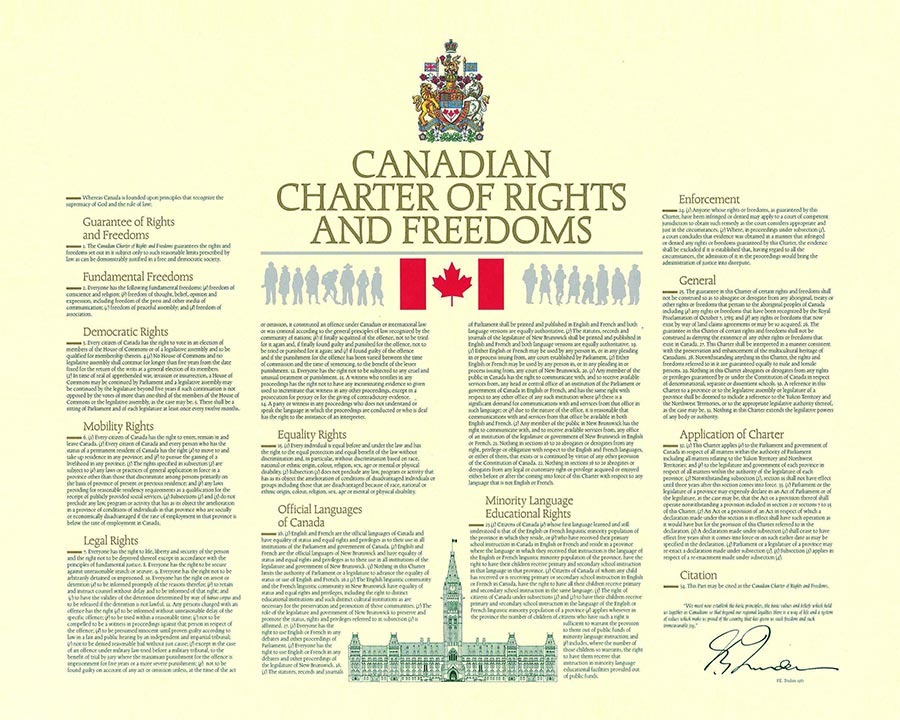
Secondly the Canadian Constitution through Section 16 of the Canadian Charter of Rights and Freedoms explicitly recognizes two official languages in Canada, namely English and French. Other than reference to indigenous languages in section 35 of the constitution, there is no affirmation elsewhere in the Constitution that indigenous languages were the first languages spoken for millennia in this land later called Canada. Isn’t it about time we formally recognize this fact? It might be a symbolic gesture, but would contribute to reconciliation between indigenous peoples and other Canadians.
Thirdly, the threat and reality of certain provinces using the” Notwithstanding Clause” in section 33 of the Charter which allows Parliament or provinces to temporarily override certain constitutional rights; raise tensions between Democratic authority and individual rights. It certainly if over used or abused it could lead to the diminishment of the authority of the National Government and possibly the courts. That might satisfy the provinces at a particular moment, but over time and overall it will inevitably lead to disunity among Canadians. The Parties to a future FMM should strive to ring-fence this clause to prevent its misuse and abuse in the future. Either repeal it or amend it to make it much more difficult for governments to opt to use it.
