


We have a love/hate relationship with some of the insects at the cottage, but we love to see stink bugs, mostly because their very name makes us laugh. The name is so direct.
Stink bugs comprise a large family of related insects with more than 220 species found in North America. In the tropics, some stink bugs may grow to be as large as 10 centimeters in length. We have photographed five species during the summers around White Lake all of which range around 10 millimetres in length. The majority are herbivorous, plant feeding insects which use their needle-like mouthparts to pierce plant tissues and suck out the juices. For some gardeners this could be a problem but it seems to us that the numbers in our cottage neighbourhood are well-balanced.
Our most common stink bug has the not-surprising name of common green stink bug. We see both the nymph and adult stages often on the leaves of roadside plants. Because these bugs are generally fairly slow moving, our intrepid photographer is able to get many photos of adults in the autumn. The nymphs, which we see throughout the summer have not yet grown wings, making them even easier targets. In the following photos the top one is a nymph while the adult is below.


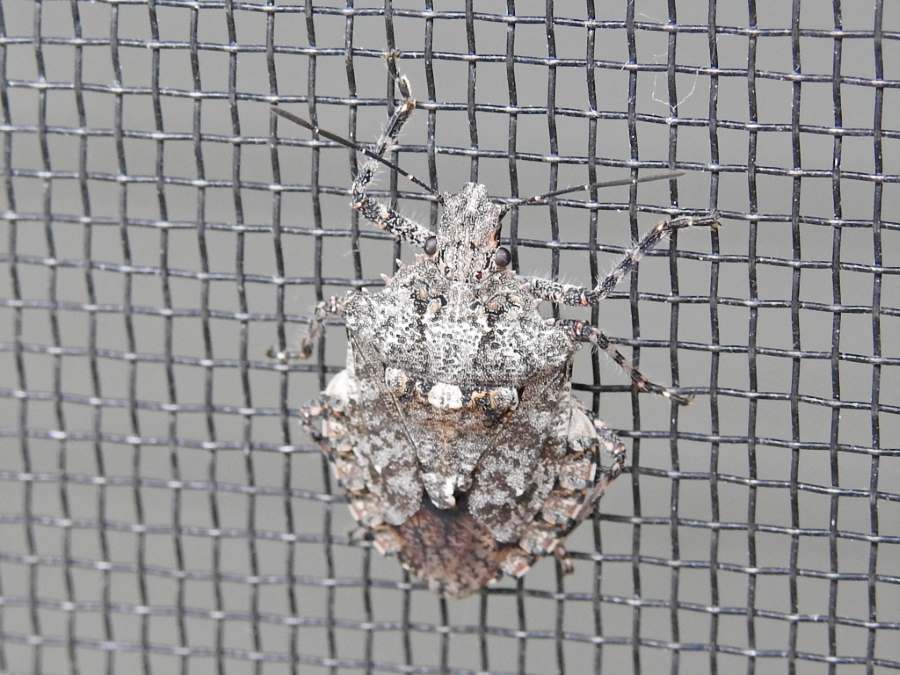
We see the marmorated stink bug less often, but consistently at least a couple of times annually, perhaps not because they are not around, but because its camouflage of mottled browns is more effective. This stink bug feeds on a wide variety of plants, mostly the fruiting bodies but also the stems, leaves, flowers, and seeds. The marmorated stink bug is the one we most often find in the screen-in porch at the cottage. When this happens, we gently capture it to put it outside, being careful not to squish it because the innards give off the terrible stink for which the insect is famous.

The rough stink bug is also brown and difficult for us to discern from the other brown stink bugs, which is why we depend heavily on internet friends for help. But the rough stink bug’s lifestyle is different from others in that it tends to be found on trees and shrubs where it feeds chiefly on the living plants. Like many other insects, this one seemed to prefer the environment inside our porch. It too occasionally feeds on other insects, though, and for that we cheer the rough stink bug on.
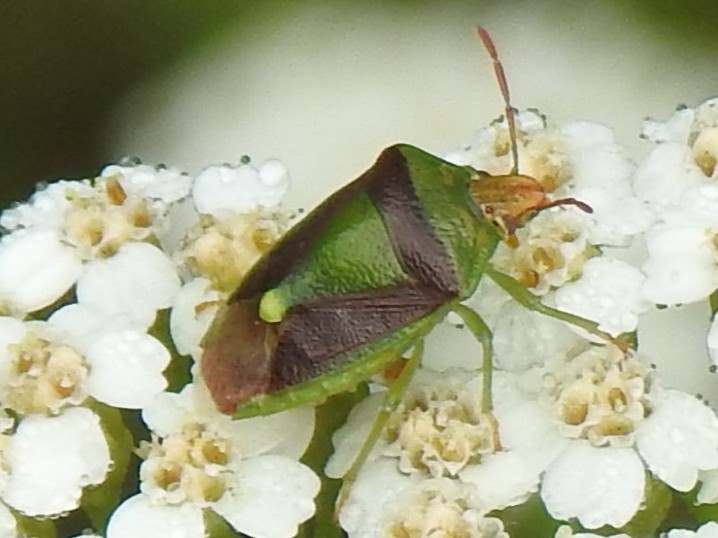
This year we have a new stink called the green burgundy stink bug. Also an herbivore, this distinctive stink bug feeds on a wide variety of trees and shrubs, often berries and can be found across Canada.
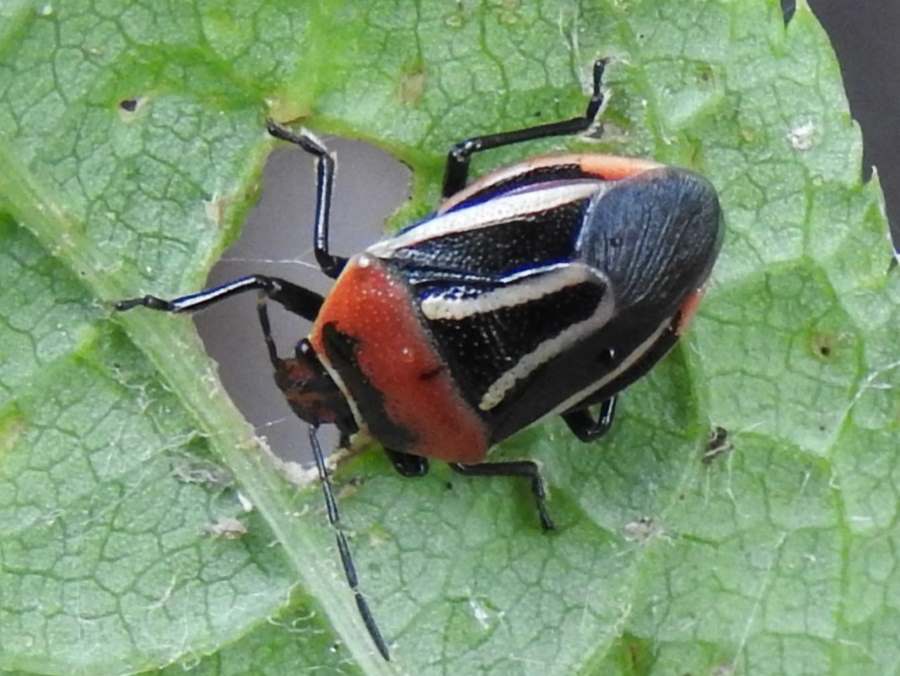
One species we see is predaceous. The predatory stink bug, unlike other stink bugs, feeds mainly on other insects, preying principally on slow-moving soft-bodied insects, especially larvae. Apparently, this particular species of predatory stink bug (Perillus exaptus) is rare. We saw this one in 2021.
Many animals in our cottage neighbourhood stink, the most obvious being the skunk, but many others as well, including beaver, river otters, and turkey vultures stink, whether they stink for defence, to attract a mate, or to mark territory. However, stink bugs are the only one of our stinky wildlife friends that includes the word in its name. When a stink bug is squished, our noses confirm what the name suggests.
For this article, we relied primarily on the experts at Bug Guide for identification and other information. In addition, we found two children’s books that we liked: My Stinky Summer by Paul Meisel; and, Stink Bugs And Other True Bugs by Meish Goldish.
