


In the ‘green’ world of plants, white parts can be seen sometimes in flowers, in seeds and fruit, and in stems of some plants.
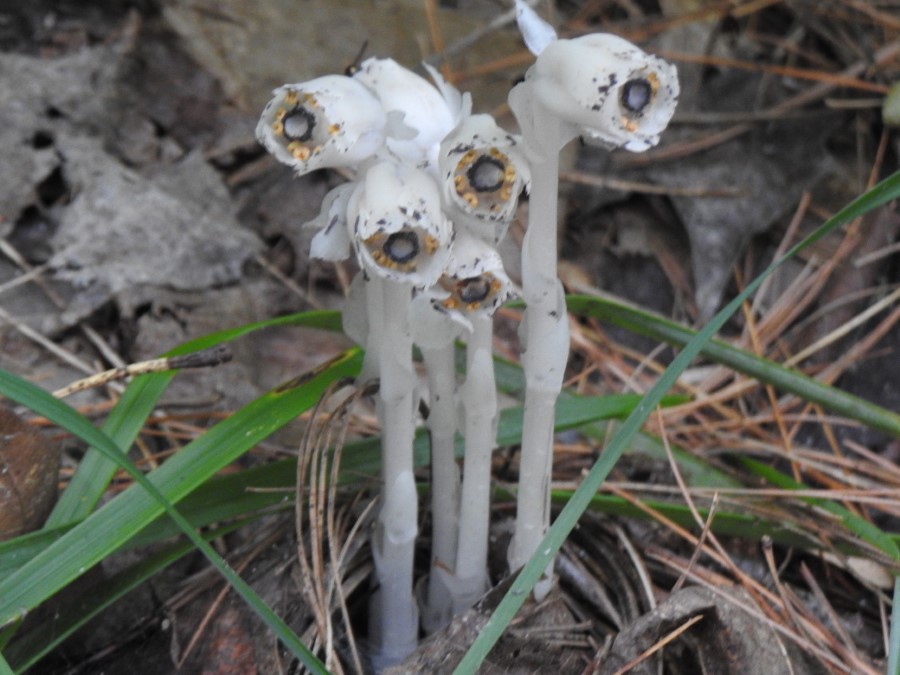
We start our survey with our most extreme example of ‘white parts’—the ghost pipe, also called Indian-pipe, which is a member of the heath family. Heath family members have symbiotic relationships with soil fungi that infect their roots. A mycorrhizal relationship consists of a plant providing a fungus with energy while the fungi help the plant roots absorb water and inorganic nutrients. The mycorrhizal relationship in ghost pipe has developed to the extent that the plant has lost the ability to produce chlorophyll, and therefore is unable to photosynthesize, resulting in the plant being fully dependent on the fungi for all its nutrients. All parts of the plant are white due to the lack of chlorophyll. The waxy stems and nodding flowers grow to a height of 22 centimeters. We see ghost pipe deep in the woods in organic soil.
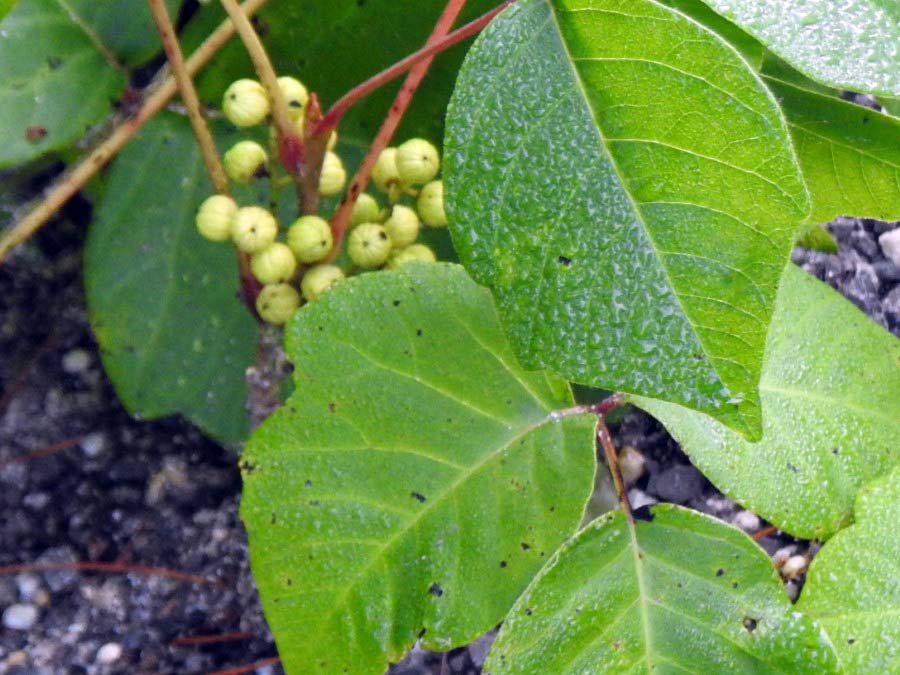
Many have suffered the effects of contact with the irritating resin contained in all parts of the poison ivy plant. This woody perennial, which is a member of the sumac family spreads by seed berries and sucker shoots, and is abundant along the road sides near our cottage. For many people skin inflammation, itching and blistering, results from direct contact with the plant. The allergen is so powerful we can easily contact it by touch in any season, whether handling tools, footwear, clothing, or gloves that were in touch with poison ivy, even in the previous year. We have also experienced issues from cuddling a dear pet that was in contact with the poison ivy plant, from compost containing decaying poison ivy, or even from the smoke of burning poison ivy. We are much more careful than we once were. The berries turn white but the immature ones, as pictured here, still have a slight greenish tinge.
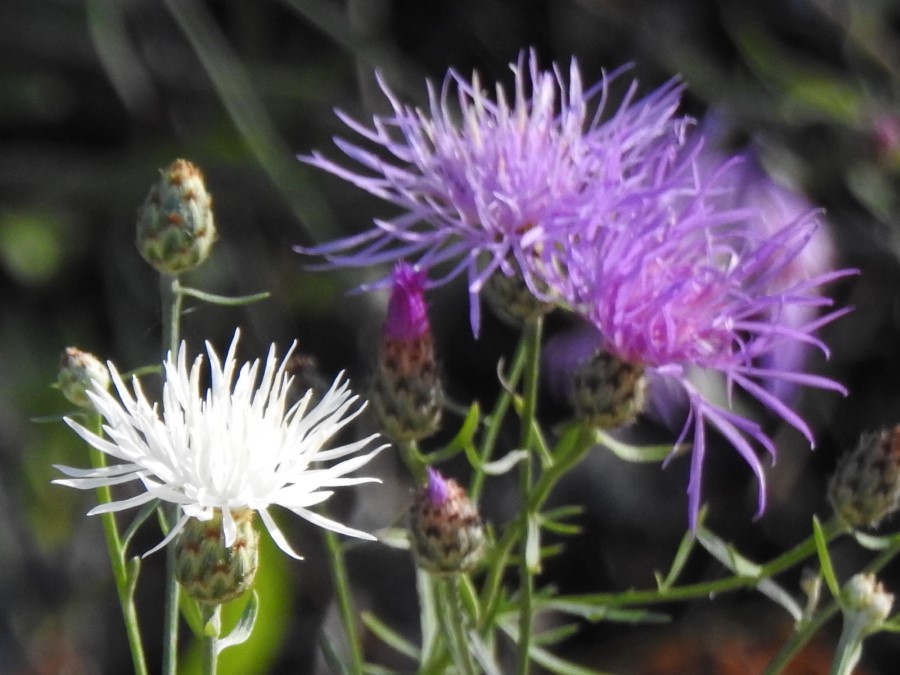
Spotted knapweed is another very common plant found growing along the roads near our cottage. This biennial plant is a member of the sunflower family. Plants can grow to a height between 30 centimeters and one meter. The majority of plants have mauve/purple blossoms but a few individual plants, such as the one pictured, have white blooms.
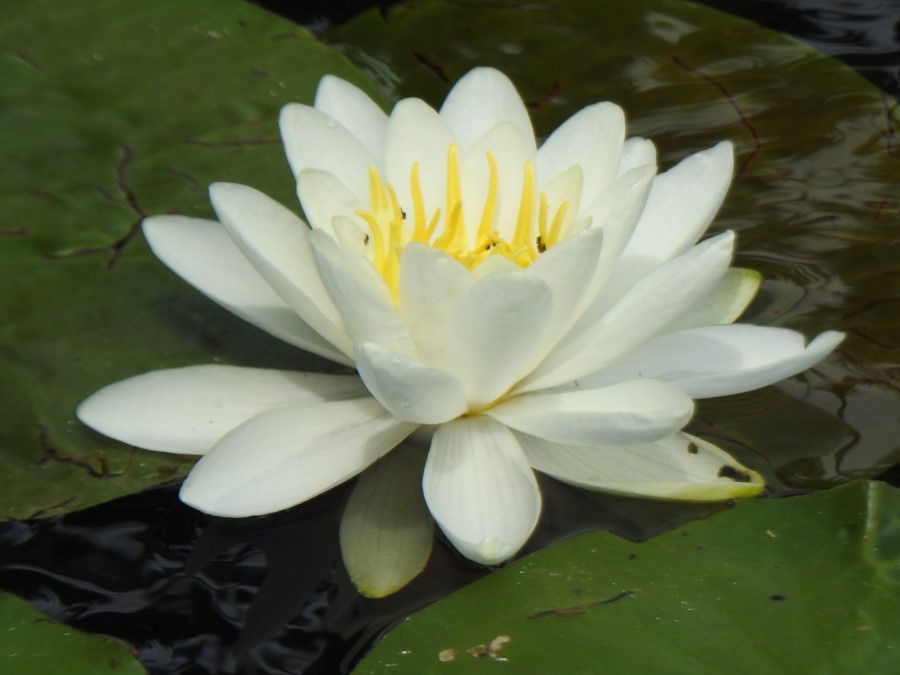
The white water-lily, also called fragrant water-lily, is a perennial aquatic plant that grows in slow-moving or still water. Rising from a rhizome on the lake or river bottom, leaves rise on a single stalk and float to the surface while the solitary white bloom also rises on a separate, single stalk to float on the water surface. The blooms, which open from mid-morning to early afternoon during the summer, are 7 to 20 centimeters across. Water lilies, especially the rhizomes, are an important food source for ducks, muskrats, and beaver. The leaves provide shade and habitat for fish and invertebrates.
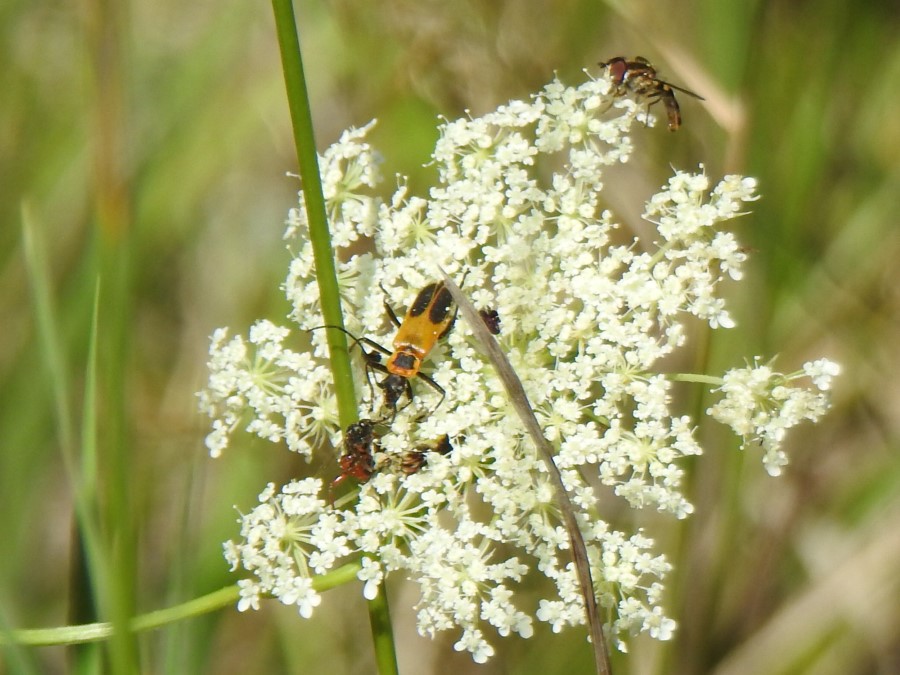
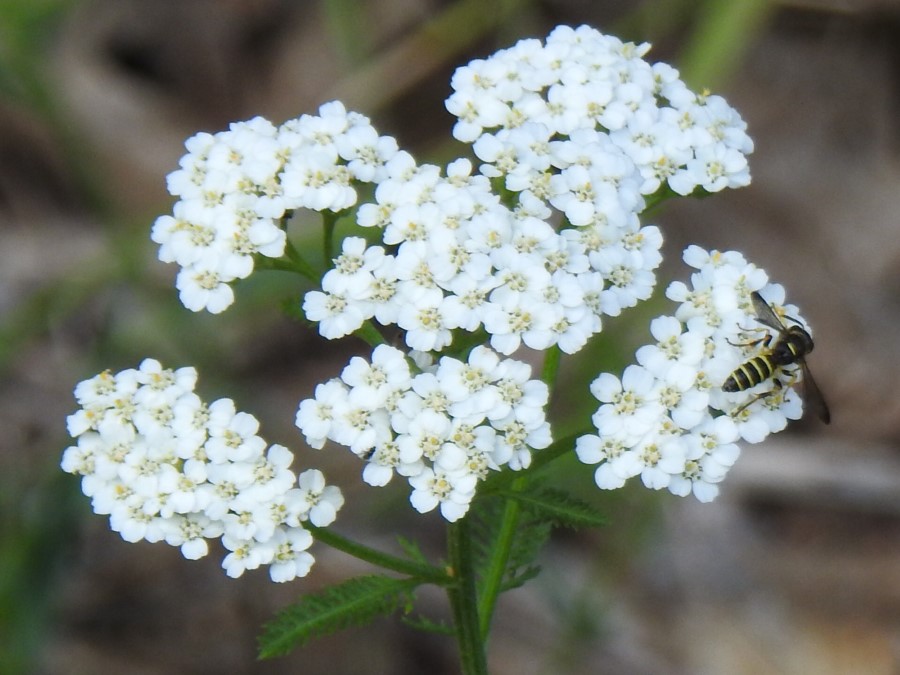
Two plants with similar looking composite heads of white flowers are very common along the roadsides near our cottage – wild carrot or Queen Anne’s lace and common yarrow.
Wild carrot is a biennial plant that is a member of the carrot or parsley family. Plants can grow to a height of 1.6 meters. It has a woody, white tap root that somewhat resembles the softer, orange root of the cultivated carrot. The leaves resemble those of a garden carrot. The flowers make up a dense compound flat-topped cluster, termed an umbel, which can measure to 15 centimeters across. The umbel is comprised of numerous umbelets, smaller starburst-like flower clusters.
Common yarrow is a member of the aster or composite family. This perennial plant is slightly shorter than wild carrot, growing to 1 meter in height. The clusters of white flowers, termed a corymb can grow to 6 to 30 centimeters across. The corymb is comprised of numerous smaller heads of flowers producing a more irregular, flattish flower cluster than in wild carrot. The numerous feathery leaves are very different from those of wild carrot.
These are just a few of the many plants around our cottage that have white parts, mostly flowers and fruit, and in the rare case of ghost pipe, the entire plant. You can relax when you are seeing these snow-white plant parts because it is clearly still summer. We hope the white snow will only come much later in the year.
The field guides we relied on include: Timothy Dickinson, Deborah Metsger, Jenny Bull and Richard Dickinson’s The ROM Field Guide to Wildflowers of Ontario; Clarence Frankton and Geral A. Mulligan’s Weeds of Canada; William Niering and Nancy C. Olmstead’s National Audubon Society Field Guide to North American Wildflowers – Eastern Region; and, Steven G. Newmaster, Allan G. Harris and Linda J. Kershaw’s Wetland Plants of Ontario;
