


Birds have evolved a diverse array of sizes and shapes of mouth parts, referred to as their bill. Generally speaking, the length and thickness of a bird species’ bill indicates the kinds of food they consume. We have observed several bird species at our cottage with elongated bills. That does not mean they all feed on the same food as you will see from our look at five bird species that frequent our cottage.
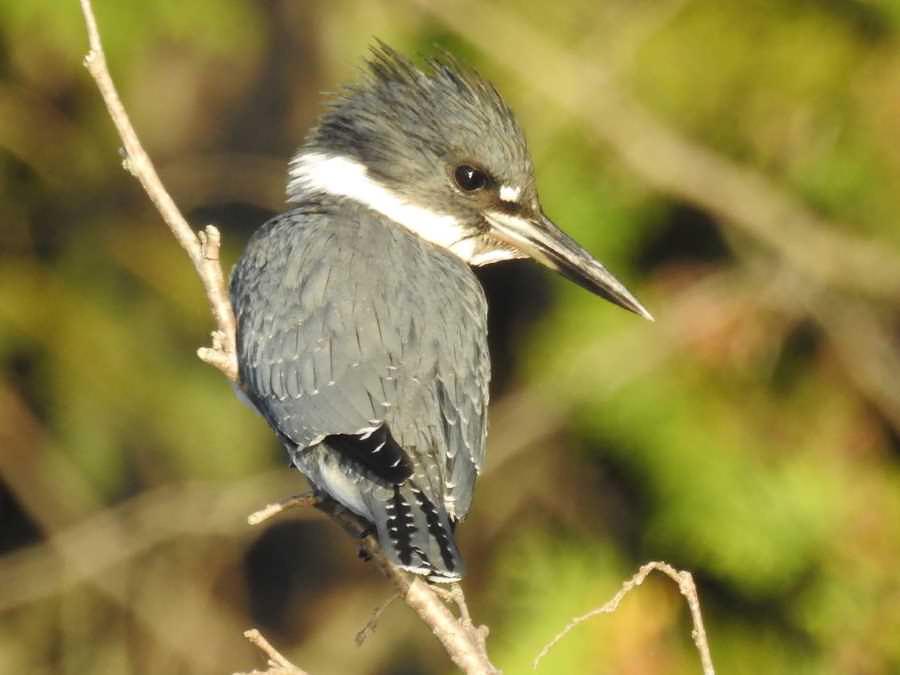
We see and hear the belted kingfisher often along our cottage shoreline. Adults grow to 35 centimeters in length and have a long, dagger-like bill. They plunge dive from trees and shrubs overhanging the water, using their sharp bill to capture a wide variety of fish swimming near the surface, as well as crustaceans. We often hear the loud rattling call of these birds before we see them. Atypical of most birds, the females are more colourful than the males as they also sport a chestnut band across their white breast. The back view as shown below precludes knowing if this individual was a male or female, but the photo shows the bill nicely.
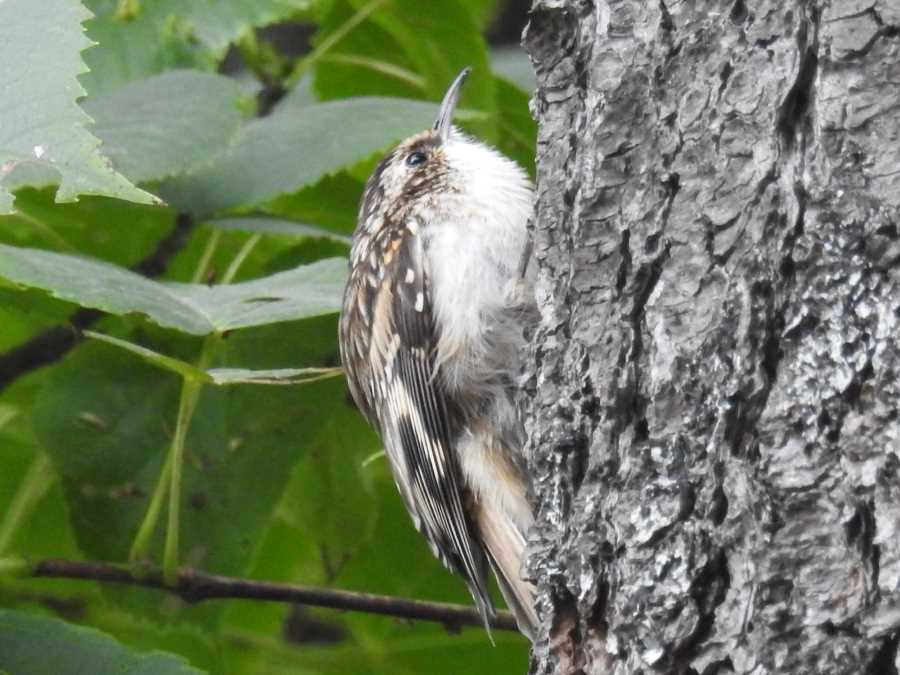
The brown creeper is a very small bird, growing to 13 centimeters in length, with a long, slightly downward curved bill. This bill is used to probe the bark of mature trees for insects. In addition to being small, their brownish black plumage provides excellent camouflage while foraging on tree trunks, making them difficult to spot. They typically forage on the main trunk of trees, “creeping’ from the bottom to the top before flying to the base of the next tree. They use their stiff tails to prop themselves against the trunk while foraging.
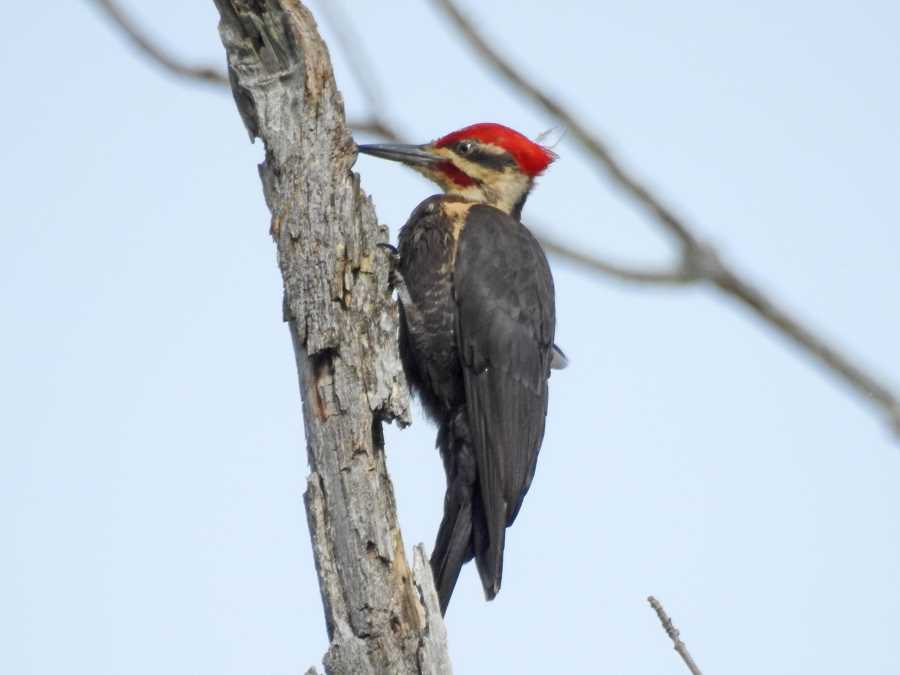
The pileated woodpecker is the largest member of the woodpecker family we see around our cottage, growing to 46 centimeters in length. They use their large straight elongated bill to ‘peck’ deep into trees, both standing and fallen, in search of wood-boring insects such as carpenter ants and beetle larvae. Their excavations, both feeding and nesting, are distinctive from those made by other woodpeckers as they are rectangularly shaped. In addition to their distinctive red crest, the male also has a red ‘moustache’ at the base of its bill as pictured below.
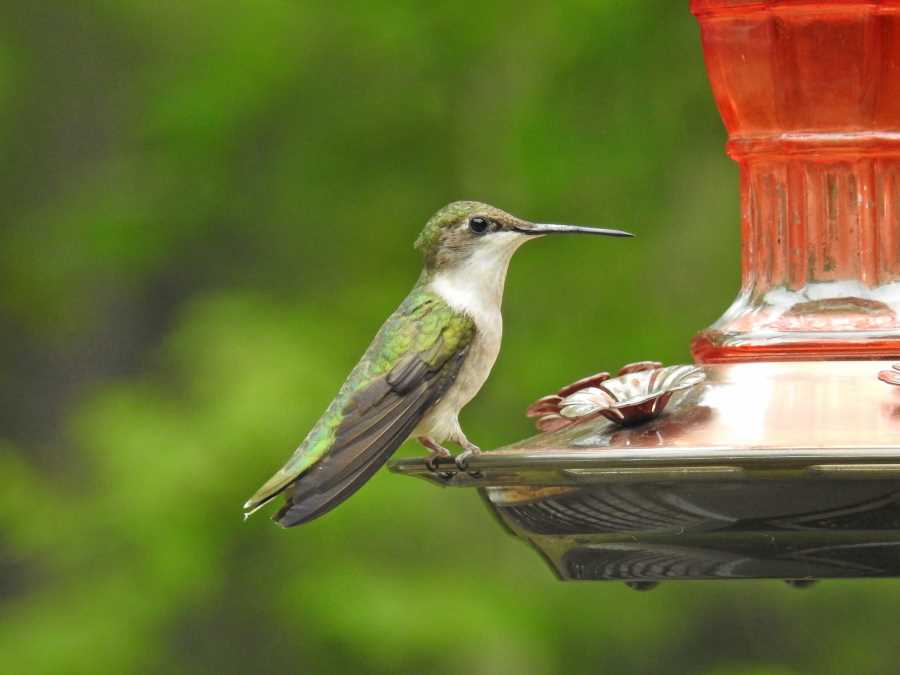
The only hummingbird species in our region is the ruby-throated hummingbird. They are the smallest bird we see around the cottage, growing to 9 centimeters in length. They have a long, straight needle-like bill which they use primarily to feed on the nectar found deep in flower blossoms. They use their equally long tongue to lap up flower nectar as well as sap exuding from trees. Ruby-throated hummingbirds also feed on small flying insects such as mosquitoes, something we are particularly appreciative of at the cottage. The rapid beating of their wings generates a humming sound, hence their common name.
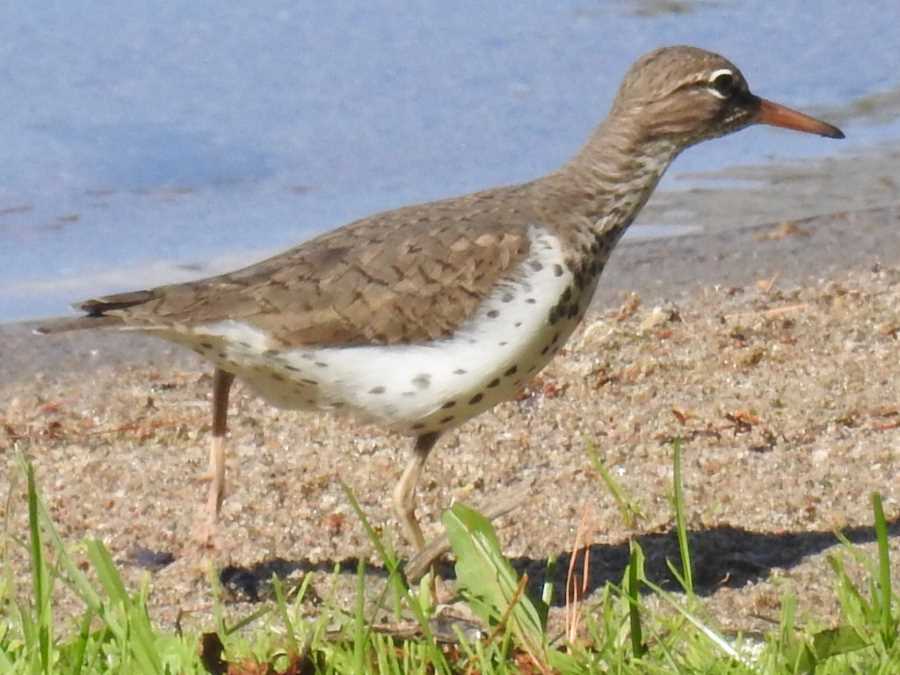
Our last bird with an elongated bill is the spotted sandpiper which is the most widespread shorebird in North America. We see them walking along our shoreline searching for food with their distinctive quick pace, frequently bobbing their tail. Spotted sandpipers use their long straight bills to probe the shore and water for insects, mollusks, crustaceans, and worms. Adults can grow to 20 centimeters in length, about robin-sized. The common name, sandpiper, comes from the ‘peeping’ sounds they vocalize as they take flight.
These are just five species of bird that have evolved an elongated bill. Interestingly, each of these bird species eats very different foods and employs very different feeding techniques using their elongated bills. In addition to feeding, elongated bills have other uses such as defending territories; attracting mates; facilitating the rearing of young; and, excavating nesting cavities in trees in the case of woodpeckers.
We relied on the following sources for this article: David M. Bird’s Birds of Eastern Canada; Susan Myers’ The Bird Name Book; and, Roger Tory Peterson’s Peterson Field Guide to Birds of Eastern and Central North America.
