


Many animals lead solitary adult lives, except for breeding and rearing young. Many others are gregarious, living in flocks or colonies with numerous members of the same species. It always catches our attention when we occasionally see a number of the usually solitary animals coming together in groups. This article looks at some of the groupings or aggregations we see at our cottage on White Lake.
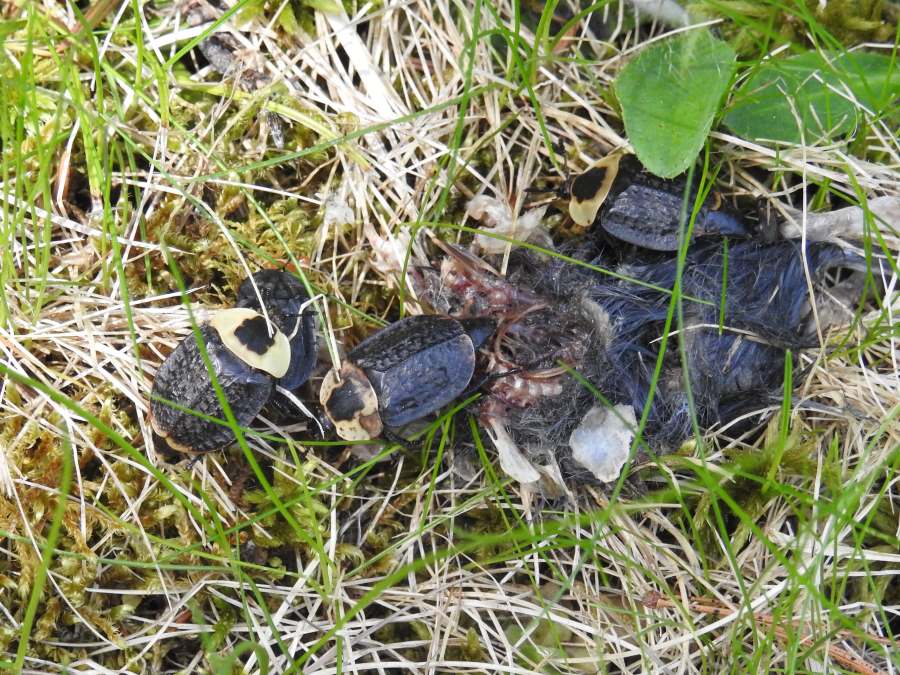
Every now and then we find a dead mouse in the traps we have set in our screened-in porch. When this happens, we dispose of the carcass in a quiet corner of the lawn. Seemingly out of the blue several individual American carrion beetles fly in and begin feeding. The adults measure 1.3 to 2 centimeters in length. We have seen aggregations of as many as six to seven on a single mouse carcass, so many that the mouse is completely obscured by the feeding beetles. These aggregations can strip a carcass in just hours and then the individual beetles depart to search for their next banquet of decaying flesh. Carrion beetles are one of nature’s clean-up crews.
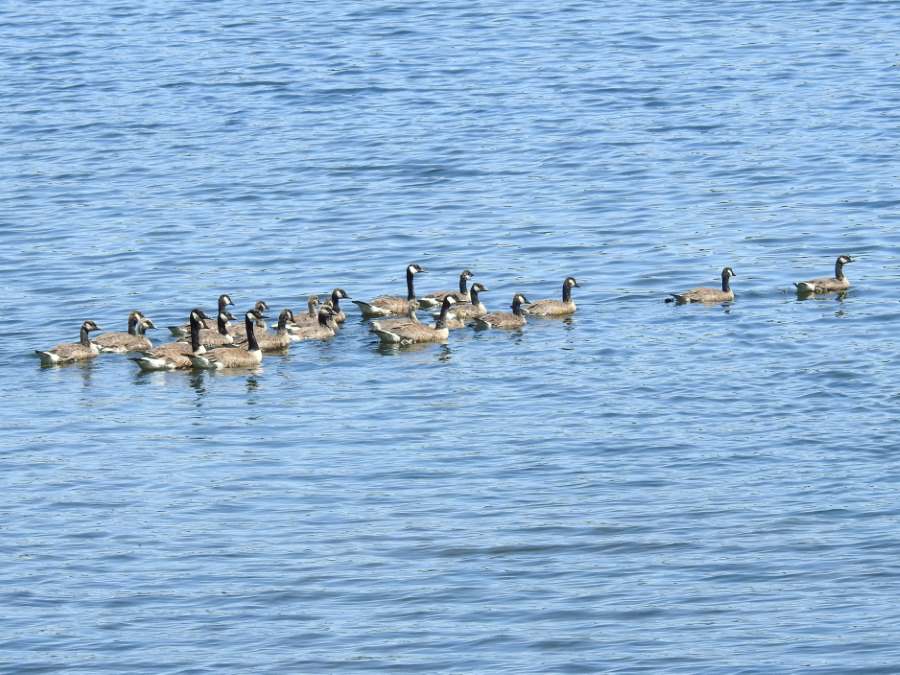
Unlike some of our cottage neighbours, we enjoy having aggregations of Canada geese families visit our beach to feed on the lawn, to rest, and to fertilize the yard. These aggregations are made up of pairs of adult Canada geese each with its own 4 to 8 chicks. We find it interesting to see more and more families grouping together as the summer progresses. Clearly, some of their chicks have been lost, likely to predation. Presumably these aggregations of multiple adult geese, who do not always get along with each other, result in greater safety and protection for the remaining chicks. This aggregation was photographed in early July.
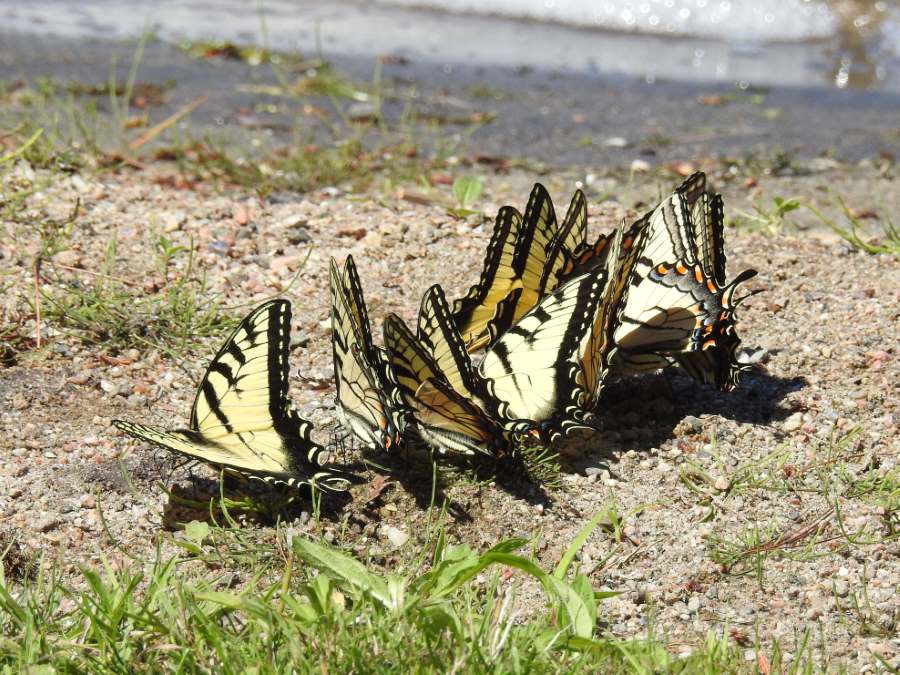
We really enjoy watching individual Canadian tiger swallowtail butterflies moving about feeding on the lilac blooms at the cottage. What is even more spectacular is observing aggregations of these butterflies on our beach. Our field guide notes this species is an ardent ‘mud puddler’, where it may be found in large numbers sipping in specific wet areas. It is believed that the moisture in certain areas contains salts and nutrients, particularly sodium and nitrogen, which aid the butterflies in reaching sexual maturity.
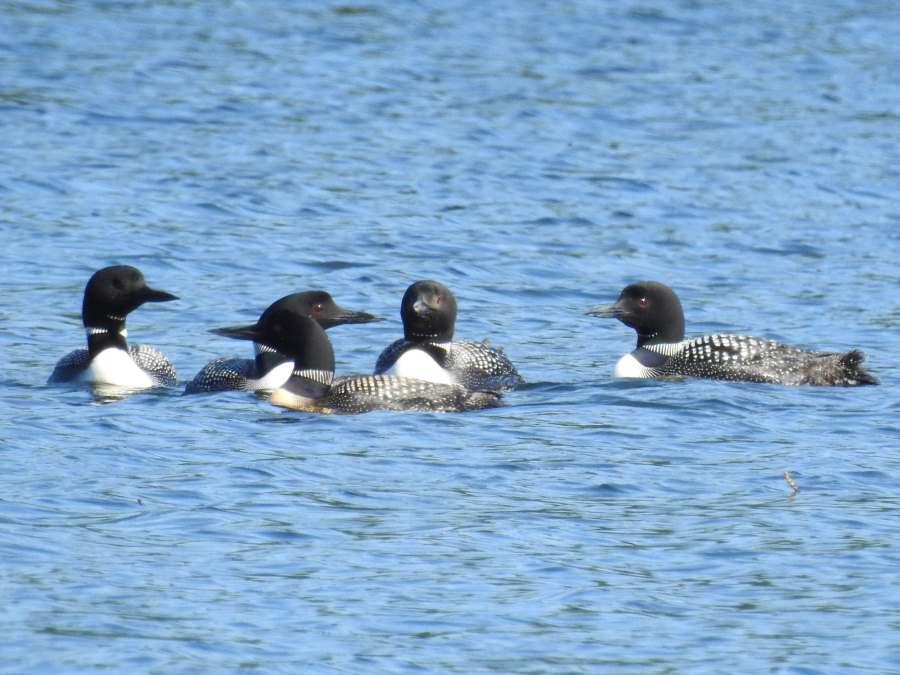
Common loons are aggressively territorial, especially when rearing chicks. Both parents are involved in raising their chicks over the summer. However, towards the end of August, when the young are catching much of their own food, we see periodic ‘social’ aggregations of adults without chicks. We like to think they are comparing notes on the best routes to follow for the upcoming migration to southern wintering grounds. We saw this aggregation on Aug 25, 2025.
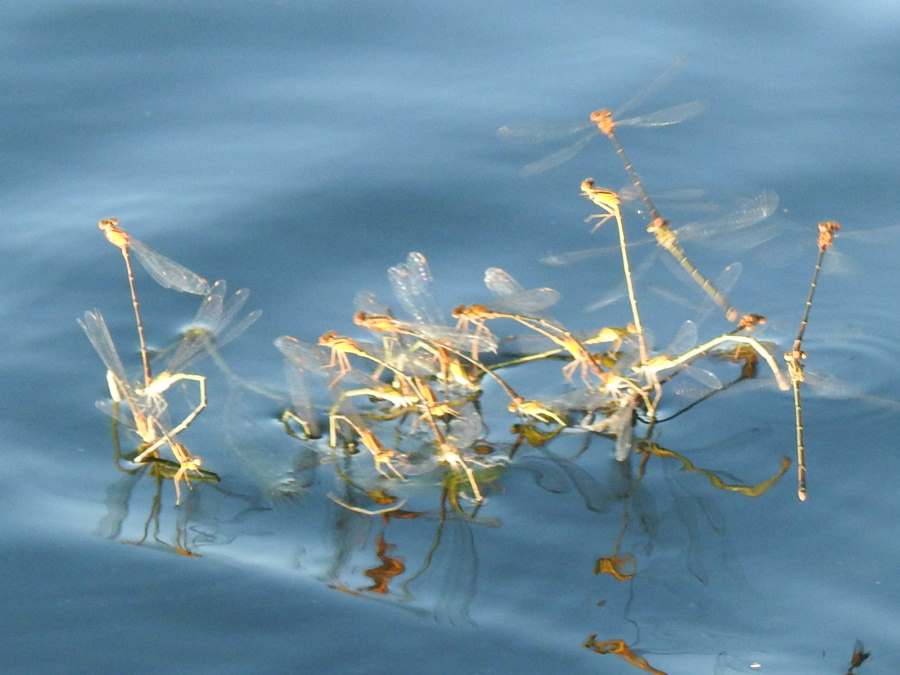
While kayaking and canoeing, we see numerous individual dragonflies and damselflies flitting about over the water. Occasionally in mid-summer we see what we have termed ‘rafts’ comprised of many pairs (male and female) of damselflies of the same species. A piece of floating vegetation appears to be the base for these rafts. Apparently, the vegetative base of these rafts provides the females with a place to lay their fertilized eggs. This aggregation was photographed on July 12, 2025.
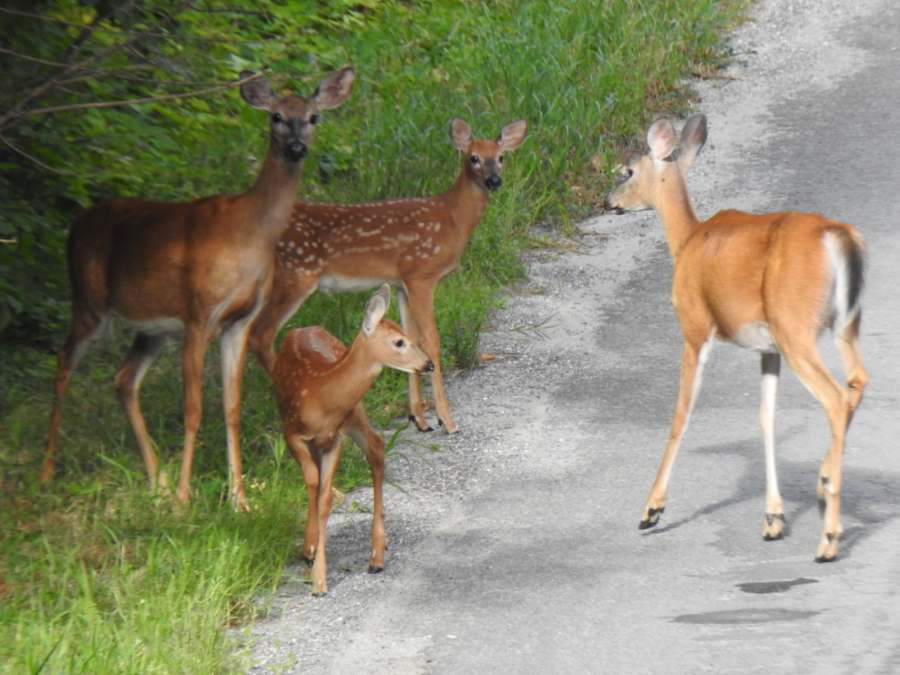
Solitary whitetail deer are frequent visitors to our yard. We especially enjoy it when a new mother brings her young spotted fawn(s) to cavort on the lawn between the lakeside deck and the shore. We have seen mothers with as many as three fawns! This past summer we saw for the first time two does, each with a fawn, crossing the road together. We can only speculate about the reason or purpose of this small aggregation but it certainly made for a memorable sighting on August 19, 2025.
These are just a few examples where primarily solitary animals periodically and briefly come together into aggregations of members of the same species. These aggregations likely support reproduction, feeding, protection, and ‘socializing’ of the species. It also affords us opportunities to see and photograph these exciting gatherings.
We referred to the following field guides during the preparation of this article: Arthur V. Evans’ Beetles of Eastern North America; Peter W. Hall, Colin D. Jones, Antonia Guidotti and Brad Hubley’s The ROM Field Guide to Butterflies of Ontario; David M. Bird’s Birds of Eastern Canada; Colin D Jones, Andrea Kingsley, Peter Burke and Matt Holder’s The Dragonflies and Damselflies of Algonquin Provincial Park and the Surrounding Area; and, Tamara Eder’s Mammals of Ontario.
