


We have reached mid-cottage season, a time when we can expect warmth from the sun, and visits from family and friends. Amongst the friends are two-, four-, six-, and eight-legged ones. The birds heading to Algonquin Park and further north have come and gone. The fall warblers have not yet begun their migration south. At this time of year, we reliably see specific species of mammals, dragonflies, butterflies, and birds. This article talks about just a few.
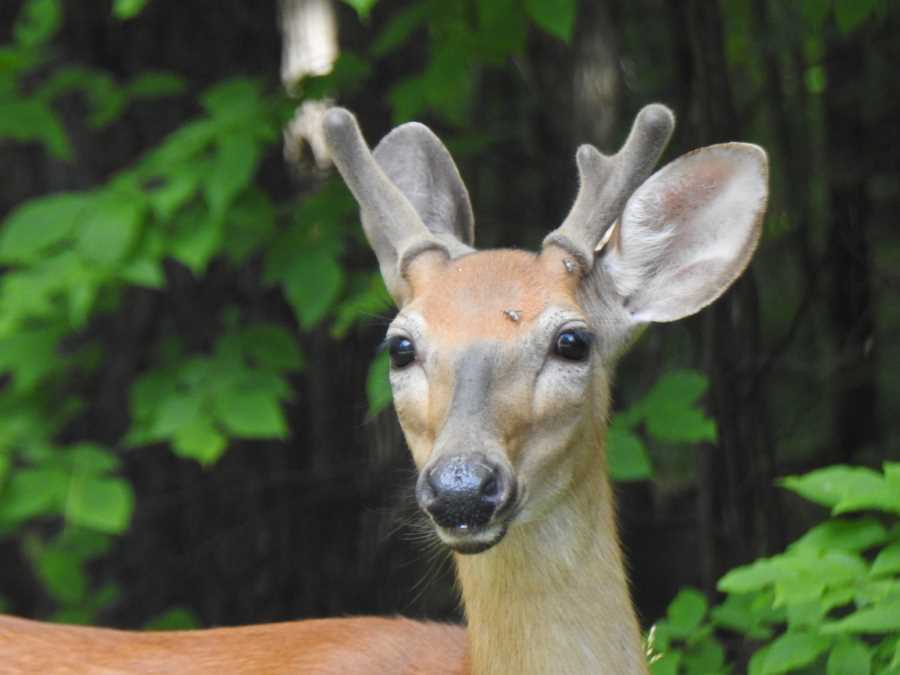
If we lived at the cottage on White Lake 12 months of the year, we would see whitetail deer throughout the year. As it is, we see them every month of the summer. A number were born in the spring 2025, but perhaps not as many as some years. In any event, most of our sightings of whitetail deer each year is of does and fawns. Only occasionally do we see bucks, but this year is one when we have a delightful buck visiting us most days. He very reliably keeps our hosta and sedum cropped low and under control. Honestly, we enjoy his visits.
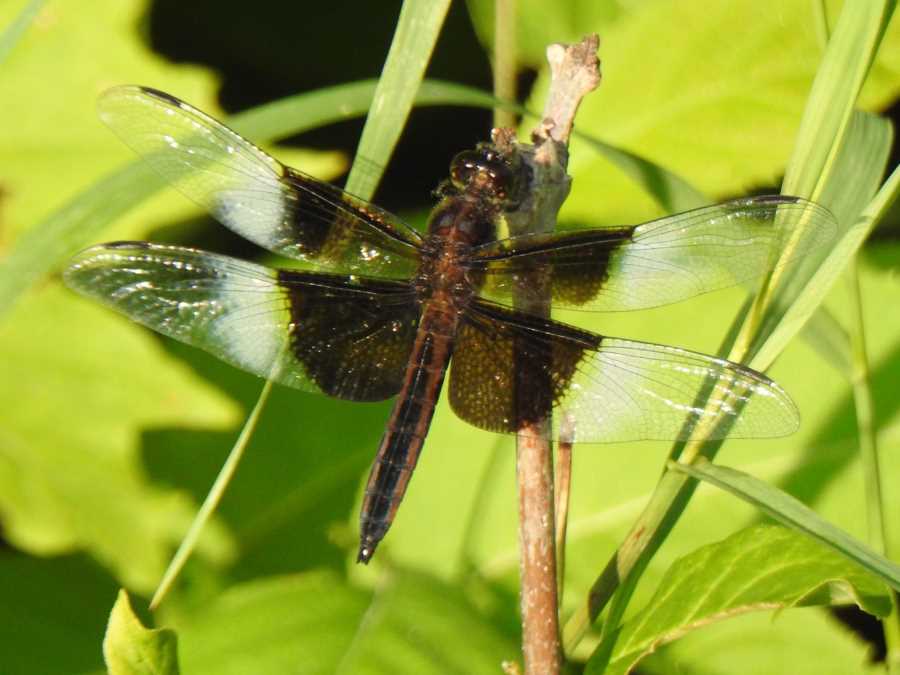
One of our favourite six-legged friends is the widow skimmer dragonfly which we reliably see each year from mid-June through to early August. Widow skimmers breed in still waters, still lakes, or ponds which we have in abundance. The nymphs are voracious predators eating other waterborne larvae, including mosquito larva, as well as tiny fish and tadpoles. The adults earn a second star on our favourites list because they eat flying insects including mosquitoes. With their broad wings marked by large black patches, widow skimmers are an unmistakeable species, adding a third star to their credit for ease of identification. This photo is of a male.
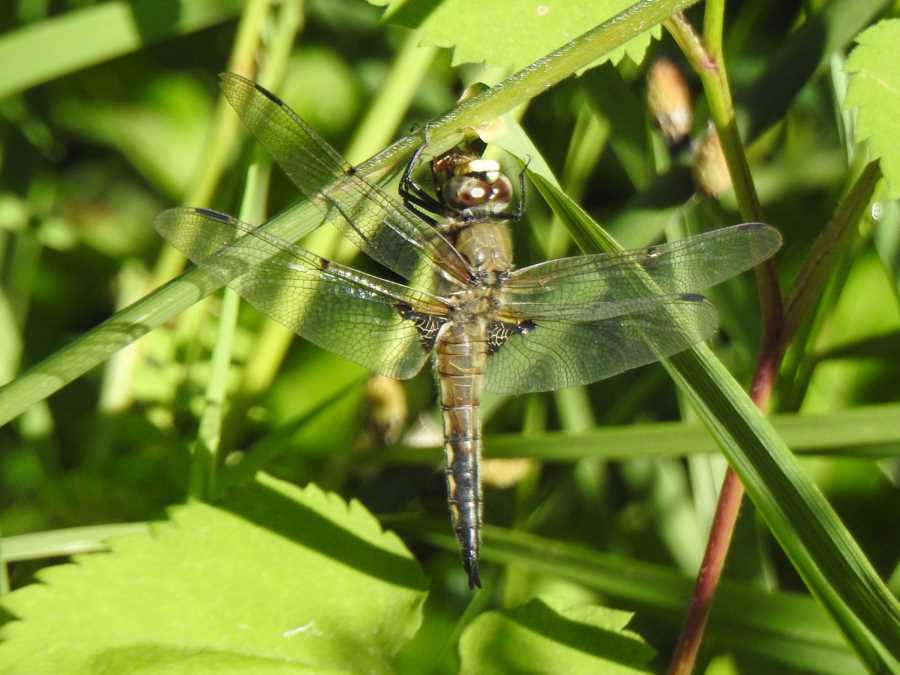
Another favourite dragonfly is also a skimmer, the four-spotted skimmer. We first noticed this species of dragonfly less than ten years ago, but once we did, we have seen and recognized it each year. Something about its shape and markings makes it standout. The leading edges of the four-spotted skimmer’s wings are washed in amber, each with two small spots. The hindwings have a triangular patch at the base. These markings, combined with its wide abdomen, make it a reliably identifiable dragonfly in our neighbourhood.
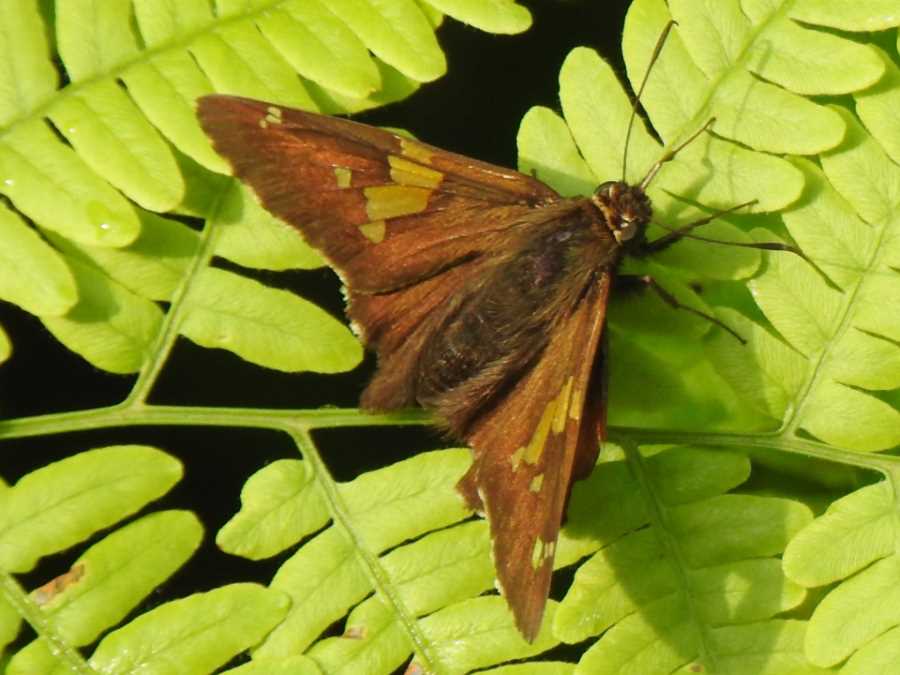
The silver-spotted skipper is one of the butterflies we reliably see, possibly because it is easy to identify. Most often we see this skipper at rest with its wings closed up over its back, showing the underside with its name-sake silver spots. It took us a long time to learn to identify the silver-spotted skipper when its wings were open, showing the dorsal (top) sides which display gold-tone patches on a brown background, rather than silver. (Experts might cringe at our reference to skippers as butterflies. Skippers constitute a separate family from the butterfly family. We have read that skippers are a bridge between butterflies and moths.) Please forgive our scientific inexactitude when we refer to skippers as butterflies.
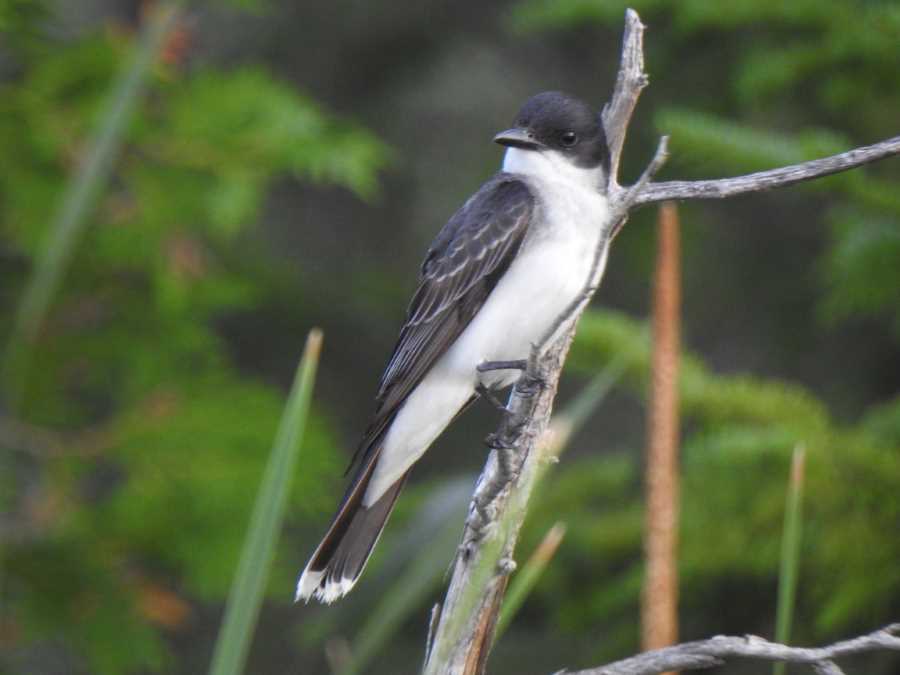
We are always delighted to see an eastern kingbird, especially posing nicely with the white band at the tip of its tail displayed conspicuously. This is a key identification characteristic for us. We see the eastern kingbird at the lakeshore, perched on a high branch of a tree. From this vantage point it has a good view of passing, flying insects, which it darts out to capture midair for its meal. We see the eastern kingbird each year from the end of May to early August before it embarks on its long flight to its winter home in South America.
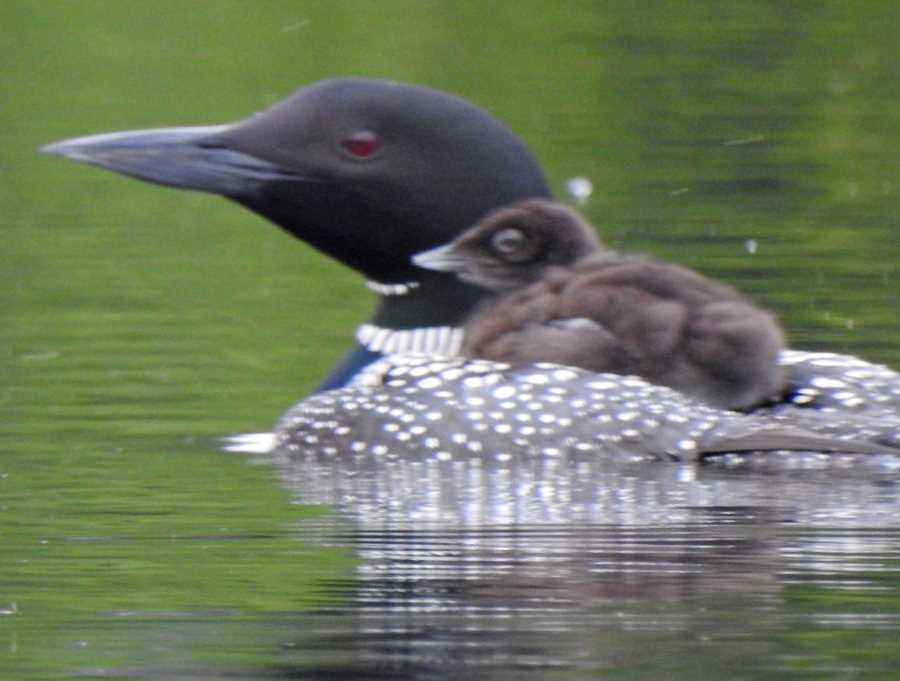
If it is possible to have a most favourite among favourites, it is the iconic common loon which we hear and see every day from early May through the summer to October when, if it is mature enough, the juvenile finally leaves for the warmth and open water to the south. It is heart-breaking each year to see that the adults have left, usually by late August, leaving the year’s young alone to finish their development including the ability to fly. Nature is tough. We see common loons every year but not necessarily do we see a successful breeding pair. This year a pair has chosen to nest somewhere near us and is currently raising one chick. We know we will be standing at the lakeside deck rail in October cheering it on to fly south. Not the best loon photo you have ever seen, this was taken June 17, 2025 in the smoke.
Summer is half over and we continue to enjoy seeing all of our reliable two-, four-, six-, and eight-legged friends. We are grateful and enjoy each one with great enthusiasm.
For this article we did some fact checking in the following field guides: Princeton’s Dragonflies and Damselflies by Dennis Paulson; Peterson’s Eastern Butterflies by Paul Opler etal; and, David Bird’s Birds of Eastern Canada.
