


As we approach the end of summer the moths and butterflies around our cottage on White Lake have reproduced. The eggs they laid have hatched and are now larvae, commonly referred to as caterpillars. We have not seen many of the commonly recognized smooth green, yellow, and black-striped Monarch butterfly or the fuzzy black and orange woolly bear (Isabella moth) caterpillars this year. That said, there has been no shortage of other species of caterpillars. The following includes just six different species of this summer’s caterpillars both smooth and fuzzy.
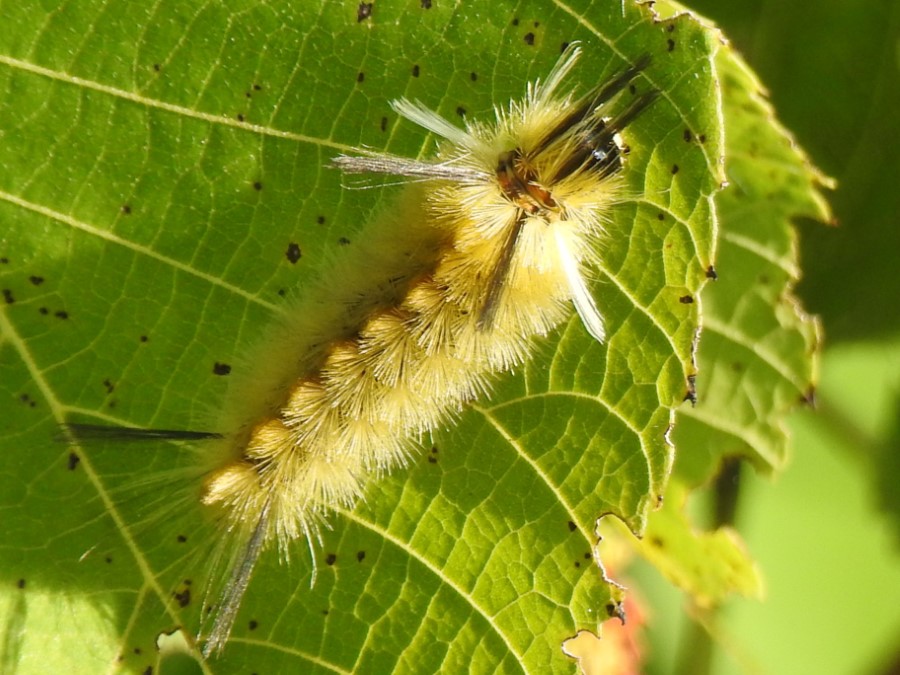
The banded tussock moth caterpillar is covered in dense hairs, termed setae that range from yellow-brown to grey-black. They have conspicuous black (inner) and white (outer) longer setae, termed lashes, extending from the anterior end of their body. The banded tussock moth caterpillar grows to 4.5 centimeters. They feed on alder, ash, birch, and many other woody shrubs and trees. They frequently rest on the upper surface of leaves, in full view, which suggests most birds do not consider them as suitable food.
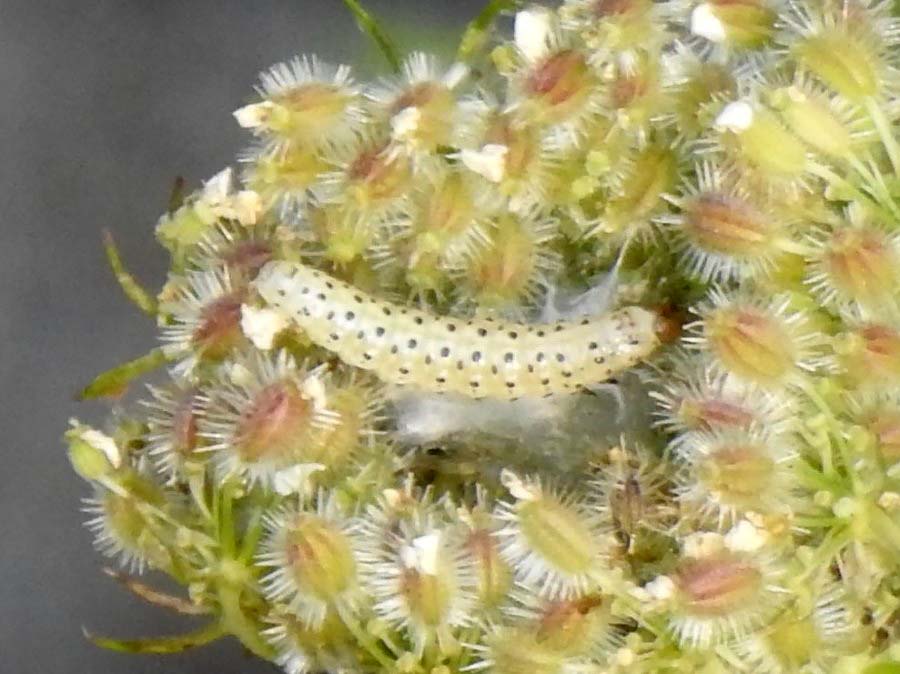
The carrot seed moth caterpillar is a small greenish-red with white spots invasive species that grows to 1.5 centimeters. It primarily feeds on the flowers and ripe seeds of plants belonging to the carrot family. This caterpillar can limit the number of seeds a farmer can harvest from carrots, celery, and dill. This individual was photographed on the flower cluster of the weed called wild carrot or Queen Anne’s lace, but we first made its acquaintance when one dropped out of a bouquet of wild flowers that included Queen Anne’s lace.
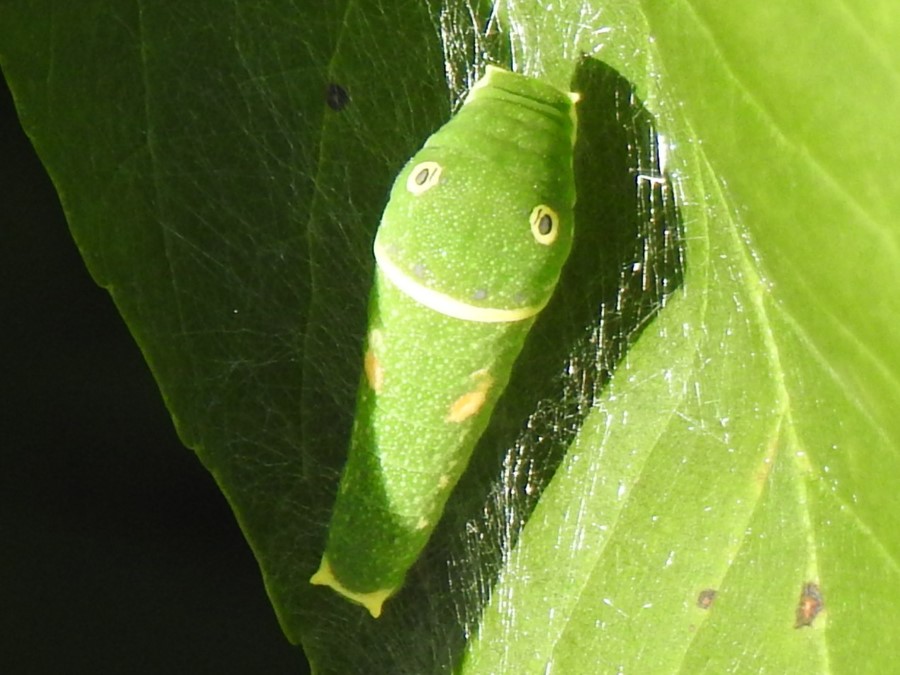
The Canadian tiger swallowtail butterfly caterpillar is smooth and green, growing to 5.5 centimeters. It sports a pair of distinctive black, blue, and yellow eyespots near its enlarged head. Typically, the caterpillar can be found on the top of leaves sitting directly over the leaf’s mid rib. Ash and cherry trees are among its preferred food plants. This individual was photographed on an ash leaf.
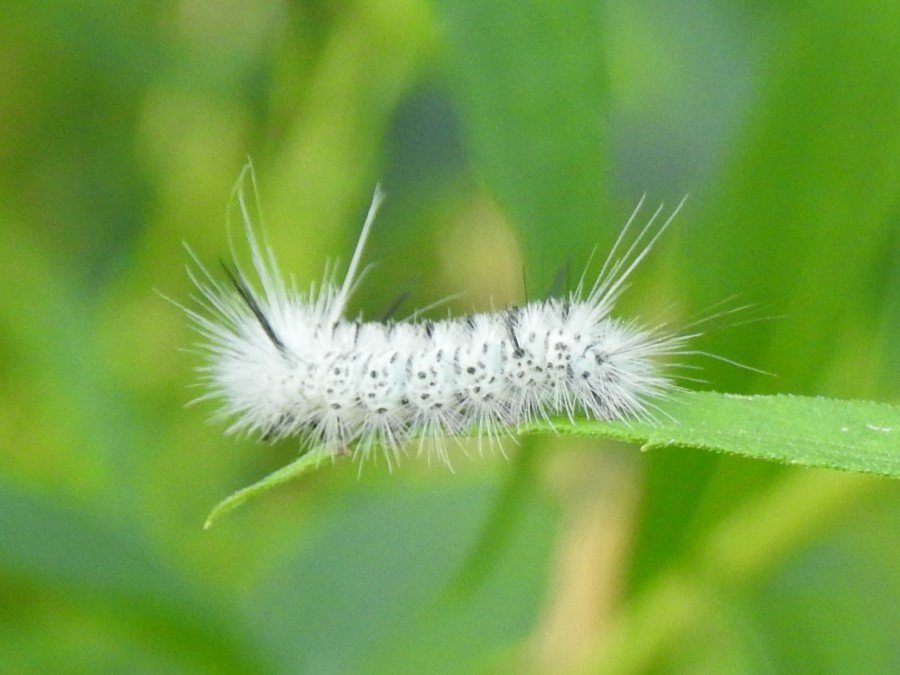
The hickory tussock moth is another fuzzy white caterpillar which can grow to 4.5 centimeters. In addition to its white setae, it also has prominent black mid-dorsal tufts and three pairs of long black lashes mid-way and towards both ends of their bodies. Populations occasionally irrupt as has been the case this year around our cottage. Many of our cottage neighbours have asked what ‘that’ caterpillar is. The hickory tussock moth caterpillar feeds on most woody plants. Sensitive people can develop rashes where they come in contact with its setae.
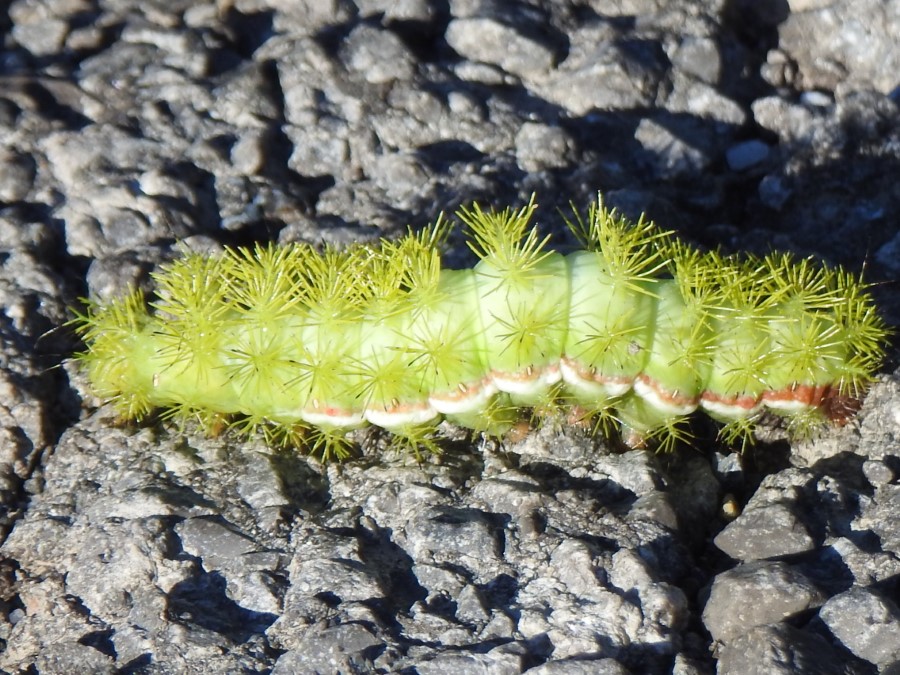
The Io moth caterpillar is a large green caterpillar, with a red and white stripe along its sides. It grows to 6.5 centimeters. This caterpillar is covered in fine green stinging spines. Our field guide advises that the sting from handling these spines is similar in intensity to stinging nettles but is longer lasting. We have not tested the advice. It feeds on aspen, birch, and other deciduous trees, clover, grasses, and many other plants. This individual was seen crossing the road near our cottage on the last day of August and is only the second one we have seen in all years at our cottage.
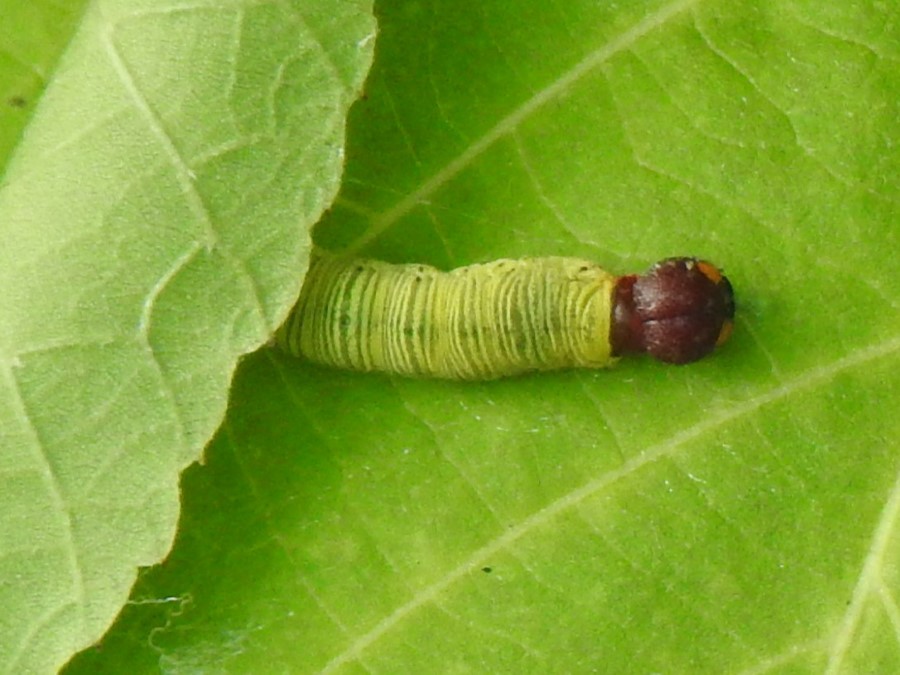
Skippers are one of most numerous members of the moth and butterfly family; however, their caterpillars’ nocturnal feeding habits hide their distinctive caterpillars from those of us who are not night dwellers. We were fortunate to see a silver-spotted skipper caterpillar early one morning recently as it was preparing to retire into its silken leaf shelter for the day. Silver-spotted skipper caterpillars grow to 3.5 centimeters and are distinguished from other skipper caterpillars by two orange spots on their bulbous heads. This individual was photographed early one morning as it was touching up its basswood leaf shelter.
Provided the pupae of these caterpillars successfully overwinter, we can look forward to seeing the adult moths and butterflies next year and more caterpillars in late summer.
For the details in this article, we relied almost entirely on David L. Wagner’s Princeton Field Guide – Caterpillars of Eastern North America.
