


The common white and yellow flowers of the ox-eye daisy are a familiar sight along the roadside and in the ditches near our cottage. We begin to see them in mid-June. Individual flowers grow to a diameter of 1.5 to 2.5 centimeters. The blooms are a pretty sight in their own right with the radial white ‘petals’, termed ray florets, surrounding the yellow ‘crown’ made up of disk florets. This daisy is a member of the aster family of flowers, also known as the composite family. In addition to the plant’s numerous flowers, it is interesting to see what spiders and insects have been attracted to the blooms. Mind you, only a few blooms carry this bonus. The following identifies just a few of the many visitors we have observed on ox-eye daisies.
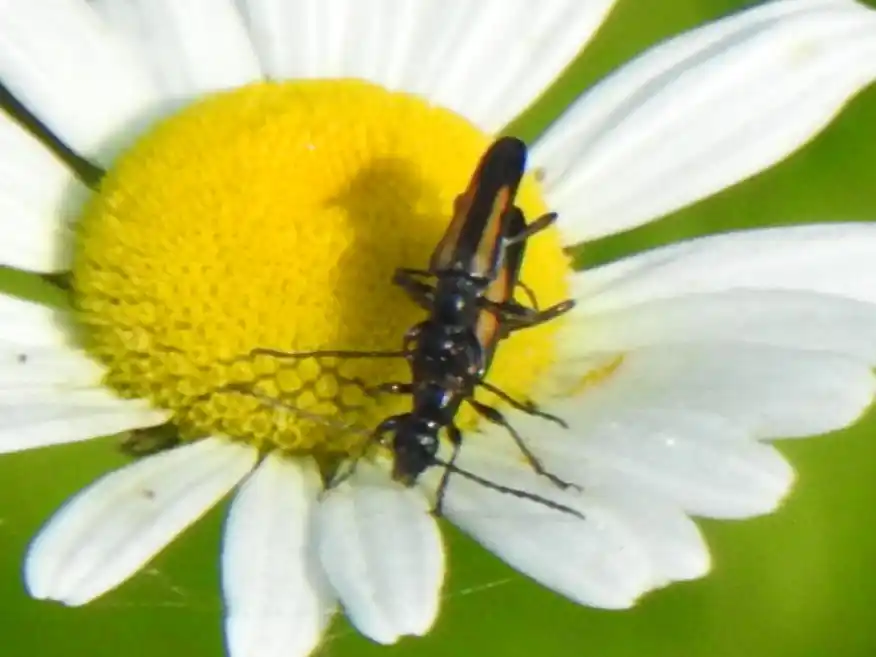
Flower longhorn beetles are members of the longhorn beetle family. While most longhorn beetle species feed on dying or dead trees, the flower longhorn feeds on flower pollen and leaves. Adults are common on the flowers we see during June and July including the ox-eye daisy. This particular species grows to one centimeter in length. By the looks of this pair, they will continue to be common around our cottage.
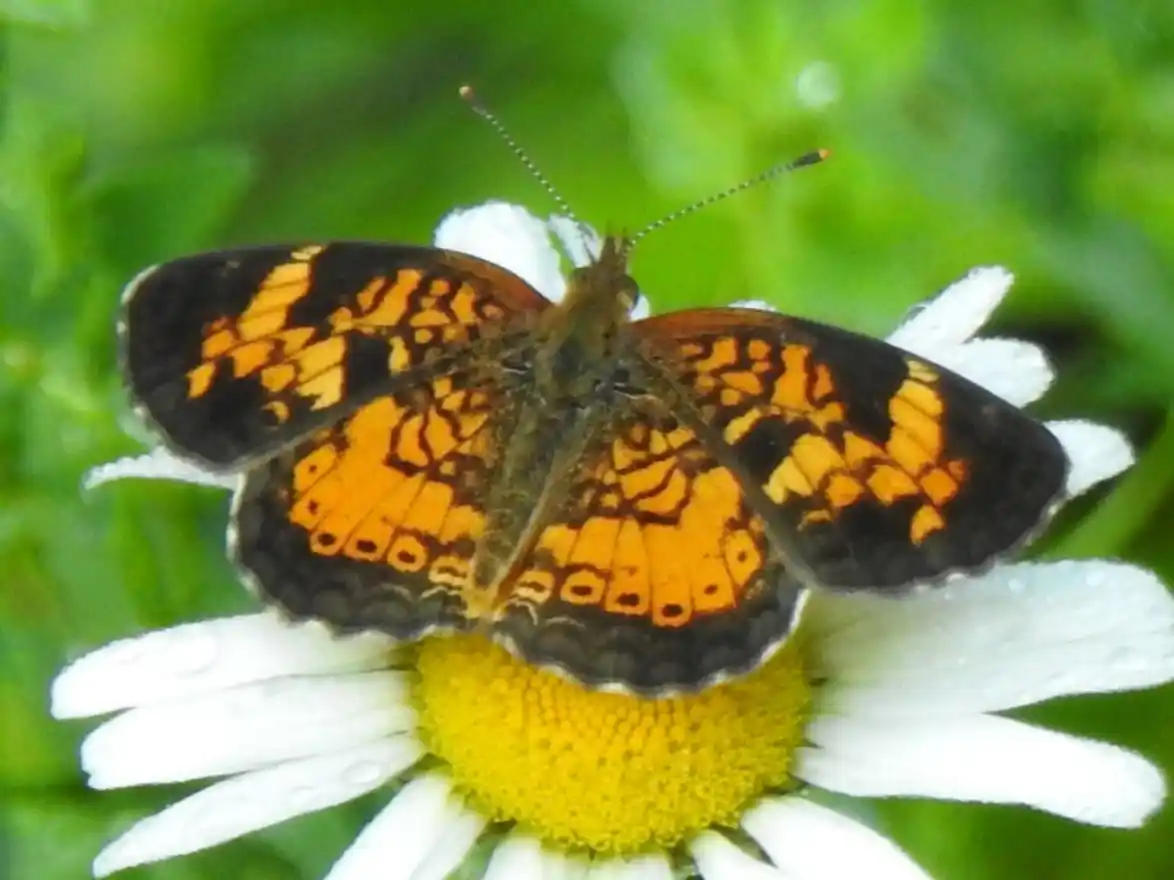
Crescent butterflies are members of the brushfoot butterfly family. There are four species around our cottage which look very similar, the pearly, the tawny, the northern, and the lesser northern crescent. All these species are small, growing to two centimeters in length and feeding on flower nectar. The erratic flight pattern of the crescent butterflies can make them difficult to photograph unless you can catch them when they stop on a flower to feed. Such was the case with this one which we guessed to be a northern crescent but our on-line experts were not able to either confirm or deny. Crescent butterflies are difficult to identify to species.
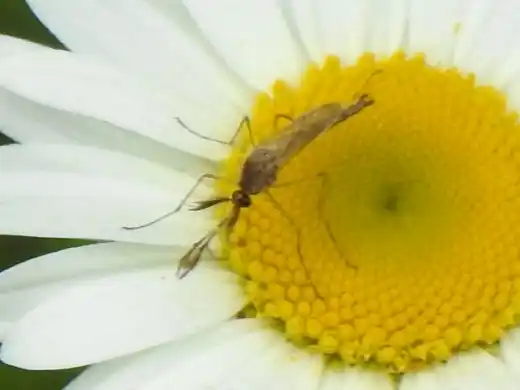
We are all familiar with the pesky, blood-sucking mosquito. Perhaps not everyone knows that it is only the females that need to feed on the blood of vertebrates, including humans, to produce their eggs. We have a number of species of mosquito in eastern Ontario; females of all the species rely on blood meals. Male mosquitos feed on flower nectar and can often be seen on blossoms. This mosquito is clearly a male given its bushy, feathery antennae.
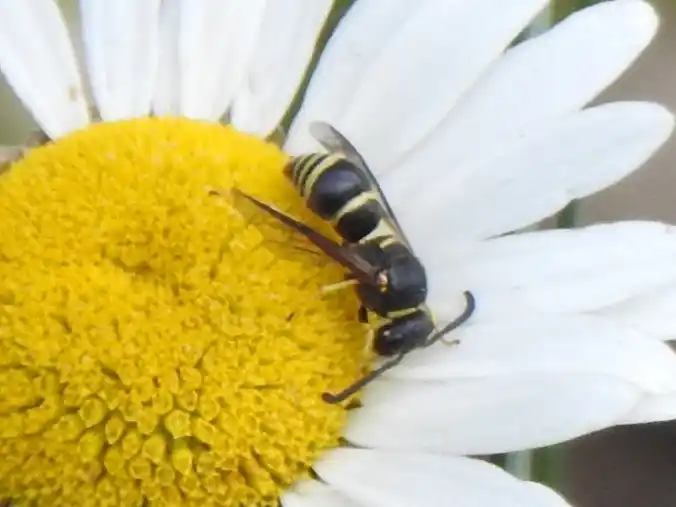
Potter wasps are a member of the bees, wasps, ants, and sawfly order. The small adult wasps, which grow to one centimeter in length, frequently visit flowers to feed on nectar. Adults are solitary hunters that capture, sting, paralyze, and feed caterpillars and other soft bodied insects to their larvae. They are very similar to the mason wasp. Be careful getting too close to observe them. They sting.
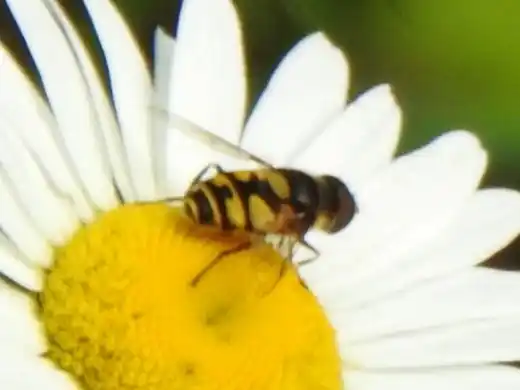
Syrphid flies are members of the flower fly family. They are very common in many different habitats and are most frequently seen on flowers. They are often black and yellow striped, in order to resemble or mimic bees and wasps. However, syrphid flies do not sting or bite. Sometimes simply called flower flies, like all true flies, they have a single pair of wings while bees and wasps have two pair. Syrphid flies are also sometimes called hover flies because they are often seen hovering 15 to 30 centimeters above the ground. This overabundance of names is one reason entomologists usually prefer to the scientific names when discussing the species in this group. These flies grow to one centimeter in length and play an important role in pollination.
We find it relaxing to take in the vistas of white and yellow daisies growing along the roadside. In addition, it can be rewarding to take a bit of extra time to look for the variety of insects and spiders that can be found on these ditch daisies (not an officially recognized common name).
We relied on the following field guides to help prepare this article: John Acorn & Ian Sheldon’s Bugs of Ontario; Timothy Dickinson, Deborah Metsger, Jenny Bull and Richard Dickinson’s The ROM Filed Guide to Wildflowers of Ontario; Peter W. Hall, Colin D. Jones, Antonia Guidotti and Brad Hubley’s The ROM Field Guide to Butterflies of Ontario; and, Tom Murray’s Insects of New England & New York.
