


The migrating birds have returned and, along with those that stay, have turned their minds to building nests, laying eggs, and raising their young. Of course, many species of wildlife build nests, in addition to birds, including reptiles, many insects, and even some spiders.
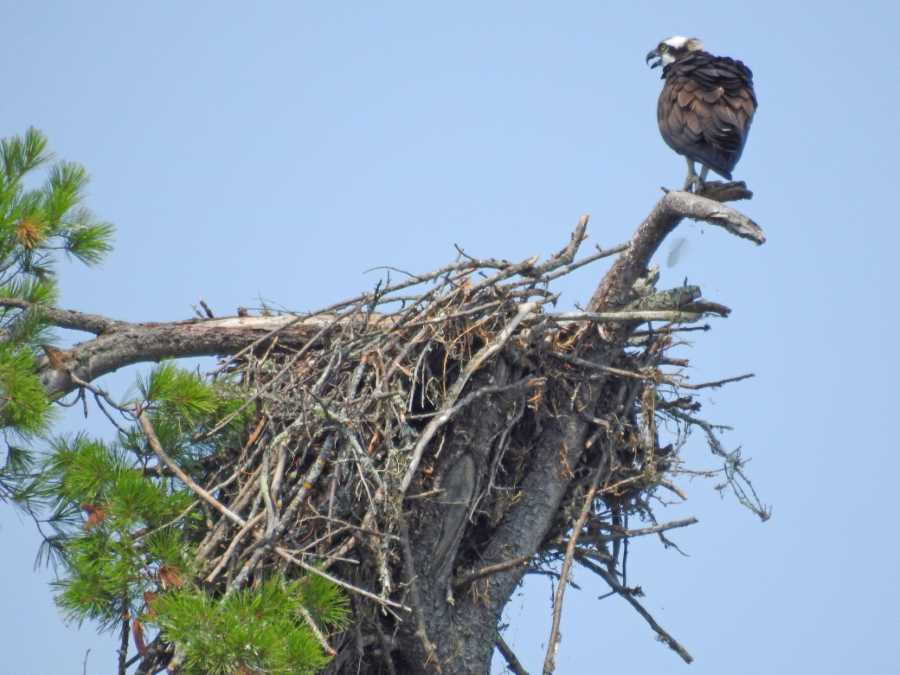
Around White Lake, one of the most majestic birds we see is the osprey. It builds an equally majestic, large, and distinctive nest. The earliest we have ever seen and photographed an osprey on the lake is May 23rd. After their long journey ‘home’ from Central or South America, it is time for the male to start bringing additional material for the female to arrange to upgrade the nest they left the previous autumn. Ospreys build their nests from large sticks, lining it with bark, grasses, and other material they find. Over the years, an osprey nest may grow to 6 feet in diameter. Every year, we look for the nests which ospreys build high in the white pines, in a location from which the parents have a good view of the surrounding lake.
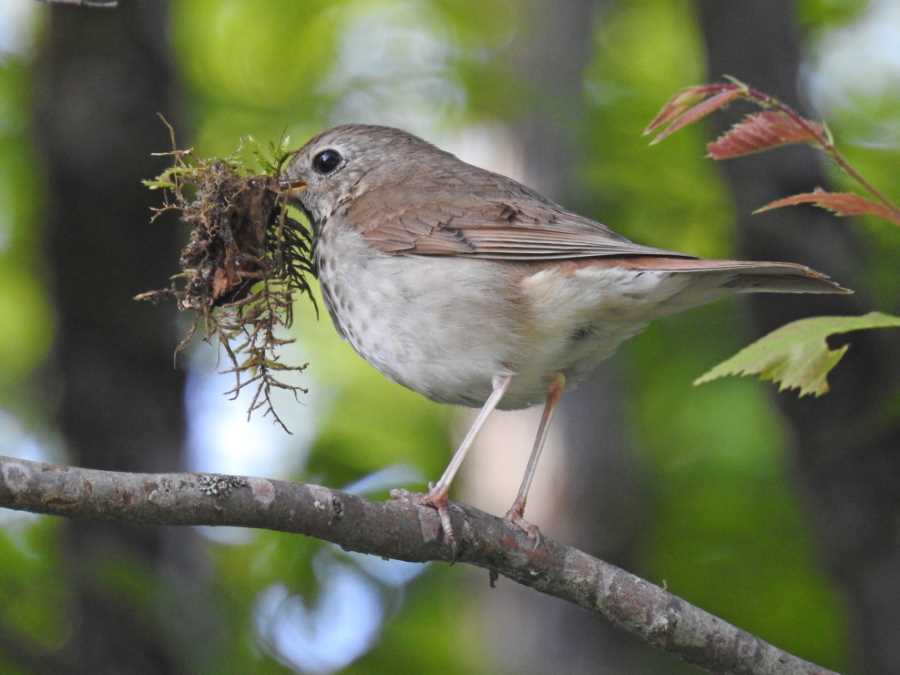
Rather than a high location with a view, the hermit thrush prefers to nest on the ground or in low vegetation in forests near edges such as meadows or forest roads. We think this must apply to our cottage road much of which passes through forest. The female builds the nest from grass, pine needles, and leaves, lining it with softer material such as willow catkins. The earliest we have seen a hermit thrush is May 7th, after its shorter migration from the southern United States or Mexico. During the summer the hermit thrush eats insects, so of course, it is one of our favourite birds.
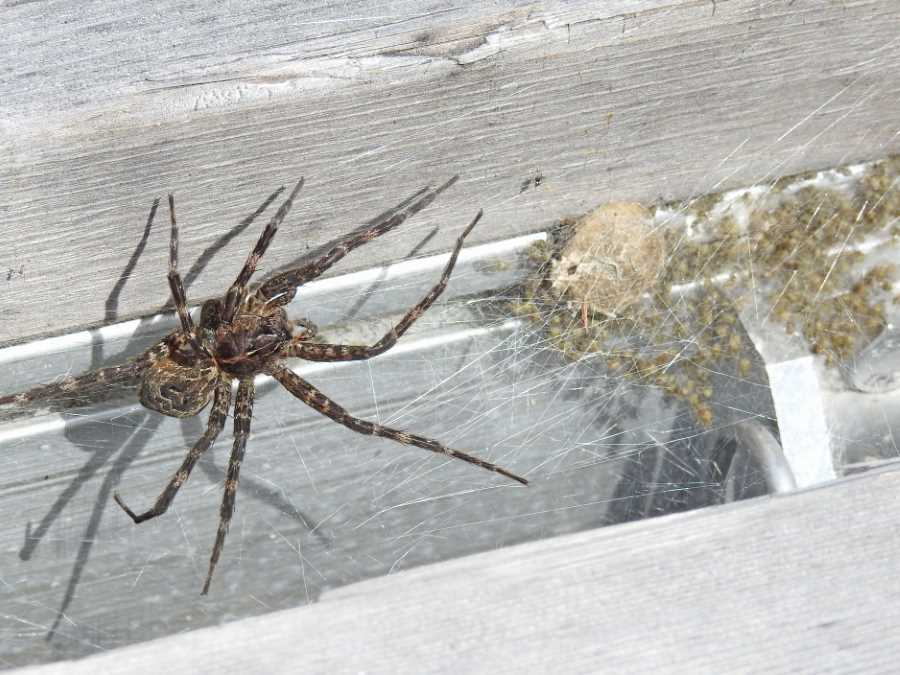
An intriguing and regular resident at the cottage is the dock spider whose nest we were delighted to see built in the dock fascia (edge) one year. The placement of this nest, or web, gave us a great opportunity to watch the spider guard her eggs and spiderlings when they hatched. And a fierce foe she might be, considering that the female dock spider commonly eats the male after mating. Also known as a fishing spider, this dock spider eats small aquatic beasties including insects and wee fish.
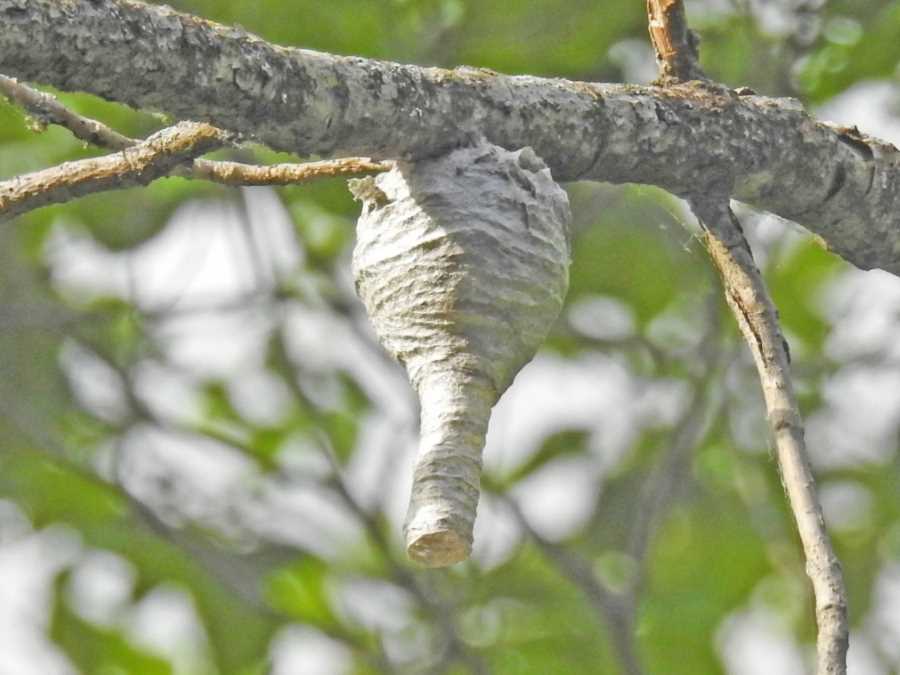
One of the biggest nests in the forest is that of the bald-faced hornet. When mature these nests can be as long as 58 centimeters and contain 700 workers. Nests can be seen above ground in trees and other protected places such as the underside of our cottage porch. New nests sometimes display a long entrance tube such as the one in our photograph. This shape is unique to bald-faced hornets.
Our dislike for ants is mitigated by the fact that we know ants are the food of some other species that we find quite delightful. Unique amongst ants at the cottage is the citronella ant, so named for its distinctive lemony scent. Citronella ants are found in the wooded area around the cottage. Building their nests plays an important role aerating the soil.
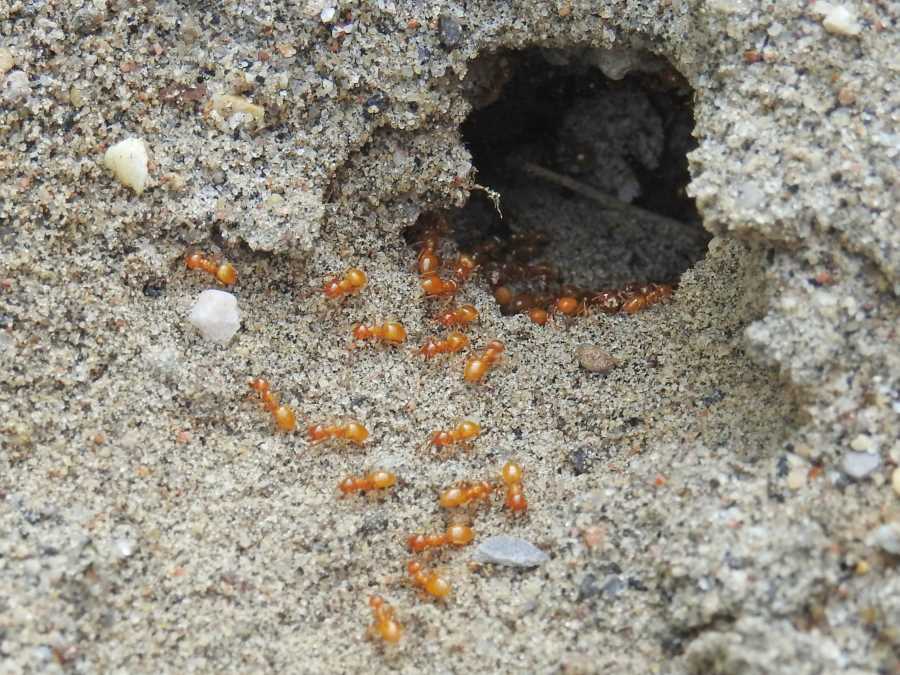
Birds are not the only species of wildlife at the cottage that build and live in nests, although we probably think first of birds when we speak of nests. But a nest is any structure that has been created, or an area that has been modified, to house any species of animal. Birds build nests from material as small as grass to as large as tree branches. Spiders spin webs which they attach to structures or plants. Wasps (hornets) attach their nests to trees and buildings. Ants burrow into the ground.
We are looking forward to burrowing into our cottage nest for the summer and observing all the interactions among the wildlife nesting around us.
For this article, we referred to Ontario Birds by Jeffrey C. Domm; AllAboutBirds.org; Bugguide.net; and, Spiders of North America by Sarah Rose.
