


Although it is winter and we have closed our cottage on White Lake and moved back into town, we still enjoy aspects of our summer as we review and catalogue the photographs taken during 2025. Every year we are pleasantly surprised to learn how many species we have photographed for the first time over the past cottage season and 2025 was no exception, 24 ‘new’ species of insect and a spider! We are not suggesting that these ‘new’ species just arrived at our cottage for the first time last summer. It is just the first time we have observed and photographed them. The following identifies five of these ‘new’ species.
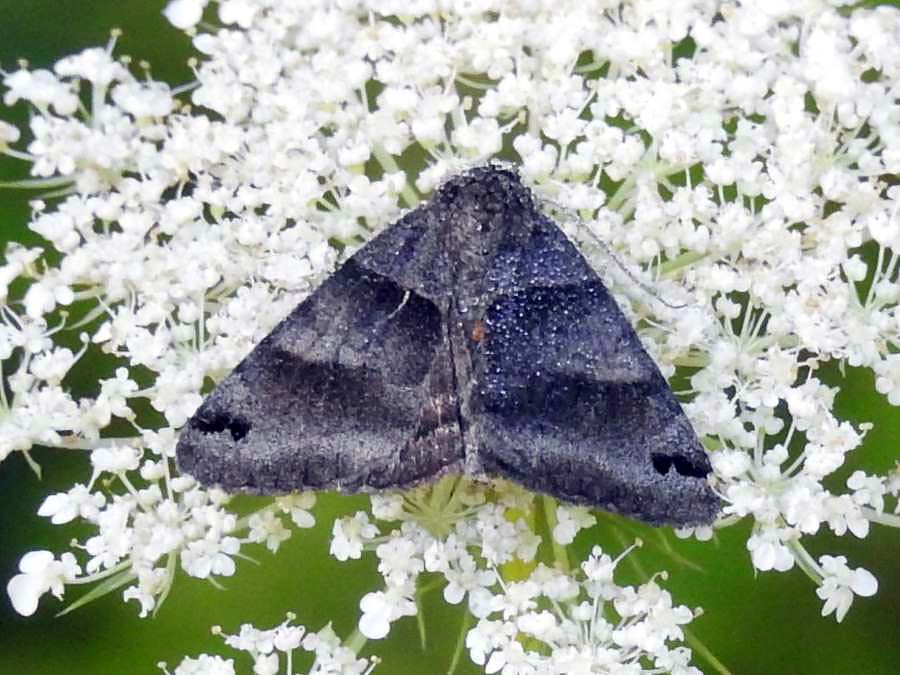
The clover looper moth is a member of the underwing family of moths. Underwings include a large group of medium to large woodland moths whose underwings, which are usually concealed when the moth is at rest, are usually colourful. Adult looper moths can grow to a length of 2.2 centimeters. It is considered a common moth in southern and eastern Ontario. Host plants for this moth are mostly legumes, for example vetches, as well as a variety of grasses and other herbaceous plants. The underwings of this resting individual are not visible.
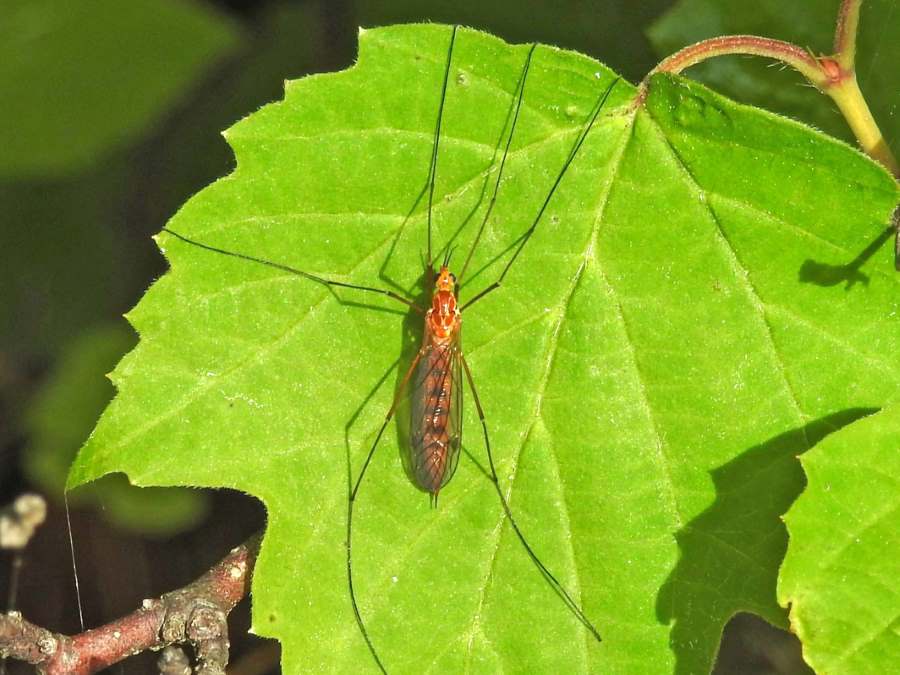
Members of the large crane fly family are often mistaken for large mosquitoes but they do not feed on blood. One such member is the ferruginous tiger crane fly. Adults can grow to 2.5 centimeters in length (not including their legs) and their abdomen have yellow-orange and black markings. The adults typically do not feed. They live for only a few days, long enough to breed and lay eggs. Crane flies are usually found in moist damp environments associated with wooded areas which we have in spades.
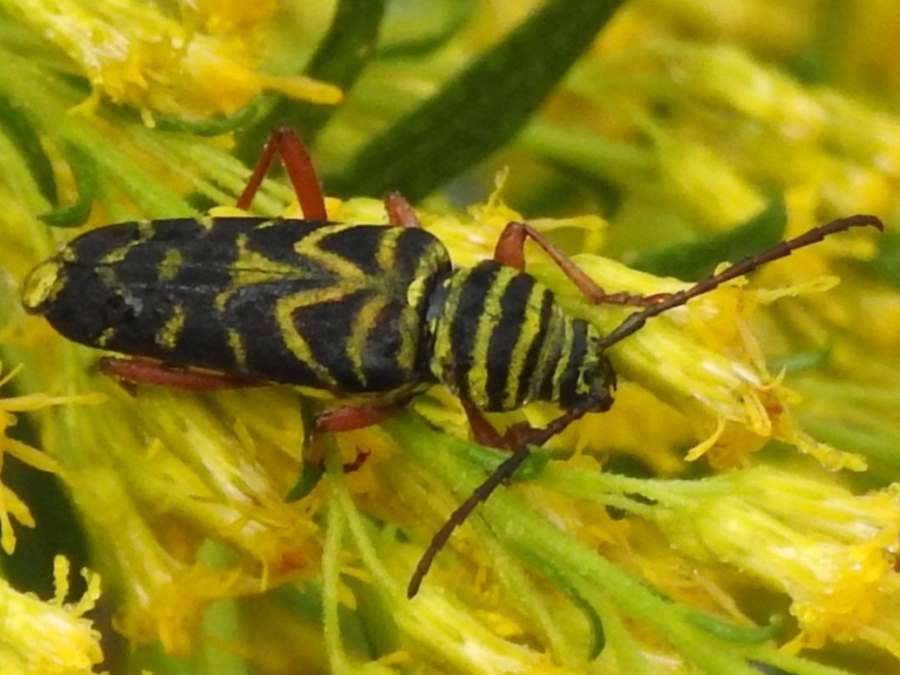
The locust borer is a member of the longhorn beetle family. Flower-visiting members of this family tend to be brightly or contrastingly coloured and sometimes look and behave like stinging wasps (but without a sting). Adult locust borer beetles are wasp-like in appearance and can grow to a length of 1.1 to 2.8 centimeters. Larvae develop on black locust, hence the common name, while adults are typically found on goldenrod usually in September and October. Black locust is an invasive plant also found in damp woodlands. A pattern is developing … damp woodlands.
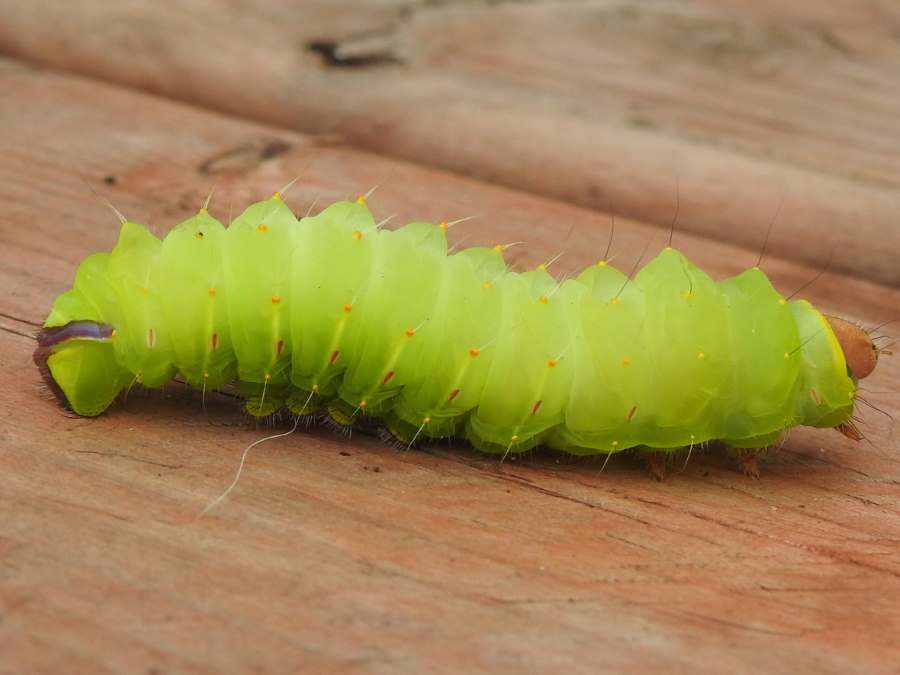
The polyphemus moth is a member of the giant silkworm moth subfamily. Larvae of North American silkworm moths all spin classic ‘silk’ cocoons although there is no commercial use for this ‘silk’. The large, bright green caterpillar of the polyphemus moth can grow to 7.5 centimeters in length. They feed on many shrubs and trees including apple, hickory, maple, oak, and members of the willow, birch, and rose families. This individual was brought to our attention one day by a friend as we were kayaking past her dock. Thanks Debbie!
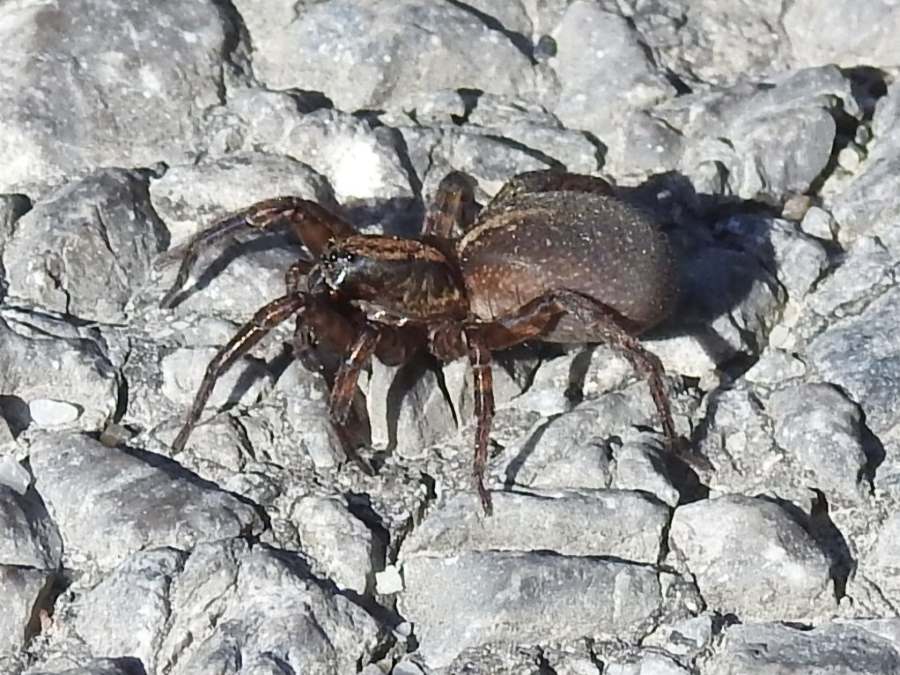
The body of this wolf spider was 1.1 centimeters long (excluding its legs). Wolf spiders are solitary hunters who actively run after and capture their prey on the ground. They do not spin webs to capture prey. They hunt actively both day and night. The jaws of wolf spiders are strong enough to bite into and crush their insect prey. They are not venomous.
As this winter unfolds, we are looking forward to the 2026 cottage season, especially the ‘new’ species we hope to discover and, of course, our long-time favourites.
We used the following field guides to aid in preparing this article: David Beadle & Seabrooke Leckie’s Peterson Field Guide to Moths of Northeastern North America; David L. Wagner’s Princeton Field Guides – Caterpillars of Eastern North America; Arthur V. Evans’ Beetles of Eastern North America; Tom Murray’s Insects of New England & New York; and Larry Weber’s Spiders of the North Woods.
